









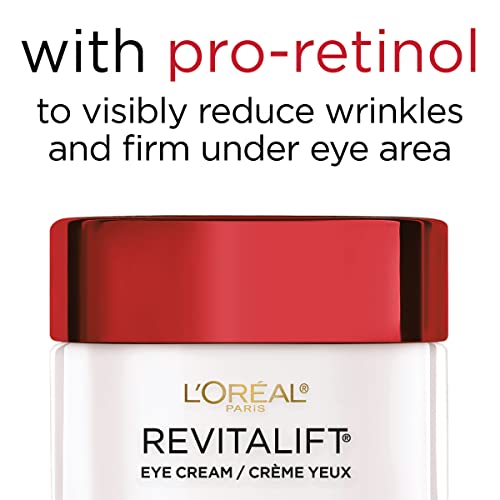


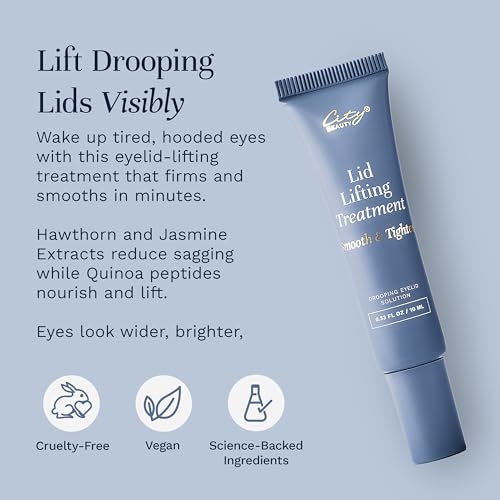
We also considered 10 others:


Our Top Choice
The order above is not editorial opinion, and it is not paid placement. It comes from what shoppers across our network actually do - which eyelid lift creams they compare, and which they ultimately buy. We re-rank as new data comes in, so the long-term favorites have to keep earning their spot against new entrants. The full method, including how we make money.
Eyelid Lift Creams Buyer's Guide
Eyelid lift creams sit in a narrow space: they can make upper lids and the surrounding eye area look firmer or more awake, but they cannot recreate the effect of a procedure. The sharpest buying concerns are whether the formula is truly safe and tolerable near thin eyelid skin, and whether the visible change is strong enough to justify consistent daily use.
Lid Lift
A good eyelid lift cream should be judged by realistic visible improvement, not by dramatic tightening claims. The most relevant result is whether the upper lid and eye contour look a little firmer, smoother, and more open with repeated use.
Look for formulas that clearly state they are suitable for the eye area and focus on gradual firming, smoothing, or tightening rather than instant “surgical” lift claims. For droopy-looking upper lids, the best candidates usually combine humectants for plumping with firming or smoothing actives, while harsh peel-level actives or vague miracle claims are red flags. Owner sentiment supports this realism: visible lifting and firming are among the strongest positives, and some users report that droopy upper lids look a bit more open, but firming results are inconsistent and not everyone sees enough change.
Eye Tolerance
Eyelid skin is thin, mobile, and close to the eye, so a formula that works elsewhere on the face may be too aggressive here. Tolerance matters as much as visible results because irritation can make the eye area look drier, redder, or more creased.
Prioritize fragrance-free, ophthalmologist-tested, sensitive-skin-friendly formulas, especially if the cream goes near the upper lid rather than only under the eye. If the formula contains retinol or other resurfacing actives, start slowly, keep it away from the lash line, and avoid stacking it with strong exfoliants on the same night. This is a major buying filter because owner feedback identifies skin irritation as the main watch-out, particularly for sensitive or dry skin and for anyone new to retinol near the eyes.
Moisture Feel
Lift creams often need enough richness to cushion thin skin, but too much heaviness can feel uncomfortable on lids. The best texture leaves the area smooth and flexible without creating dryness, tackiness, or a coated feel.
Choose a cream that balances moisture with a refined finish: humectants and barrier-supporting ingredients are helpful, while overly matte, tightening, or alcohol-heavy feels can be a problem on crepey lids. If your lids are dry, avoid formulas that rely mainly on a temporary tight film; if your lids are oily or makeup-prone, avoid very greasy textures that migrate. Owners often praise smooth, pleasant texture and skin that feels smooth rather than dry or rough, but the moisture experience is split, with some finding certain creams drying around the eyelids.
Daily Use
An eyelid cream only works if it fits into a routine you can repeat without mess or discomfort. Absorption, residue, and ease of placement are especially important because product can migrate into the eye or interfere with makeup.
Look for a texture that spreads in a rice-grain amount per eye, absorbs without pilling, and leaves minimal residue before sunscreen, concealer, or eye makeup. Avoid jars or thick creams that encourage over-application if you are prone to milia, smearing, or product traveling into the eye. Sentiment is mostly favorable on easy application, quick absorption, and little residue when the formula works well, though some buyers find richer creams too thick or slow to absorb and some dual-step routines less simple.
Eye Refresh
Many shoppers want one eye cream to address lids, lines, puffiness, dark circles, and general tiredness, but those concerns do not respond the same way. Matching the formula to the concern prevents disappointment.
For puffiness, look for lightweight depuffing support and a finish that does not trap fluid; for dark circles, be realistic because pigment, shadowing, and vascular tone may need different approaches. For fine lines, hydration and smoothing can help the area look softer, but deeper folds or structural shadows will not disappear from a cream. Owner feedback fits this mixed picture: some see encouraging improvement in dark circles, puffiness, lines, and overall under-eye appearance, but results are not miraculous, complete, or even for everyone.
Value Proof
Because eyelid creams usually require consistent use, value depends on repeatable results, not just first impressions. A product that feels luxurious but produces uncertain change may be hard to keep buying.
Before committing, judge value by the amount needed per use, how long the tube or jar should last, whether the routine is simple enough to maintain, and whether the visible change matches your main concern. Be cautious with costly formulas if you mainly need basic moisture, and reserve higher commitment for products that combine tolerability, wearability, and measurable firming for your lids. Owner sentiment shows why: many buyers see quality and stay loyal over time, but high cost is a major drawback, and inconsistent firming makes the value harder to justify for people who see little visible change.
1,000,000+ shoppers use Buyer's Guide every week to find the best products and services online.

Helping millions of users make smarter purchases online.