





We also considered 10 others:


Our Top Choice
Compare Features


The order above is not editorial opinion, and it is not paid placement. It comes from what shoppers across our network actually do - which extra large room heaters they compare, and which they ultimately buy. We re-rank as new data comes in, so the long-term favorites have to keep earning their spot against new entrants. The full method, including how we make money.
Extra Large Room Heaters Buyer's Guide
Extra-large room heaters are usually limited by household outlet capacity, so the real tradeoff is not “biggest heater” but how well a 120V unit distributes and cycles heat across a large, drafty space. Prioritize safe high-watt operation, strong air throw or oscillation, accurate thermostat behavior, and realistic coverage claims; avoid buying a compact unit advertised for huge rooms if it lacks the airflow, controls, or circuit-safety features to support that use.
Controls
Clear, intuitive controls make a space heater easier and safer to use, especially if you’ll be adjusting it often from a bed, desk, or couch. Look for simple temperature and mode settings, readable buttons or displays, and a remote control if you want to change settings without getting up. Watch out for controls that are tiny, poorly labeled, overly complicated, or hard to use in low light.
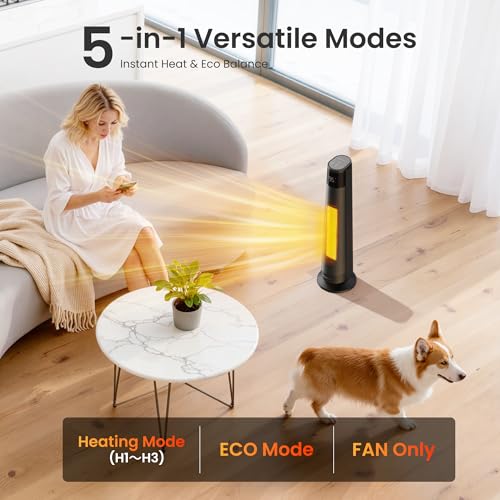
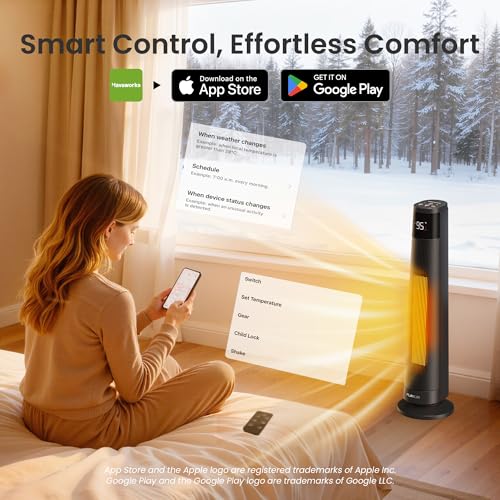
For an extra-large room, look for controls that manage heat over time rather than just blasting on high: a true thermostat with set-degree adjustment, Eco or auto-cycling mode, multiple heat levels, oscillation control, timer, and ideally remote/app scheduling so you can preheat or adjust from across the room. Check whether the temperature sensor is on the heater body, because in a large room it may shut off early if placed near the warm airflow; placement flexibility and clear display readings matter. Owner feedback supports this priority: shoppers consistently value remote controls, thermostat-style settings, Eco mode, oscillation controls, app scheduling, and phone-based adjustments because they reduce constant manual tweaking and help maintain steadier comfort.
Noise
Noise level matters if you plan to use a space heater in a bedroom, office, nursery, or anywhere quiet, since fan hums, clicks, or cycling sounds can become distracting over time. Look for models described as quiet or low-noise, and pay attention to whether the sound is a steady background hum or an intermittent on-off noise that may be more noticeable.
For extra-large spaces, noise is tied to heat distribution: fan-forced models usually warm a big room faster, but you should check low/high fan noise, oscillation motor sound, startup beeps, and the click or surge when the thermostat cycles. If the heater will run during sleep, TV, or work calls, avoid units that only move enough air on a loud high setting; if you choose a quieter radiant or convection style, expect slower whole-room warmup. Owner sentiment indicates that quiet operation is a major satisfaction driver, with many users saying their heaters are suitable near desks, beds, living rooms, work calls, TV watching, and overnight use while still producing comfortable warmth.
Size
Size matters because a space heater needs to fit where you’ll actually use it without blocking walkways, vents, doors, or furniture. Look for a footprint and height that suit your room, desk, or bedside area, and remember that some compact heaters still need clear space around them for safe airflow and heat dispersal.
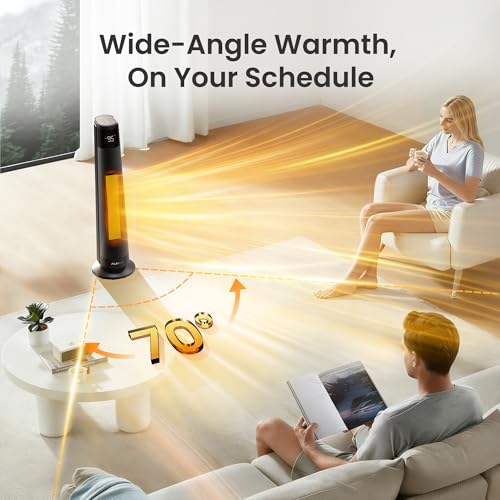
Do not judge size only by footprint in this category: an extra-large room heater needs enough grille area, fan throw, oscillation range, and safe clearance around the intake and outlet to move heat without overheating nearby furniture, curtains, bedding, or walls. A compact tower or wall-mounted unit can be convenient, but confirm tip-over stability, cord length without relying on extension cords, carrying handles or casters if it will be repositioned, and whether one unit can realistically cover the room layout or if two smaller heaters on separate circuits would be safer and more even. Owners often like compact heaters because they are easy to place in offices, bedrooms, bathrooms, desks, and workspaces, and some appreciate wall-mounted designs that save floor space, but for an extra-large room that convenience should not replace airflow and clearance checks.
Value
A space heater’s value comes down to how well its heat output, controls, safety features, and build quality match what you pay. Look for a model that fits the room size you actually need to warm and includes useful features you’ll use, while being wary of paying extra for flashy extras that don’t improve comfort, safety, or durability.
Value in an extra-large room heater depends on targeted supplemental heating, not replacing a whole HVAC system in a poorly insulated open area. Before buying, estimate operating cost from wattage and local electricity rates, confirm the room is on a circuit that can handle a high-draw appliance, and look for safety certification, overheat protection, tip-over shutoff, adjustable wattage, thermostat cycling, and a realistic return window in case the unit cannot keep up. Owner sentiment is broadly positive when heaters provide focused warmth more efficiently than turning up central heat, and Eco/thermostat cycling is often praised for avoiding nonstop running; however, feedback is mixed when airflow, heat output, long-term dependability, or perceived cost do not match expectations.
1,000,000+ shoppers use Buyer's Guide every week to find the best products and services online.

Helping millions of users make smarter purchases online.


