














We also considered 10 others:


Our Top Choice
Compare Features


The order above is not editorial opinion, and it is not paid placement. It comes from what shoppers across our network actually do - which ellipticals for seniors they compare, and which they ultimately buy. We re-rank as new data comes in, so the long-term favorites have to keep earning their spot against new entrants. The full method, including how we make money.
Ellipticals for Seniors Buyer's Guide
Ellipticals for seniors have to balance gentle, circulation-friendly movement with fall prevention, joint comfort, and day-to-day usability. The biggest buying questions are whether the user should be seated or standing, whether controls can be adjusted without bending, and whether the machine is stable enough to use confidently at low effort.
Ease
You’ll use an elliptical more consistently if starting, adjusting, and ending a workout feels straightforward. Look for intuitive controls, clear resistance and incline adjustments, an easy-to-read display, and handles or pedals that feel natural to use. Watch out for cluttered consoles, confusing menus, or features that require too much setup before you can simply get moving.
For seniors, prioritize an elliptical that is easy to mount, start, adjust, and stop without awkward bending or balance shifts. Seated models should work from a stable chair with pedals that are easy to find and keep feet on; standing models should have a low step-up height, clear console, supportive handles, and simple resistance changes. A remote or raised controls are especially useful for anyone with back, hip, knee, or balance limitations. Owner feedback supports this: shoppers often praise seated ellipticals for quick setup, straightforward controls, no-assembly operation, and the ability to begin gentle pedaling during desk work, TV, or other sitting time without making exercise feel intimidating.
Features
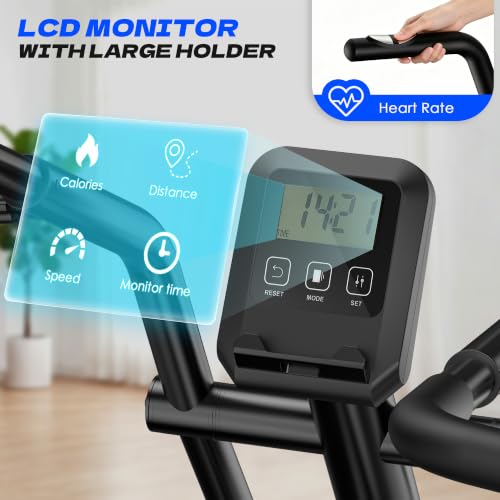
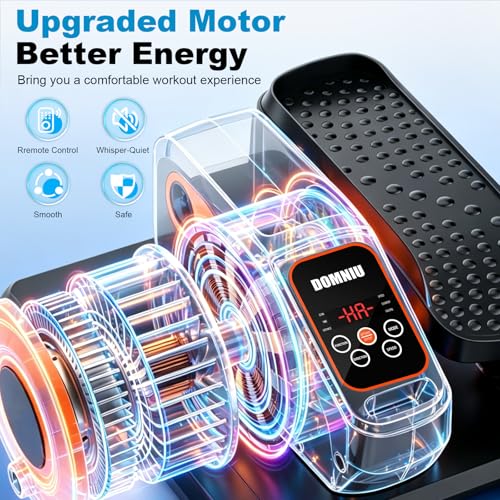
Features determine how much flexibility you have beyond a basic stride, from resistance and incline options to workout modes, heart-rate inputs, and controls that are easy to reach while moving. Look for functionality you’ll actually use, such as quick adjustments, clear programs, and convenient extras like remote control or device holders, but be cautious of feature lists that sound impressive yet make the machine harder to operate or maintain.
For seniors, the most important features are safety and adjustability rather than flashy programs: look for wide non-slip pedals, low starting resistance, small speed or resistance increments, a clear display, remote control if seated, and modes gentle enough for warmups, circulation, and rehab-style movement. If buying an under-desk unit, check knee clearance under the desk, chair compatibility, cord placement, and whether the unit has manual and assisted movement modes; if buying a standing unit, look for stable full-length handles and easy-to-read controls. Owner sentiment backs up these priorities, with many buyers valuing straightforward controls, remotes that reduce bending, quiet smooth motion, adjustable settings, and seated leg-and-ankle movement that helps keep legs active.
Workout
Your workout experience determines whether an elliptical feels effective enough to use consistently, so look for smooth resistance changes, a stride that feels natural, and programs or controls that help you vary intensity without interrupting your rhythm. Pay attention to whether the motion engages both your lower and upper body comfortably, supports your fitness goals, and leaves you feeling challenged rather than awkward or strained. If circulation benefits are important to you, choose a machine that makes it easy to maintain steady, low-impact movement for the duration you need.
For seniors, choose the workout type around the user’s mobility and medical goals: seated ellipticals are best for circulation, stiffness, edema management, post-surgery movement, and days when walking is limited, while standing ellipticals should be reserved for users with adequate balance and stamina. Avoid machines that start too fast, force a long stride, or have resistance jumps that make knees, hips, or ankles work harder than intended. The safest option is usually one that allows short, frequent, low-impact sessions and gradual progression. Owner reports align with this: buyers commonly describe seated pedaling as useful for staying active indoors, supporting circulation, easing stiffness, and providing gentle knee- or joint-friendly movement without feeling like a strenuous workout.
Build
A well-built elliptical feels steady under you, with a frame that doesn’t wobble, creak, or flex when you increase resistance or pick up your pace. Look for sturdy construction, smooth-moving parts, and enough overall weight or floor contact to keep the machine planted, especially if you’re taller, heavier, or plan to train hard. Watch out for lightweight frames, loose-feeling handlebars, or pedals that shift side to side, since poor stability can make workouts feel less comfortable and less safe.
For seniors, build quality should be judged by stability under cautious, uneven, or low-strength pedaling—not just by maximum intensity. Look for a frame that does not rock, pedals that do not wobble, grippy feet that stay put on the intended floor surface, and a weight capacity comfortably above the user’s body weight. On standing models, test for handlebar flex and side-to-side sway; on seated models, make sure the unit does not slide forward during use. Owner feedback reinforces the need for solid construction, with many users noting machines that feel sturdy, smooth, stable, well made, and secure enough for regular gentle exercise.
Noise
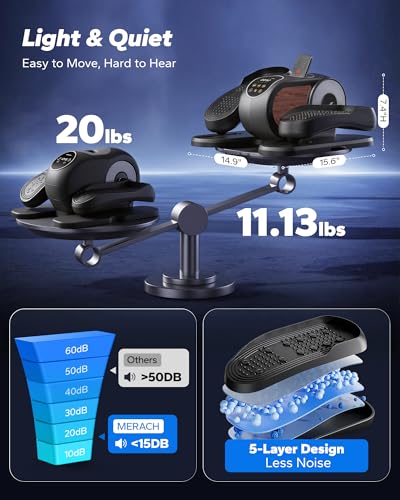
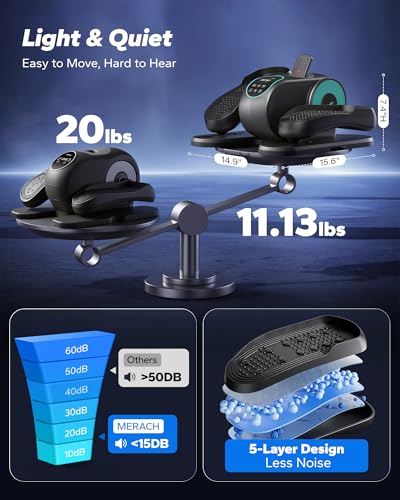
A quiet elliptical matters if you share walls, work out early or late, or want to hear music, TV, or calls without cranking the volume. Look for stable frames, smooth resistance systems, and well-fitted moving parts, and watch for squeaks, knocking, or floor vibration that can make even a “quiet” machine disruptive in real use.
For seniors, quiet operation matters because the machine is more likely to be used during TV, calls, reading, or shared living spaces; a noisy or squeaky unit can quickly become abandoned equipment. Look for magnetic resistance, smooth bearings, a stable base that does not thump, and pedals that do not click at low speeds. Also check whether noise increases after longer sessions, since some units are quiet only at first. Owner sentiment strongly supports this concern: buyers repeatedly appreciate machines that run quietly enough for watching TV, working at a desk, taking calls, listening to music, or exercising indoors without distraction.
Portability
An elliptical’s portability determines whether it will realistically fit your space and routine, not just whether it looks good on paper. Check the machine’s weight, footprint, transport wheels, and whether it can be folded or moved easily through doorways, and watch out for heavier full-size models that may be stable during workouts but difficult to reposition or store.
For seniors, portability is a safety issue: a machine that is too heavy, lacks a handle, or must be lifted awkwardly can create fall or back-strain risk before the workout even starts. If the elliptical will move between rooms, look for transport wheels, a secure carry handle, compact storage dimensions, and a weight the user or caregiver can realistically manage; if it will stay in one spot, prioritize stability over lightness. Also consider floor transitions, rugs, and whether the user can position it without bending or dragging. Owner feedback is mixed in exactly this way: many buyers like compact designs that fit into daily routines and can be moved or stored, but others warn that heavier units are awkward to move, especially for people with back problems or multi-room use.
1,000,000+ shoppers use Buyer's Guide every week to find the best products and services online.

Helping millions of users make smarter purchases online.


