










We also considered 10 others:


Our Top Choice
Compare Features


The order above is not editorial opinion, and it is not paid placement. It comes from what shoppers across our network actually do - which electric inserts they compare, and which they ultimately buy. We re-rank as new data comes in, so the long-term favorites have to keep earning their spot against new entrants. The full method, including how we make money.
Electric Inserts Buyer's Guide
Electric inserts are bought as much to solve a fit-and-finish problem as a heating problem: the unit has to look intentional in an existing firebox, mantel, media wall, or recessed opening while safely moving heat and air. The sharpest checks are exact opening depth/width/height, where the heater vents, and whether you want a convincing firebox/log illusion or a modern linear flame display.
Design
Your fireplace often becomes a focal point, so its appearance should fit the room’s architecture, furnishings, and overall mood rather than feel like an afterthought. Look for proportions, materials, flame presentation, and surround details that create the ambiance you want, and watch out for styles that may overpower a small space or clash with your existing decor.
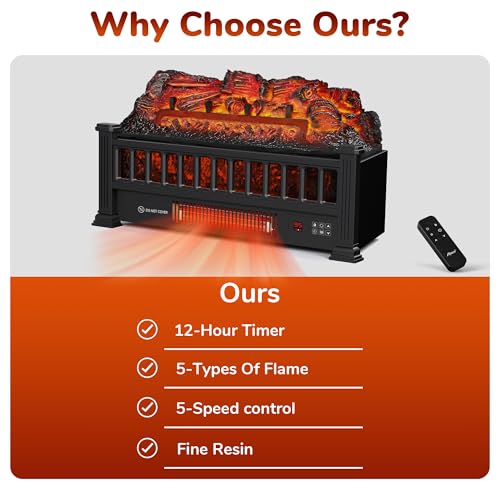
Choose the insert style around the opening you already have: a traditional masonry hearth usually looks best with a deep firebox, log set, ember bed, trim, or door detail, while a shallow media wall often suits a linear glass-front design with crystals or colored media. Check that the face frame covers gaps without blocking vents, and avoid units that look too flat or screen-like if the goal is to revive an unused fireplace. Owner feedback supports this priority: buyers most often praise inserts that make a room feel cozy and finished, especially those with realistic flames, glowing logs or embers, glass-door details, and adjustable crystal/flame color combinations.
Heat
You want a fireplace that produces enough heat for the space you plan to use it in, whether that means taking the chill off a small room or serving as a supplemental heat source in a larger area. Look for clear heat output ratings, effective heat distribution, and adjustable heat settings so you can stay comfortable without overheating the room. Watch out for fireplaces that look substantial but provide limited warmth, especially if ambiance is not your only priority.
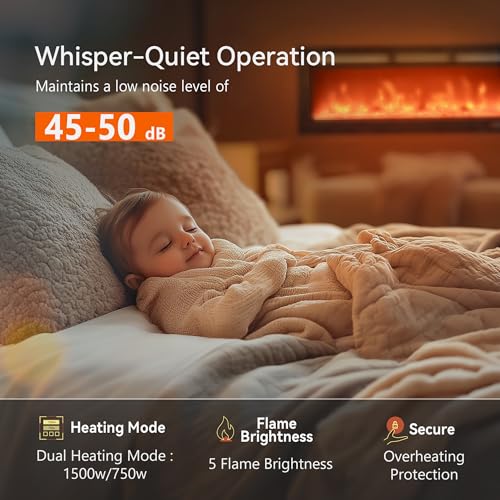
Treat the heater as supplemental zone heat, not a furnace replacement: most electric inserts are limited by a household outlet, so look for clear wattage, high/low heat settings, thermostat control, overheat protection, and a heater vent location that will not blow into a closed mantel cavity. For an existing fireplace, confirm whether heat exits from the front/top front rather than the back, and keep combustibles, trim, and TV components out of the warm-air path. Owners commonly report that these units take the chill off living rooms, open areas, and unusable fireplaces, with many appreciating flame-only mode when they want ambience without heat.
Operation
How a fireplace operates affects how often you’ll actually use it, from simple ignition and heat adjustment to flame settings, timers, and safety shutoff behavior. Look for controls that feel intuitive, whether on the unit, a wall switch, or a remote control, and watch out for setups that require awkward access, confusing menus, or too many steps for everyday use.
Prioritize controls that match how the insert will actually be used: independent flame and heat control, a remote, timer, adjustable thermostat, brightness settings, and memory settings are especially useful when the insert is recessed or tucked into a mantel. Also check whether the unit can restart safely after power loss, whether buttons remain accessible after installation, and whether fan noise will bother you in a quiet room. Owner sentiment aligns with this: buyers like inserts that simply plug in and work, offer high/low heat plus ambience-only modes, and include convenient controls for flame color, ember effects, timer use, and remote operation.
Flame
The flame is what you’ll look at most, so realism and visual quality matter as much as heat output if the fireplace will be a focal point. Look for natural movement, adjustable brightness, and flame color options that fit your room’s mood, and be wary of effects that look flat, repetitive, or overly artificial once viewed in normal lighting.
Evaluate the flame effect for the specific illusion you want: for an old hearth, look for layered flames, glowing ember beds, realistic logs, and enough depth to avoid a flat TV-screen look; for a contemporary wall, prioritize brightness levels, media colors, and clean glass presentation. If you plan to use it year-round, make sure the flame can run without heat and can dim enough for evening use without looking harsh. Owners repeatedly praise inserts that create a convincing fireplace feel, especially models with natural-looking flames, glowing logs or embers, customizable colors, and flame/ember brightness options that let the look be tuned to the room.
Build
Build quality matters because a fireplace needs to feel stable, well-fitted, and durable enough to handle regular use without rattling, warping, or showing early wear. Look for sturdy materials, clean seams, secure doors or panels, and controls that feel solid, and be cautious of flimsy housings, uneven finishes, or parts that shift when touched.
Look closely at the parts that determine long-term fit and appearance: a rigid face frame, clean glass panel, well-finished trim, secure media bed, stable log set, and a chassis that does not flex when slid into a firebox or wall cutout. For replacement projects, verify dimensions against the old insert and check that the cord routing, service access, and front panel attachment will still work once installed. Owner feedback generally supports solid everyday quality, with buyers describing many inserts as well-made, attractive, dependable after setup, and a good-value upgrade when replacing wood, gas, or older electric units.
Installation
A fireplace that is difficult to install or poorly sized can turn a simple upgrade into a frustrating project. Look for a unit that fits your intended space, has clear mounting or assembly requirements, and matches what your room can support safely. Pay close attention to clearance needs, power or venting requirements, and whether you can handle installation yourself or should plan for professional help.
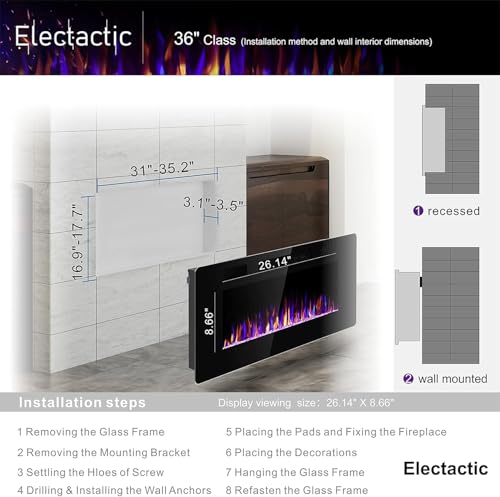
Measure the actual opening—not just the old fireplace label—including front width, rear width, height, depth, hearth lip, surround obstructions, outlet location, and clearance around heater vents. Decide before buying whether this is a plug-in firebox, log set for an open hearth, wall-mounted unit, or fully recessed build; recessed installs may need framing, a properly located outlet, two-person handling, and access for future removal. Owners often find installation straightforward when the opening is right, with many describing simple plug-in setups, manageable wall mounting or recessing, and secure results once the unit is fitted into a mantel, hearth, or built-in surround.
1,000,000+ shoppers use Buyer's Guide every week to find the best products and services online.

Helping millions of users make smarter purchases online.


