










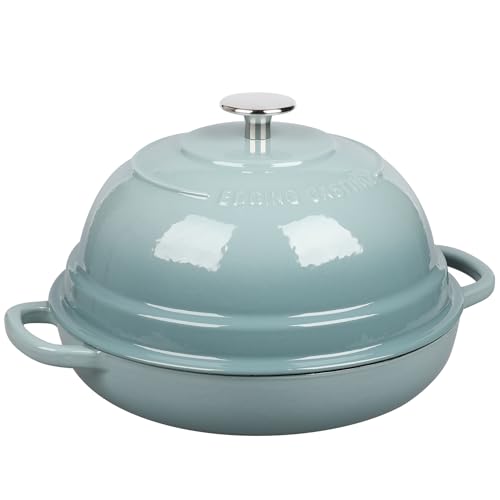
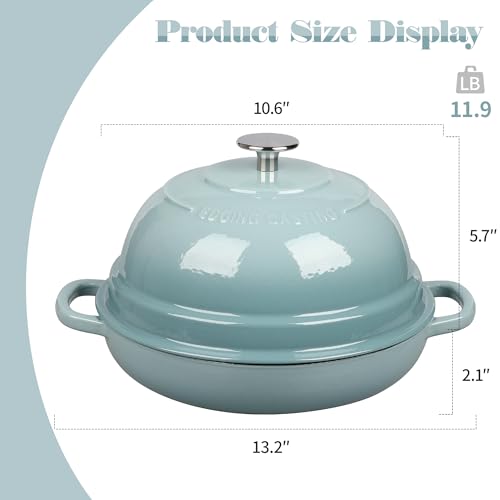
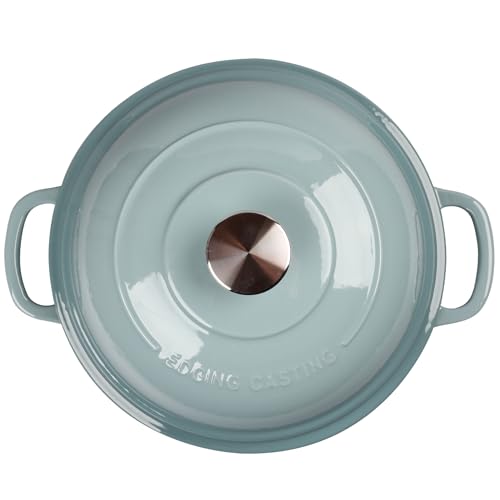
We also considered 1 other:
Our Top Choice
The order above is not editorial opinion, and it is not paid placement. It comes from what shoppers across our network actually do - which dutch ovens for bread they compare, and which they ultimately buy. We re-rank as new data comes in, so the long-term favorites have to keep earning their spot against new entrants. The full method, including how we make money.
Dutch Ovens for Bread Buyer's Guide
A Dutch oven for bread has to balance brutal heat retention with safe, precise dough handling. The best picks create a tight, steamy chamber for oven spring and crust while still making it easy to load, score, and remove a fragile loaf without fighting a deep, heavy pot.
Crust & Rise
Bread-focused Dutch ovens work because they combine stored heat with a small, steamy baking chamber. That combination affects oven spring, crust blistering, browning, and whether the loaf bakes evenly instead of drying out early.
For bread, prioritize a thick cast-iron or similarly heat-retentive vessel with a well-fitting lid: the base supplies the heat shock for oven spring, while the covered chamber traps steam long enough to expand the loaf before the crust sets. Avoid thin, loose-lidded, or poorly sealing pots if your goal is sourdough with a lifted ear and crisp crust; they can bake bread, but they do not create the same enclosed steam environment. Owner feedback strongly supports this focus: buyers repeatedly praise bread and sourdough results, including good rise, trapped steam, even golden baking, crisp crusts, and better results than baking on a flat sheet.
Loaf Fit
A bread Dutch oven is not just a pot; its geometry determines how safely and cleanly dough enters the hot surface. The wrong depth or shape can make loading awkward, distort the loaf, or limit the styles of bread you can bake.
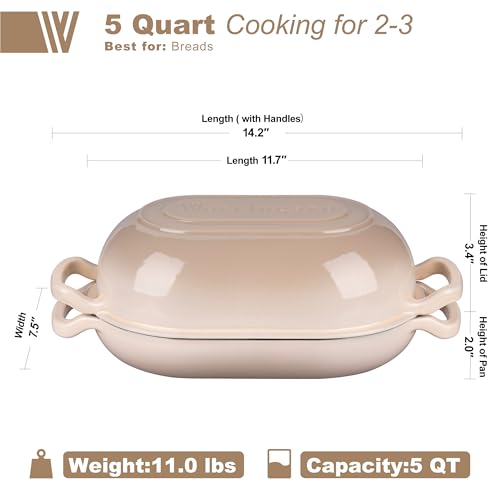
Match the oven shape to the bread you actually bake: round pots suit boules, while oblong or oval bread ovens make more sense for batards and longer artisan loaves. Look for enough interior clearance for expansion but not so much empty space that steam disperses; around a mid-size bread-friendly capacity is commonly favored for home loaves. Low-sided bases, invertible lids, or skillet-style bottoms are especially useful because they let you lower, score, and remove sticky dough without reaching deep into a screaming-hot pot. Owners specifically praise 5-quart sizing, invertible lid setups, and oblong low-sided designs for making sourdough and larger batard-style loaves easier to load and bake.
Build & Finish
Bread baking asks more from a Dutch oven than gentle stovetop cooking because the vessel is often preheated very hot and handled while fully loaded. Strong materials and reliable finishes help preserve heat performance, safety, and long-term usability.
Choose construction that can tolerate repeated high-heat preheating, thermal cycling, and lid handling. Bare cast iron should arrive evenly seasoned or be easy to maintain; enameled versions should have smooth, even coating and robust handles because chips near rims or handles can worsen with use. Heavy-duty build is a real advantage for bread, but inspect new cookware immediately for enamel flaws, handle damage, or casting defects before committing it to regular baking. Owner sentiment is very positive on sturdy, high-quality, heavy-duty construction, but durability is also the main caveat, with some reports of early enamel or handle chipping.
Hot Handling
The riskiest moments in bread baking are loading dough into a preheated vessel and removing the finished loaf. Handling design matters because a great baking chamber is not very useful if it is awkward or unsafe to move at baking temperatures.
Assume the oven will be heavy before it is hot, and much harder to manage when preheated and holding dough. Favor wide handles, a stable base, and accessories that make bread transfer safer, such as a silicone lifter, bread sling, or properly rated gloves; also verify that promised accessories are actually included when the box arrives. If hand strength, wrist mobility, or storage height is a concern, a low-base bread oven may be safer than a deep pot because it reduces the reach into hot cast iron. Owners describe weight as a clear tradeoff: the heft helps heat retention and durability, but it can be cumbersome to handle; they also note the usefulness of gloves and lifters, while some sets reportedly arrive missing a referenced bread sling.
Versatile Value
Many bread bakers have limited cabinet space, so a Dutch oven that also handles everyday cooking can be easier to justify. Versatility is most valuable when it does not compromise the bread-baking shape, sealing, or heat performance.
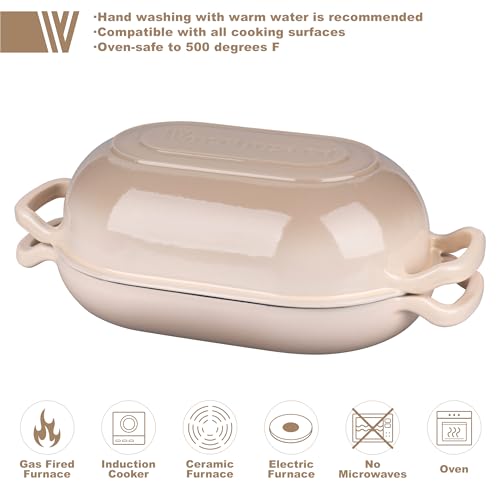
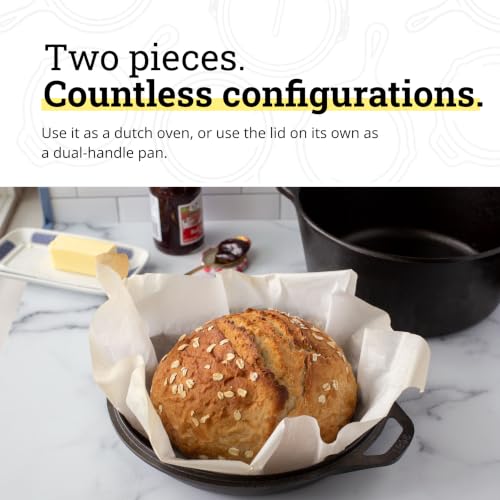
Decide whether you want a dedicated bread cloche or a Dutch oven that earns space between bakes. Two-piece designs with a skillet-style lid can sear, fry, bake cornbread, cover the pot, or even let both pieces cook at once, while included bread tools can reduce the need for separate purchases. For value, look beyond the pan alone: a bread-focused bundle is only useful if the accessories fit your process and are complete. Owners frequently call pot-and-skillet designs versatile for soups, stews, roasts, chili, cornbread, bacon, eggs, and bread, and many see strong value when useful extras such as bannetons, gloves, silicone lifters, or skillet lids are included.
Care & Looks
Bread baking leaves different residue than soups or stews, including dry flour, browned starch, and occasional scorched parchment. A surface that matches your cleaning habits helps keep the oven pleasant to use without sacrificing baking performance.
Pick the surface you are willing to care for: seasoned cast iron can improve with use but needs drying and light oiling, while enamel can wipe clean more easily but must be protected from chips and harsh impacts. Bread bakers should also think about flour residue, baked-on starch, and parchment scorch marks, which are easier to manage on smooth, well-finished interiors. If the oven will live on the counter, exterior appearance and color may matter, but they should not outrank safe handles, fit, and heat performance. Owners praise attractive enameled finishes and colors that look good in the kitchen and wipe clean easily, and some also value seasoned cast iron that improves over time.
1,000,000+ shoppers use Buyer's Guide every week to find the best products and services online.

Helping millions of users make smarter purchases online.


