













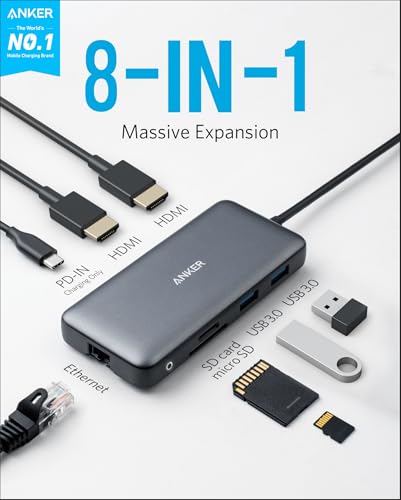
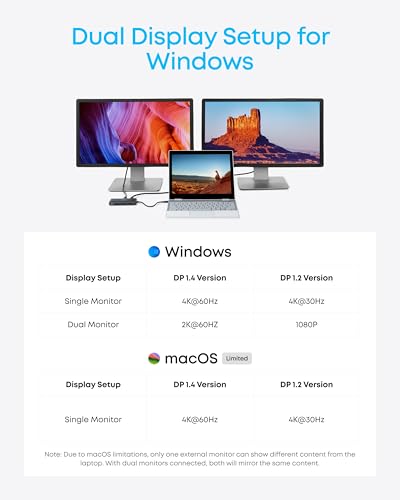


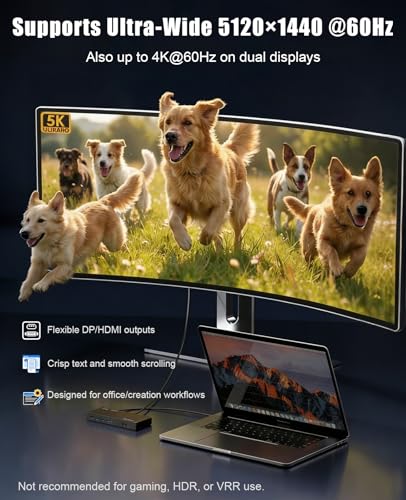


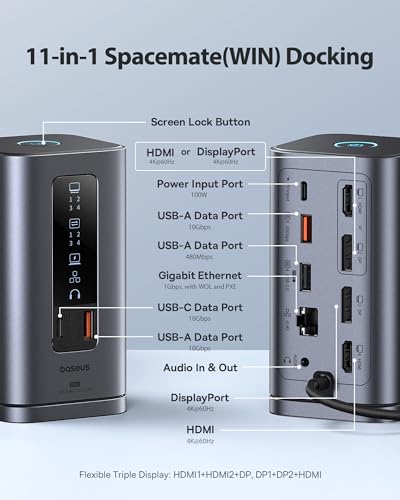


We also considered 10 others:


Our Top Choice
Compare Features


The order above is not editorial opinion, and it is not paid placement. It comes from what shoppers across our network actually do - which dual monitor docking stations for laptops they compare, and which they ultimately buy. We re-rank as new data comes in, so the long-term favorites have to keep earning their spot against new entrants. The full method, including how we make money.
Dual Monitor Docking Stations for Laptops Buyer's Guide
Dual-monitor laptop docks live or die by compatibility: the same-looking USB-C port can mean native video, Thunderbolt/USB4 bandwidth, or no display output at all. The sharpest concerns are whether the dock can run two extended monitors at your required resolution and refresh rate, and whether it will stay stable under daily heat, power, and sleep/wake cycles.
Connectivity
Connectivity determines whether your docking station can reliably link your laptop to the monitors, storage, network, and peripherals you use every day. Look for the right mix of ports and standards for your setup—such as Thunderbolt or USB-C support, enough display outputs, Ethernet, and USB ports—and watch for limits like shared bandwidth, adapter requirements, or laptop compatibility that can reduce performance.
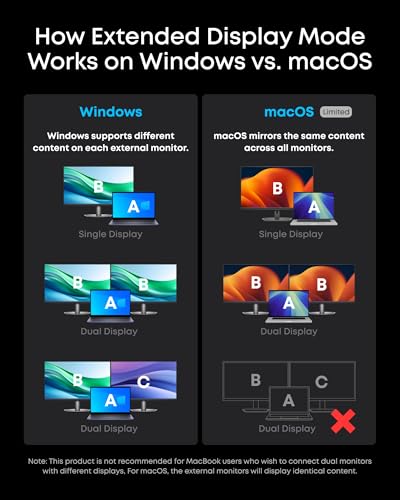
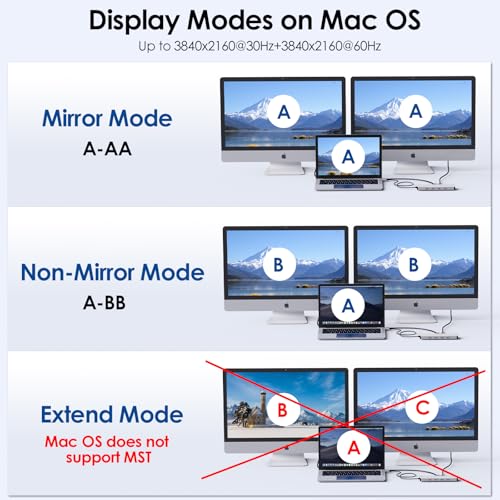
For connectivity, start by matching the dock’s upstream connection to your laptop: USB-C must support DisplayPort Alt Mode for native video, Thunderbolt/USB4 gives more bandwidth, and DisplayLink-based docks need drivers but can bypass some laptop display-output limits. Also check whether the dock supports true extended dual displays on your operating system, because some laptops and macOS setups may mirror displays or require DisplayLink rather than simple USB-C MST. Owner feedback supports this priority: shoppers often report fast plug-and-play setup, smooth recognition of monitors and accessories, and successful use with dual or even triple displays, Ethernet, USB peripherals, phones, printers, keyboards, and mice from a single dock.
Build
A docking station should feel solid because it often supports multiple cables, power delivery, and daily plugging and unplugging. Look for sturdy construction, secure ports that don’t wiggle, good heat management, and a casing that resists flexing or sliding around your desk. Be cautious of docks that feel lightweight, arrive in poor condition, or show loose connections, as those can signal weaker durability over time.
For build, look for a dock designed as a stationary desk hub if it will run two displays all day: a stable chassis, good ventilation, a secure upstream cable connection, and enough weight or grip to avoid being pulled around by monitor and Ethernet cables. Avoid ultra-tiny hubs if your setup includes high-resolution displays, multiple USB devices, and laptop charging, since cramped designs can run hotter and put more strain on connectors. Owner sentiment is generally encouraging here, with buyers describing many docks as compact, sturdy, well made, easy to set up, and practical either as a full desk upgrade or a travel-friendly hub.
Displays
Your docking station’s display support determines how many monitors you can run, at what resolution and refresh rate, and whether the setup feels smooth or frustrating day to day. Check that it supports your exact dual-monitor or multi-monitor needs over the ports your displays use, and watch for limits that reduce resolution, refresh rate, or extended-display capability. Also look for reports of stable video quality, since flickering, blank screens, or wake-from-sleep issues can make an otherwise capable dock hard to live with.
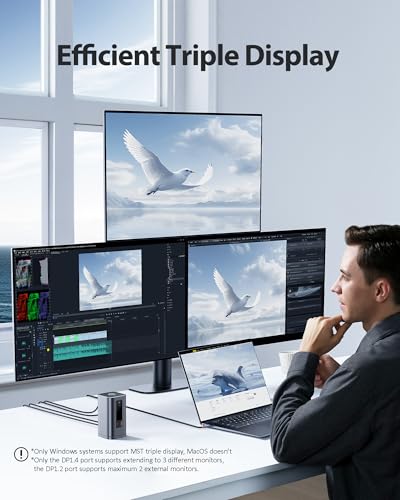
For displays, verify the exact dual-monitor specification before buying: resolution, refresh rate, connector type, and whether both screens can run extended mode at the same time. A dock that says “dual 4K” may only do 4K at 30 Hz, may require one HDMI and one DisplayPort cable, or may reduce performance when both outputs are active; if you use high-refresh monitors, ultrawides, HDR, or color-critical screens, confirm those modes explicitly. Owner reports back up the value of getting this right: dual-monitor support is one of the strongest use cases, with many buyers successfully creating two- and three-screen workstations, though some note that the dock’s port mix may require extra or different monitor cables.
Usability
A docking station should make your workspace simpler, not add friction every time you sit down. Look for straightforward setup, reliable plug-and-play behavior, clear port placement, and enough flexibility to connect your usual monitor, power, storage, and accessories without constant cable swapping. Watch out for docks that require fussy drivers, unclear compatibility, or awkward layouts that make daily use less convenient.
For usability, decide whether you want driver-free simplicity or the broader compatibility of a DisplayLink dock, then confirm what setup steps are required on your OS before it arrives. If you hot-desk, travel, or reconnect daily, prioritize one-cable operation with laptop charging, monitor output, Ethernet, and USB peripherals all restored reliably after sleep or reboot. Owner feedback aligns with this: users frequently praise quick setup, plug-and-play behavior, and the convenience of avoiding repeated cable swapping, while DisplayLink models are often straightforward once the needed drivers are installed.
Reliability
You want a docking station that stays connected through long work sessions without dropping monitors, disconnecting peripherals, or needing frequent resets. Look for signs of stable operation under full load, effective heat management, and low noise if it uses active cooling; watch out for reports of intermittent failures, overheating, buzzing, or ports that become unreliable over time.
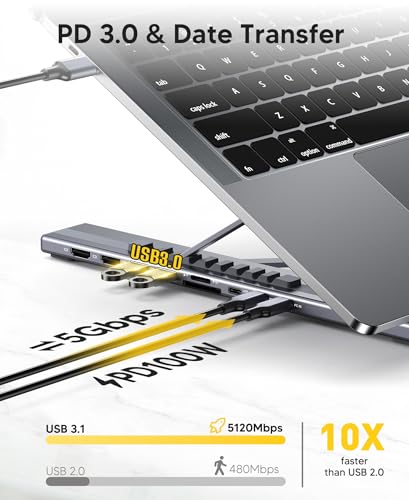
For reliability, treat heat, sleep/wake behavior, cable quality, and power delivery as core buying concerns rather than afterthoughts. A dual-monitor dock should stay stable under sustained load, reconnect cleanly after the laptop sleeps, avoid random display dropouts, and provide enough charging wattage for your laptop without running near its limit; fanless or compact docks should still have credible thermal design. Owner sentiment is mixed enough to warrant caution: many buyers say their docks work dependably with monitors, storage, and every port in use, but others report long-term failures, connection drops, overheating stress, short service life, or distracting audio hiss and mechanical noise.
Ports
Ports determine how many devices you can connect at once and whether the dock actually matches your workflow, from monitors and storage drives to keyboards, card readers, and Ethernet. Look for the right mix of port types and enough capacity for your current setup plus a little room to grow, and pay attention to placement so frequently used USB ports are easy to reach. Watch out for docks with many ports that duplicate types you do not need while leaving out essentials like display outputs, fast USB connections, or network access.
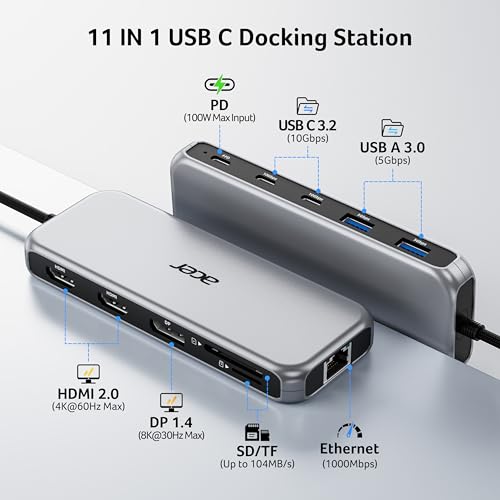
For ports, map every device you plan to leave connected: two monitor outputs of the right type, enough USB-A/USB-C ports for keyboard, mouse, webcam, drives, headset, and phone, plus Ethernet, audio, SD card slots, and laptop charging if needed. Also check port speeds and power limits, not just the count—external SSDs need fast USB, webcams can be bandwidth-sensitive, and bus-powered drives may disconnect if the dock cannot supply enough power. Owner feedback strongly supports prioritizing the port map: buyers praise docks that combine HDMI, DisplayPort, USB-C, USB-A, Ethernet, audio, card readers, and powered connections, especially when they can run monitors and everyday peripherals from one compact hub.
1,000,000+ shoppers use Buyer's Guide every week to find the best products and services online.

Helping millions of users make smarter purchases online.


