


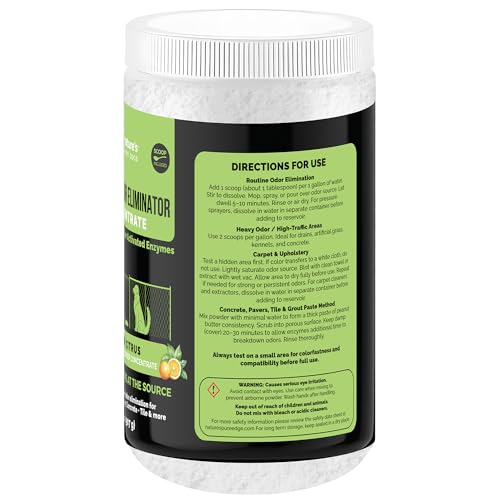




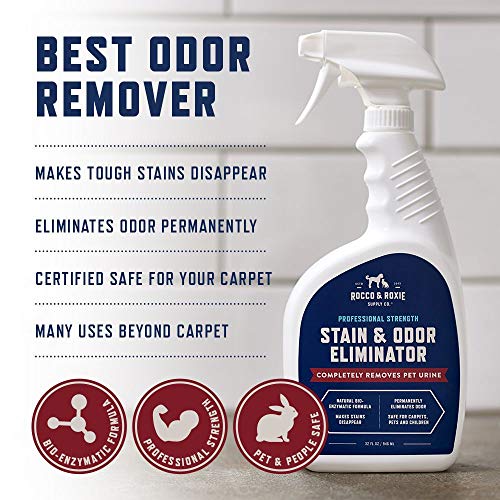


We also considered 10 others:


Our Top Choice
Compare Features


The order above is not editorial opinion, and it is not paid placement. It comes from what shoppers across our network actually do - which dog urine eliminators they compare, and which they ultimately buy. We re-rank as new data comes in, so the long-term favorites have to keep earning their spot against new entrants. The full method, including how we make money.
Dog Urine Eliminators Buyer's Guide
Dog urine eliminators have to balance true urine breakdown with surface safety: the product must reach the same carpet pad, grout line, bedding fiber, or washable pee pad that the urine reached, without leaving residues that attract repeat marking. The sharpest concerns are whether the formula is actually built for urine chemistry, whether it can be saturated and left to dwell long enough, and whether scent is being used as a finish—not as a substitute for odor removal.
Effectiveness
You want a urine remover that actually breaks down and lifts the mess, not just masks the smell or leaves residue behind. Look for strong cleaning performance on the surfaces you need to treat, especially fabrics, carpets, grout, or hard floors, and watch for formulas that struggle with older stains or require repeated applications to get the area truly clean.
For effectiveness, choose by accident type and surface: an enzyme/bacteria-based urine cleaner is usually the safer first pick for dog urine in carpet, upholstery, bedding, reusable pads, and porous areas because it can break down organic residue rather than just deodorize the top layer. For deep carpet accidents, the cleaner must be applied heavily enough to reach the pad; a light mist can leave the real odor source untouched. For washable items, look for a laundry-compatible pet-odor formula that works in HE machines and on bedding, pads, towels, and blankets. Owner feedback supports this distinction: shoppers often report strong results on dog and cat urine that other cleaners or home remedies failed to fix, fresh or moderate odors improving after one use, tougher spots improving with repeat applications, and pet laundry coming out cleaner with urine odor and residue removed.
Scent
A urine remover’s scent matters because it can either leave the area feeling genuinely fresh or simply mask the odor with a strong fragrance. Look for a scent you can tolerate in the spaces you use most, and watch out for formulas that linger too long or become overpowering, especially on fabrics, carpets, or in small rooms. Good dissipation is key: the cleaner should help the urine smell disappear without replacing it with a perfume that hangs around.
For scent, treat fragrance as a comfort feature, not the cleaning mechanism: avoid heavy perfume that temporarily overwhelms urine while leaving the marking residue behind, and be cautious with strong essential-oil-style citrus around pets until the area is dry and ventilated. A good dog urine eliminator should smell neutral or fresh after drying, not like a chemical cover-up, and the fragrance should not be so intense that it discourages use on bedding, crates, or small rooms. Owner sentiment lines up with this: buyers tend to praise products that leave a fresh citrus or clean scent while still eliminating urine odor rather than masking it, and many prefer scents that dry down less perfumey and less chemical-smelling.
Value
You want a urine remover that fits your budget but also gives you enough product to treat repeated accidents, not just one or two spots. Compare bottle size, dilution or coverage claims, and how much you typically need per stain, because a cheaper option may run out faster if it requires heavy soaking or multiple applications. Also watch for value packs or concentrates that offer better longevity, as long as they still match the surfaces and odor problems you need to handle.
For value, calculate by usable treatment volume, not bottle size alone: dog urine often requires saturation, repeat applications, or laundry loads, so a concentrate, powder, or laundry formula may be a better value for puppies, senior dogs, marking, or reusable pads than a small ready-to-spray bottle. Also factor in failure costs—if a cleaner only works on fresh surface messes but not pad-level odor, you may spend more repeating treatments or replacing rugs. Owner reports support this practical view: concentrated and powder formats are often seen as strong values because a small amount can be mixed into mop water, spray bottles, laundry, or carpet-cleaning routines, while value feels more mixed when deep-set odors need multiple rounds or packaging makes application frustrating.
Stains
Urine removers need to do more than neutralize odor—they should also lift visible staining and leave the surface looking clean. Look for options suited to the material you’re treating, and watch for formulas that can leave sticky residue, discoloration, or a dull finish, especially on carpets, upholstery, wood, or stone.
For stains, match the cleaner to both the urine stain and the material: test colorfastness on carpet, upholstery, rugs, and bedding, and remember that old yellowing, dye loss, or wood/tile grout discoloration may not fully reverse even if the odor is removed. Enzyme cleaners are useful for organic urine residue, but visible staining may also require proper dwell time, blotting, and repeat treatment; avoid harsh mixtures such as bleach or ammonia-based cleaners, especially on pet accidents, because they can be unsafe and may encourage remarking. Owner feedback is encouraging when areas are properly treated: shoppers often report stains lifting from carpets, bedding, upholstery, floors, rugs, reusable pads, and other accident areas, including both newer messes and some older pet stains.
Application
How a urine remover applies affects both cleanup speed and whether the solution reaches the source of the odor. Look for a sprayer that delivers even coverage without clogging, excessive foaming, leaking, or soaking more area than needed, and consider whether the formula requires mixing or has a long drying time. If the bottle feels flimsy or the spray pattern is inconsistent, you may waste product or miss deeper spots in carpet, upholstery, or grout.
For application, look for a routine that lets you soak, wait, and blot—not just spray and immediately wipe—because dog urine spreads below the visible spot and needs dwell time where the urine actually traveled. Check whether the product can be used on your real cleanup targets: carpet, mattress, crate bedding, washable pads, laundry, upholstery, hard floors, grout, or sealed wood; also confirm whether rinsing is required and keep pets off the treated area until dry. A durable sprayer or refillable application method matters because urine cleanup often needs repeated, targeted use. Owner sentiment supports straightforward routines: buyers like cleaners that fit everyday puppy or older-dog accidents, work with spray-soak-clean steps, handle smell and stain together, and require little scrubbing, though some complain that weak sprayers or bottles can fail and require transferring the liquid.
Odor
Strong odor removal matters because urine smells can linger even after a surface looks clean, and pets may return to the same spot if the odor is not fully neutralized. Look for a remover that targets urine and pet odor at the source rather than just masking the smell with fragrance, and be cautious with heavily perfumed formulas that can leave behind a new odor without solving the problem.
For odor control, prioritize source removal over room freshening: if the smell returns after drying, urine likely remains in carpet pad, seams, grout, subfloor, laundry fibers, or soft bedding, so the area needs deeper saturation, longer dwell time, or repeat treatment. For repeat accidents, also choose a cleaner that removes the scent marker well enough that the dog is less tempted to revisit the spot; room deodorizers alone are not enough for behavioral remarking. Owner reports back this up: buyers frequently say pet urine smells disappear when the cleaner is applied thoroughly and allowed enough time to work, deep-set odors improve with saturation and drying time, pet laundry loses tough urine smell, and pets are less likely to return to treated spots when the odor is truly removed.
1,000,000+ shoppers use Buyer's Guide every week to find the best products and services online.

Helping millions of users make smarter purchases online.


