


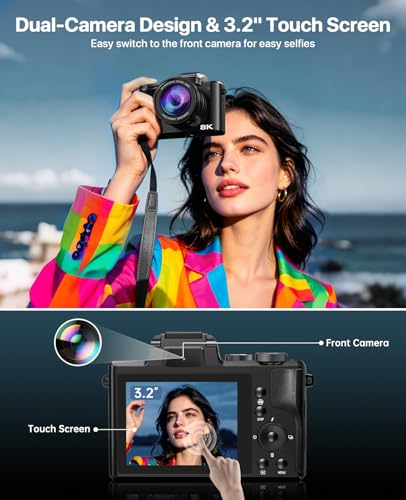




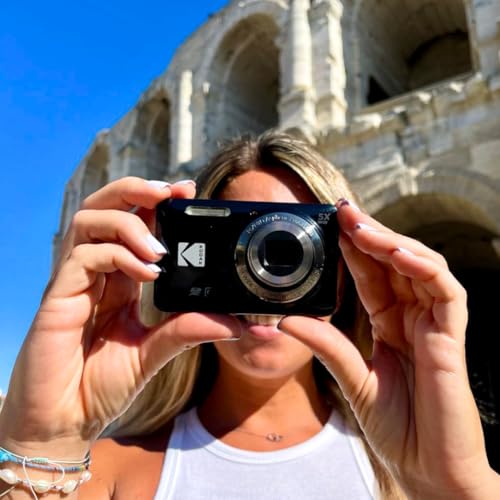


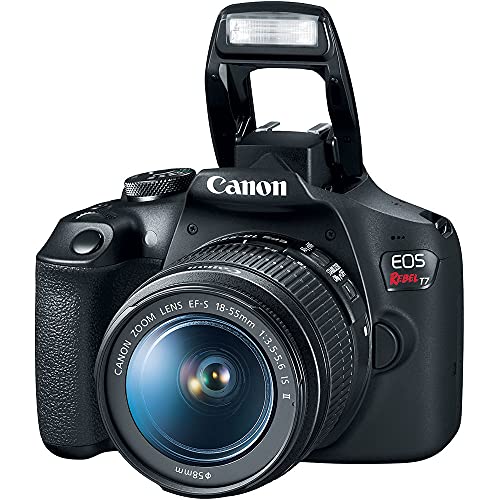
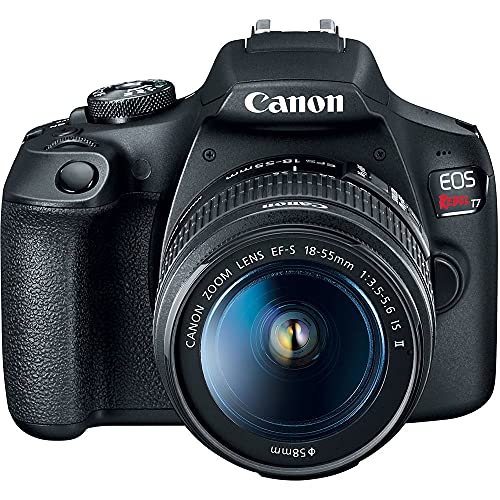
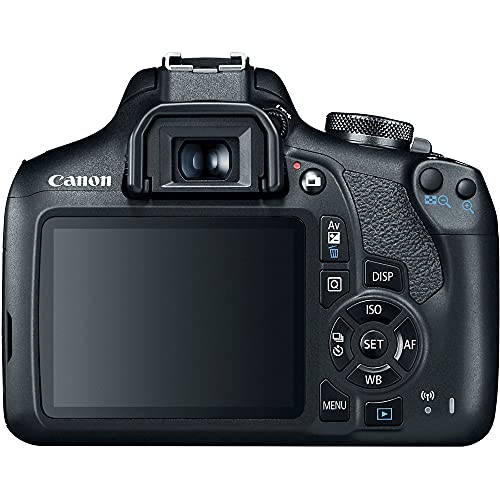

We also considered 10 others:




Our Top Choice
Compare Features


The order above is not editorial opinion, and it is not paid placement. It comes from what shoppers across our network actually do - which digital cameras they compare, and which they ultimately buy. We re-rank as new data comes in, so the long-term favorites have to keep earning their spot against new entrants. The full method, including how we make money.
Digital Cameras Buyer's Guide
Digital cameras sit between phone-level convenience and system-camera control, so the right choice depends on what you need a separate camera to do better: low-light photos, optical zoom, fast subjects, kid-safe simplicity, or cleaner video. The sharpest checks are sensor-and-lens capability, autofocus dependability, battery/storage readiness, and whether the included kit actually supports your shooting style rather than just adding accessories.
Usability
You’ll get more out of a digital camera if it feels easy to pick up, set up, and adjust without constantly digging through confusing menus. Look for clear controls, helpful automatic modes, and simple playback or sharing steps, especially if the camera is for a beginner or kid. Watch out for models with tiny buttons, cluttered interfaces, or too many advanced settings if you want photography to feel fun rather than frustrating.
For usability, choose the camera around the person who will actually carry and operate it: a child or casual vacation shooter needs a durable, simple point-and-shoot with obvious status lights, while a learner who wants to grow should get clearly labeled physical controls, guided modes, and quick access to exposure settings rather than a touchscreen-only menu maze. Check weight, grip size, viewfinder/screen visibility in sunlight, selfie or flip-screen needs, and whether memory-card, battery, and print/status indicators are understandable without the manual. Owner feedback supports this: buyers repeatedly describe beginner models as approachable, lightweight, easy to set up, simple to shoot with, and in some cases easy enough for children to use independently.
Quality
A digital camera’s quality and reliability matter because you’re trusting it to perform consistently when a shot can’t be repeated. Look for solid build, dependable autofocus and exposure, durable controls, good battery and card performance, and a reputation for stable operation over long-term use. Watch out for cameras that feel flimsy, overheat easily, freeze or lag, or have user reports of recurring mechanical or software issues.
For quality, look past headline megapixels and judge the whole camera system: sensor size, lens sharpness, autofocus reliability, build feel, card/battery doors, weather or splash protection if needed, and whether the camera still has a current lens/accessory path. A compact casual camera can be perfectly good for family events, but sports, product photos, portraits, and low-light indoor shooting benefit from stronger optics, a larger sensor, and more dependable autofocus. Owner sentiment reinforces that better beginner and mirrorless-style kits are often praised for crisp, bright, vibrant results, compact yet solid builds, and performance that feels more capable than an entry-level purchase.
Image
Image quality determines how sharp, detailed, and natural your photos look, especially when you crop, print, or shoot in challenging light. Look for a camera that delivers accurate color, clean detail, and consistent results across different scenes, not just impressive-looking sample shots in ideal conditions. Also watch for overprocessed images that appear too smooth, too contrasty, or unnaturally saturated.
For image results, match the camera to your hardest shooting condition, not the easiest one: good daylight photos are common, but indoor events, fast kids or pets, night travel, shallow-depth portraits, and handheld video expose weak sensors, slow lenses, poor stabilization, and noisy processing. Check sample images at full size, real optical zoom versus digital zoom, RAW support if you plan to edit, 4K quality without heavy cropping, and whether skin tones and colors look natural rather than over-sharpened. Owners most often praise models that produce crisp, colorful, sharp images and solid video with little technical knowledge, especially in good lighting and casual-memory use.
Value
Value for money matters because a digital camera should justify its cost with the features, image quality, handling, and reliability you’ll actually use. Look beyond the body price and consider what’s included or required, such as lenses, batteries, storage, and accessories, while watching out for cameras that add flashy specs but compromise on core performance or usability.
For value, calculate the usable kit, not just the camera body: the real cost includes compatible lenses, memory cards fast enough for video, spare batteries, charger, bag, microphone or tripod if filming, and future lenses in the same mount. Two-lens kits can be worthwhile if the focal lengths cover everyday wide shots and distant subjects, but avoid bundles padded with low-quality accessories that do not match your shooting needs. Owner feedback backs this up, with shoppers seeing strong value in starter kits that include practical lenses, batteries, cards, and essentials, especially when the setup gives beginners room to grow without immediately buying add-ons.
Features
Features matter because they determine how well a digital camera fits the way you actually shoot, from built-in modes and connectivity to accessory support, lens options, and rugged or waterproof construction. Look for useful functions you’ll rely on often, not just long spec lists, and make sure the camera’s controls, size, styling, and expandability suit your skill level and typical subjects.
For features, prioritize the few that solve real digital-camera failure modes: fast subject-tracking autofocus for kids, pets, sports, and vlogging; a flip or articulating screen for self-recording; external microphone input for serious video; optical or sensor stabilization for handheld shooting; real waterproof housing for water use; and lens compatibility for the type of photography you want. Be wary of feature lists that emphasize inflated resolution or “4K” without clarifying autofocus, stabilization, recording limits, heat behavior, or audio options. Owner sentiment supports the practical features most: buyers value flexible two-lens kits, accurate autofocus and tracking, lightweight child-friendly designs, video bundles with microphones and batteries, waterproof-case use, and larger-sensor low-light performance.
Battery
Battery life matters because it determines how long you can shoot without stopping to recharge or swap batteries, especially during travel, events, or long days outdoors. Look for a camera that matches your shooting style, and remember that video recording, continuous autofocus, bright screens, wireless features, and cold weather can drain power faster than casual still photography. Also consider how it charges, including USB charging support and recharge speed, so you know whether you can top it up easily between sessions.
For battery, check real shooting endurance for your use case: stills last longer than 4K video, cold weather drains batteries faster, and travel or events often require at least one spare plus an external charger or reliable USB-C charging. Confirm whether the camera can charge while in use, whether spares are easy to find, and whether the battery door remains accessible on a tripod or rig; also watch for reports of units that stop holding a charge. Owner feedback is mostly favorable when kits include extra batteries and memory so the camera is ready for longer days, but there are also warnings about charging reliability and batteries failing after use.
1,000,000+ shoppers use Buyer's Guide every week to find the best products and services online.

Helping millions of users make smarter purchases online.


