

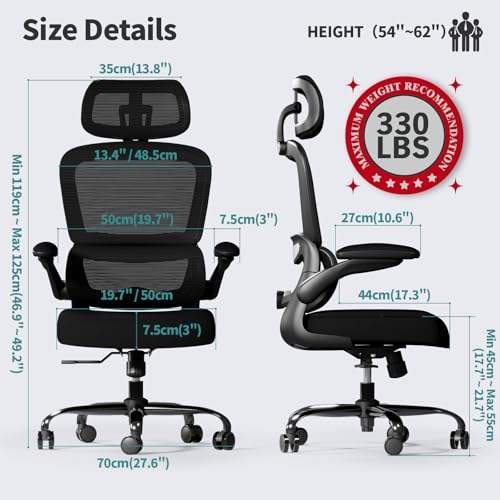
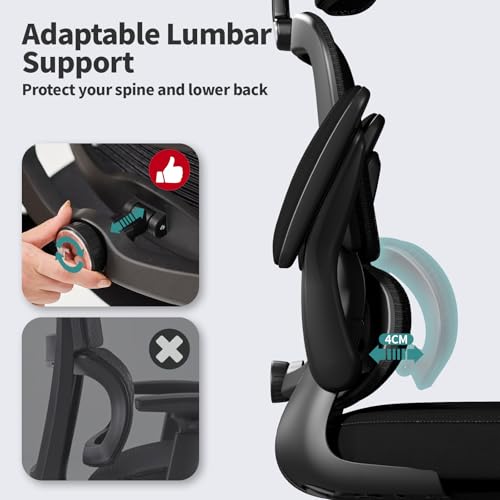




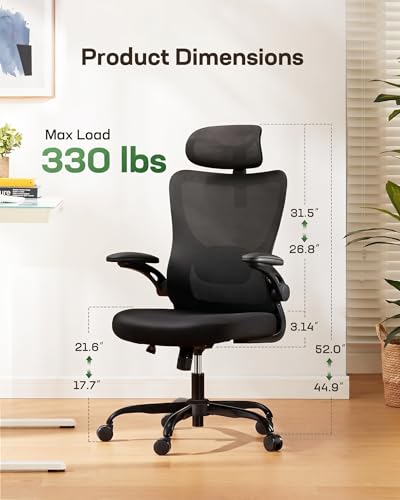
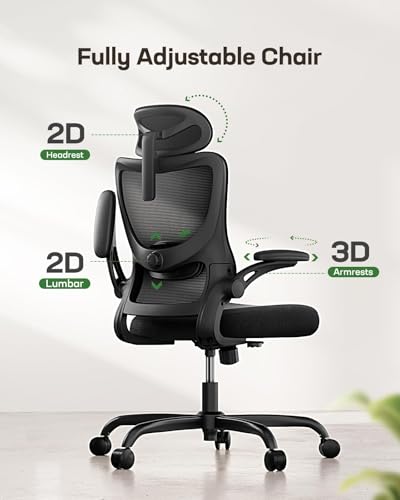











We also considered 10 others:


Our Top Choice
Compare Features


The order above is not editorial opinion, and it is not paid placement. It comes from what shoppers across our network actually do - which desk chairs for carpet they compare, and which they ultimately buy. We re-rank as new data comes in, so the long-term favorites have to keep earning their spot against new entrants. The full method, including how we make money.
Desk Chairs for Carpet Buyer's Guide
Desk chairs for carpet have to balance ergonomic comfort with the extra rolling resistance and instability that pile creates. The sharpest checks are the caster/base setup and whether the chair still supports good posture once carpet compression, mats, or upgraded wheels change the sitting height.
Support
Good support helps you sit with less strain through your back, neck, and hips, especially during long work sessions. Look for adjustable lumbar support, seat height, armrests, and recline tension that let the chair fit your body rather than forcing you into one posture. Be wary of chairs that feel comfortable at first but lack lower-back support or adjustability, since they may contribute to aches over time.
For carpet, support starts with a chair that stays level and easy to reposition: look for a stable five-point base, casters that do not sink into pile, and enough height range to compensate if you add a chair mat or taller replacement wheels. Avoid chairs whose lumbar feels good only when perfectly parked on a hard floor, because rolling resistance on carpet can make you twist, hunch, or reach instead of moving the chair naturally. Owner feedback supports prioritizing true ergonomic support: buyers often praise supportive cushioning, breathable backs, lumbar support, adjustable lumbar, recline, headrests, and arm adjustments for making long desk sessions easier on the back and hips.
Comfort
You’ll feel the difference in comfort most during long work sessions, when poor cushioning or the wrong seat firmness can lead to pressure points, fidgeting, or fatigue. Look for a chair with enough cushion to support you without feeling overly soft or bottoming out, and make sure the seat stays comfortable after more than a quick test sit.
On carpet, comfort depends on both the seat and how much effort it takes to move: choose a chair with smooth-rolling carpet-capable casters or plan for a mat, because a comfortable cushion will not help if every reach requires dragging the chair through pile. If you shift positions, sit cross-legged, or work in a small room, check seat width, seat depth, arm style, and whether the chair can move without catching on carpet edges or mat lips. Owners commonly highlight long-session comfort, cushioned seats, breathable mesh, supportive backs, wide armless designs for posture changes, and flexible sitting positions, which reinforces the value of matching the chair shape to how you actually sit.
Adjustability
You’ll get a better fit and more consistent support from an office chair that lets you fine-tune seat height, recline or tilt tension, arm position, and lumbar support to your body and desk setup. Look for adjustments that are easy to reach and meaningful in range, not just listed as features; limited or awkward controls can leave you stuck in a posture that causes discomfort over long work sessions.
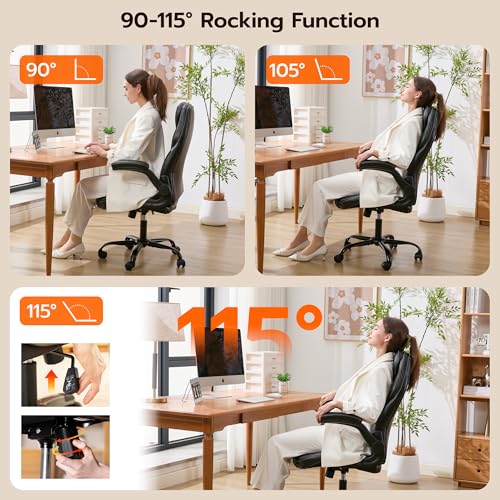
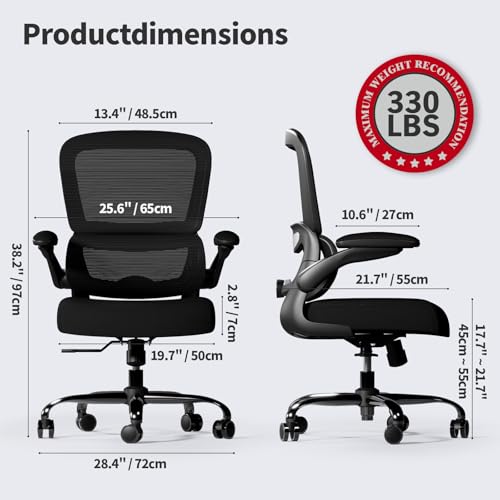
For carpet setups, adjustability should include not just lumbar and arms but floor-interface flexibility: verify seat-height range after accounting for carpet compression, chair-mat thickness, or upgraded casters, and check whether caster stems are replaceable if the stock wheels struggle. Flip-up arms can help the chair tuck under the desk when a mat limits parking space, while recline tension and lock matter because thick carpet can make a chair feel less predictable when leaning back. Owner sentiment backs the importance of adjustability, with repeated praise for adjustable lumbar support, height, headrests, armrests, flip-up arms, recline, and smoother wheel upgrades that improve mobility across different floors.
Quality
Quality matters because an office chair has to hold up to daily movement, weight shifts, and long hours of use without feeling loose, noisy, or flimsy. Look for sturdy materials, clean stitching or seams, stable armrests and controls, and a frame that feels solid under you; watch out for wobble, creaking, rough edges, uneven upholstery, or parts that feel cheap or poorly fitted.
Quality for a carpet chair is revealed at the base and rolling hardware: inspect caster material, wheel diameter, axle smoothness, gas-lift steadiness, and whether the base feels rigid under side loads, since carpet creates more drag than hard flooring. Avoid chairs with tiny hard plastic casters, vague weight ratings, or bases that flex when you pull yourself across the floor; those are common failure points when carpet resistance is high. Supporting owner feedback points to the same priorities indirectly: buyers value chairs that feel sturdy, well made, quiet, smooth rolling, and confidence-inspiring for daily long-hour use.
Assembly
A chair that’s easy to assemble lets you get set up quickly and reduces the chance of wobbles, misaligned parts, or missing hardware causing frustration later. Look for clear instructions, labeled parts, included tools, and straightforward steps, and be cautious of chairs that require two people, complex adjustments, or frequent re-tightening after setup.
During assembly, a carpet-focused shopper should check that the casters seat fully into the base, spin freely before loading the chair, and are installed without loose stems or wobble; a wheel that is slightly misfit will feel much worse on carpet than on hard flooring. Assemble on a firm surface or a flattened mat if possible, then re-tighten base, arm, and back bolts after a few days because carpet drag can introduce extra twisting forces. Owner feedback is encouraging here, with many buyers describing chair setup as quick, clear, straightforward, manageable for one person, and helped by included tools and well-fitting parts.
Build
You want an office chair that feels solid under you, especially when you lean back, shift positions, or roll across the floor. Look for a stable base, a frame that does not flex or creak, smooth-adjusting components, and materials that feel durable rather than flimsy. Poor sturdiness can make a chair feel distracting or unsafe long before it actually wears out.
Build matters especially on carpet because the chair is fighting friction every time it rolls: prefer a heavy, rigid base, reinforced wheel sockets, durable casters, a stable gas cylinder, and padding that does not bottom out when the chair is harder to reposition. Be cautious with compact seats if you need thigh support, and with thin mats or weak floor-contact parts that may shift, bunch, or make the chair feel unstable on thicker pile. Owners often report sturdy frames, solid bases, smooth rolling, stable reclining, and well-made movement, though some also note that fit, cushion longevity, and mat stability can vary by body size and setup.
1,000,000+ shoppers use Buyer's Guide every week to find the best products and services online.

Helping millions of users make smarter purchases online.


