













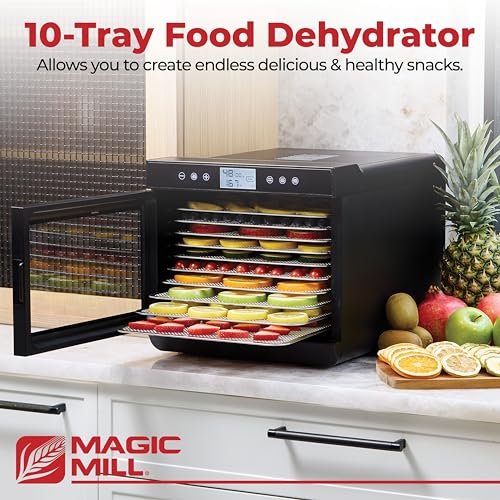

We also considered 10 others:


Our Top Choice
Compare Features


Why These Features Matter:
A dehydrator is one of those appliances that sounds wholesome and hobbit-adjacent (apple rings! mushroom jerky! “I made this!” energy) until you remember you live in an apartment with exactly one spare outlet and a partner who hates countertop clutter. The good news: the “best dehydrator” isn’t a single holy grail machine — it’s the one whose quirks match your kitchen, your patience level, and how often you’ll actually use it once the initial kale-chip optimism wears off.
After too many late-night rabbit holes through owner forums and review sections where people confess their fruit-leather failures like war stories, here’s what consistently separates the dehydrators people love from the ones they quietly exile to the closet behind the Instant Pot.
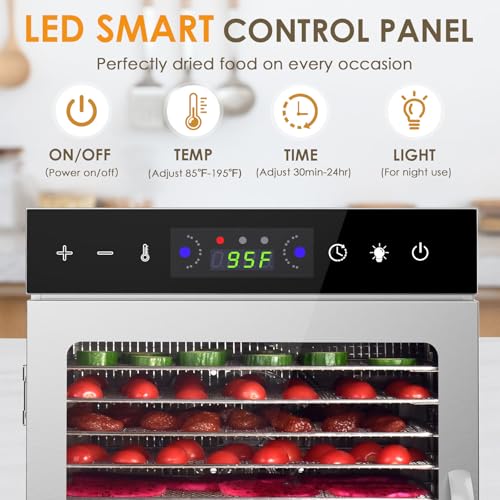
Temperature Control: The Difference Between “Dried” and “Sad”
The single biggest quality-of-life feature is how the machine manages heat. Dehydrating is basically slow, low-stakes evaporation — but small temperature swings matter more than you’d think. Too hot and you’ll get the dreaded “crispy outside, chewy center.” Too cool and you’ll be running it for 18 hours, then wondering if your strawberries are “done” or just “waiting to become science.”
- Look for: a truly adjustable temperature range (not just “low/medium/high”) and a thermostat that holds steady.
- In real life: precise control is what lets you do delicate herbs without turning them into dust, or jerky that feels like jerky — not a leather belt.
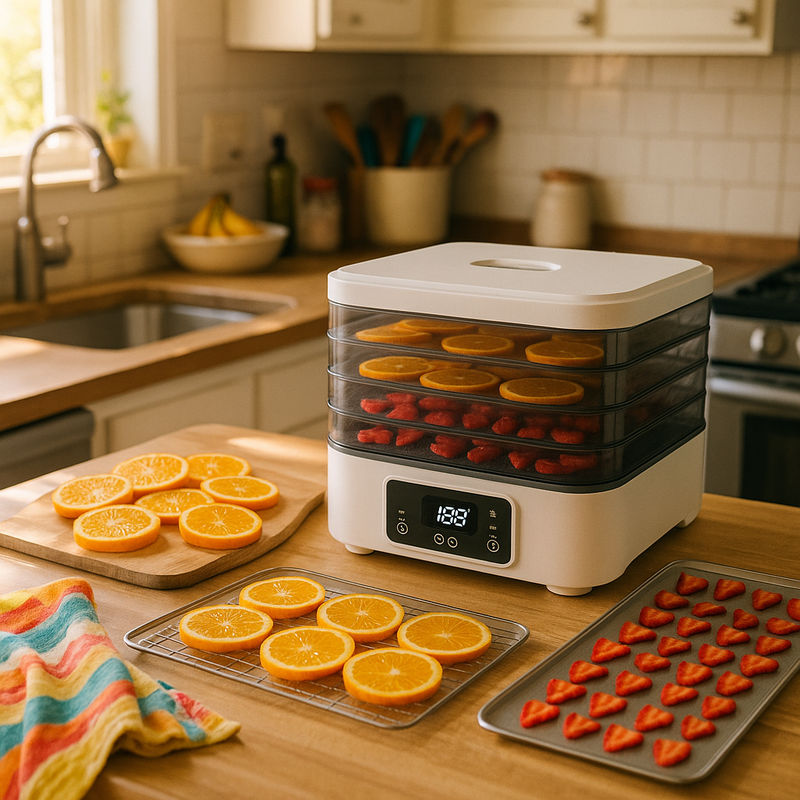
Airflow Design: Even Drying = Less Tray Babysitting
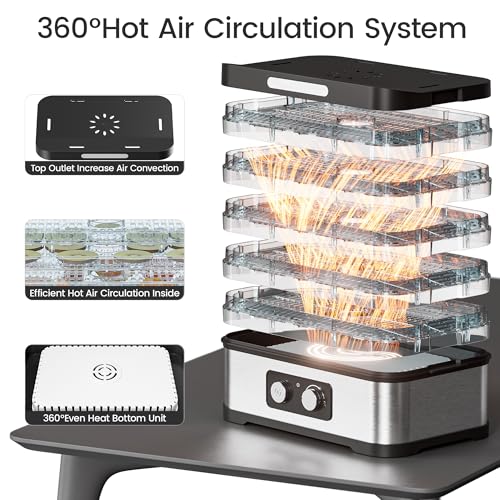
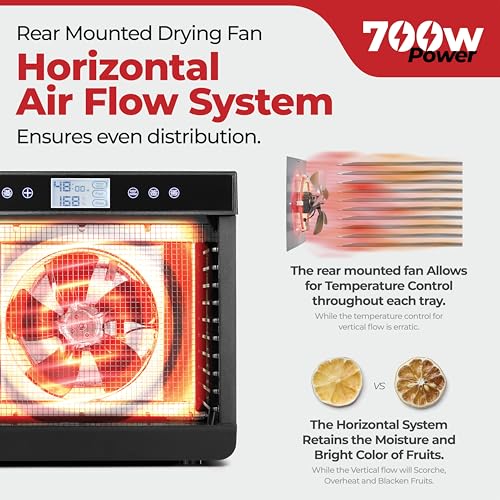
There are two basic airflow personalities: machines that dry evenly and machines that ask you to rotate trays like you’re proofing croissants. The better the airflow, the less you’ll have to shuffle trays mid-run — which sounds minor until you’re doing a six-hour batch and keep forgetting, then resentfully setting an alarm like it’s your second job.
- Look for: a design that moves air consistently across all trays. If reviews mention “no need to rotate,” pay attention.
- In real life: even drying is the difference between “I’ll do this every week” and “I’ll do this once a year when I’m feeling aspirational.”
Noise: The Overnight Factor
Dehydrators are basically polite space heaters with fans. Some hum softly and disappear into the background; others sound like a box fan with opinions. Since dehydration often happens overnight (or at least “while you’re trying to watch something without subtitles”), noise matters.
- Look for: reviews that describe it as a low hum rather than a whir/whine/rattle situation.
- In real life: if your kitchen is adjacent to your living room (hello, every modern apartment), a loud unit will slowly ruin your relationship with homemade banana chips.
Capacity vs. Counter Space: The Eternal Domestic Negotiation
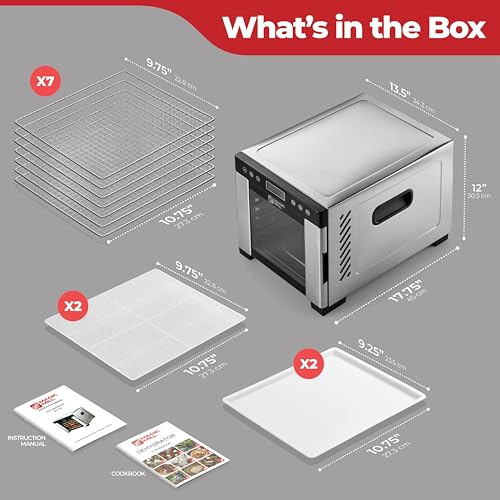
The dehydrator you think you want is the one that can dry an entire farmers’ market haul in one go. The dehydrator you’ll actually keep is the one you can store without playing Tetris with your baking sheets. Bigger isn’t automatically better — it’s just heavier, harder to stash, and more likely to become a permanent countertop resident.
- Look for: tray space that matches your habits: occasional snack batches vs. bulk garden produce.
- In real life: if you’re drying two trays of citrus for cocktails, you don’t need a towering unit that blocks the light switch.
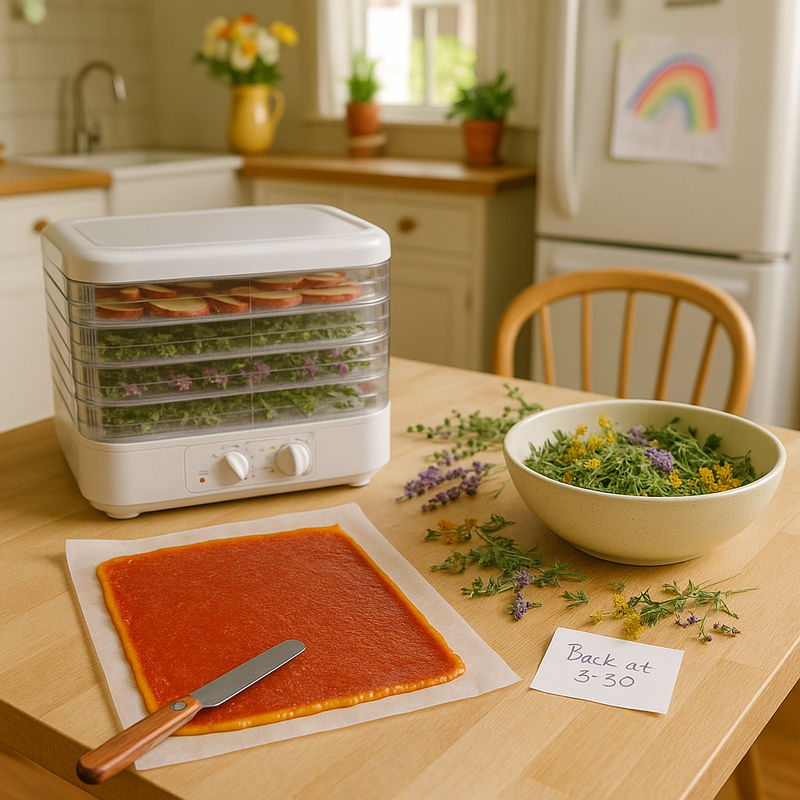
Tray Style & Cleaning: The Sticky Reality of Fruit Leather
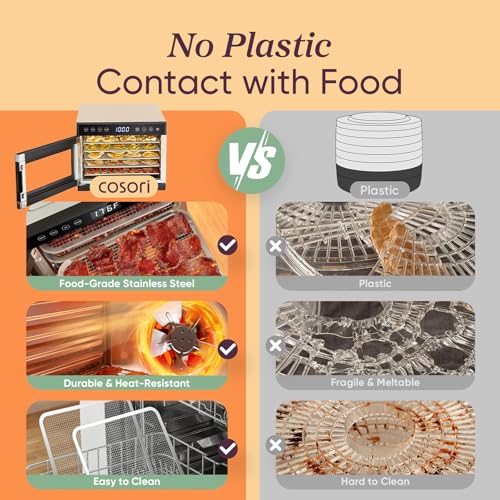
Every dehydrator looks easy to clean until you make something sugary. Then it’s you, a sink, and a tray that has basically become a fruit-glue crime scene. Trays that warp, trap gunk in corners, or can’t go in the dishwasher will test your character.
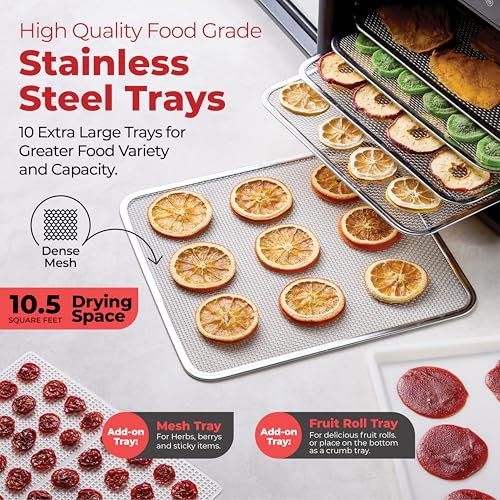
- Look for: sturdy trays that don’t flex like cheap takeout lids, plus truly washable inserts/liners for sticky projects.
- In real life: easy cleanup is what keeps the dehydrator from becoming a “special occasion appliance.”
Timers & Auto Shutoff: Because You Will Forget
Dehydrating asks for a long, low commitment. Timers aren’t glamorous, but they are deeply practical — especially if you’re the kind of person who has ever left tea steeping until it became an identity.
- Look for: a timer long enough for real projects and an auto shutoff that doesn’t require you to remember what time you started.
- In real life: this is the feature that lets you start a batch at 9 p.m. and still feel like a competent adult the next morning.
Build & Door Situation: The “Annoyance Quotient”
This is the stuff that determines whether you like using the machine. Does the door feel flimsy? Do the trays catch and spill your carefully arranged apple slices like a tiny disaster? Does it wobble when you open it? These are the micro-annoyances that make people give up.
- Look for: solid, stable construction; trays that slide smoothly; a door that doesn’t feel like it belongs on a dorm mini-fridge.
- In real life: you want something you can operate one-handed while holding a cutting board and not swearing.
What a Great Dehydrator Feels Like to Live With
The best ones have a quiet competence. You load them up, set the temp, and they just… do it. They don’t demand constant tray rotations or punish you with weird hot spots. They also don’t make your kitchen feel like a workshop unless that’s the vibe you’re going for.
- Notable strengths you’ll notice fast:
- Consistent results across trays (the “everything finishes at roughly the same time” miracle)
- A fan sound you stop hearing after ten minutes
- Trays that don’t warp or stick together after one sticky batch
- Controls that make sense without reading a novella of a manual
Things to Know Before You Commit (A Few Honest Caveats)
No dehydrator is flawless — and anyone claiming theirs is probably hasn’t tried to peel fruit leather off a tray at midnight.
- They take time. This is slow food in the most literal sense. If you’re impatient, start with herbs or citrus slices before you attempt jerky enlightenment.
- They smell like what you’re making. Drying garlic is a choice that will linger. Drying bananas is cozy; drying fish is… a statement.
- Storage is the real boss fight. Even compact models are awkwardly shaped. Measure the cabinet you think it’ll fit in. Then measure again with the cord and tray stack in mind.
- Some foods are messier than you expect. Tomatoes drip. Pineapple is sticky. Anything sweet becomes adhesive. Plan for liners or accept you’ll be soaking trays like sheet pans after lasagna.
How to Choose the Right One for Your Life
Here’s the shortcut I’d give a friend in a crowded kitchen, holding a phone in one hand and a bag of too-ripe peaches in the other:
- If you’re space-constrained: prioritize a smaller footprint, easy-to-store tray design, and a quieter fan (because it’ll be near where you live).
- If you’re a bulk-prepper/gardener: prioritize airflow consistency and capacity — you want to load it up and not babysit it.
- If you mostly want snacks: prioritize easy cleaning and usability. You’ll use it more if it doesn’t feel like a project.
- If you’re a “set it and forget it” person: prioritize a good timer, auto shutoff, and stable temperature control.
The Bottom Line
A dehydrator is worth it if you like projects that quietly run in the background of your life — the kind that make your kitchen smell faintly of apples and competence. The “best dehydrator” is the one that dries evenly, doesn’t scream acoustically, and doesn’t punish you with cleanup so annoying you never use it again. Choose for your actual kitchen (size, noise tolerance, storage) and your actual habits (snacks vs. bulk). That’s how you end up with something you’ll keep out — or at least happily pull out — instead of something you list online with the caption “used twice, like new.”
1,500+ shoppers have used Buyer's Guide in the last week to help find the best Dehydrators.

Helping millions of users make smarter purchases online.

