











We also considered 10 others:


Our Top Choice
Compare Features


The order above is not editorial opinion, and it is not paid placement. It comes from what shoppers across our network actually do - which cordless immersion blenders they compare, and which they ultimately buy. We re-rank as new data comes in, so the long-term favorites have to keep earning their spot against new entrants. The full method, including how we make money.
Cordless Immersion Blenders Buyer's Guide
Cordless immersion blenders trade outlet-free freedom for battery-dependent power, runtime, and weight in your hand. The sharpest things to check are whether it can hold torque through hot soups and thick purées without splashing, and whether the battery handle, safety lock, and attachments still feel easy during quick one-handed prep.
Size
Think about where the blender will live, how much you typically make, and whether you need to move it between rooms, work, or travel. A larger jar or cup size is useful for families and batch prep but can take up more counter or cabinet space, while compact and cordless options are easier to store and carry but may have smaller capacity and limited battery life.
Choose a cordless immersion blender that is compact enough to maneuver inside your actual pots, cups, and storage drawer, but not so short that your hand sits over hot soup. Check the wand length, head diameter, and whether the battery handle makes it top-heavy; a bulky battery pack can make one-handed blending awkward in tall jars or narrow saucepans. Owners especially value the cordless format because it removes the cord from the pot area, makes the blender easy to move around the kitchen, and can feel worth it when the battery life supports normal prep without constant recharging.
Build
A blender’s build quality affects how well it holds up to frequent use, tough ingredients, and everyday handling. Look for a sturdy base that stays stable, durable jar materials, tight-sealing lids, and controls that feel solid rather than flimsy; watch out for lightweight construction, loose fittings, or parts that seem hard to clean or replace.
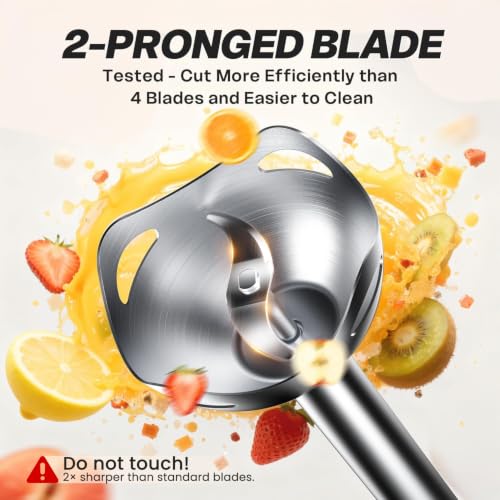
Prioritize a rigid stainless blending shaft, a solid blade guard, tight attachment couplings, and a handle that does not flex under torque; cordless models put extra stress on the motor housing because the battery and drive system are all in the hand unit. Avoid flimsy plastic wand connections, loose chopper lids, or guards with sharp edges that can scratch nonstick cookware. Owner feedback supports looking for a substantial build: buyers often praise well-made everyday units that feel powerful enough for soups, sauces, smoothies, dressings, chopped vegetables, nuts, and frequent small-batch prep without taking up much space.
Usability
A blender that’s easy to use is more likely to become part of your daily routine instead of sitting in a cabinet. Look for clear controls, intuitive speed or preset options, a jar that locks in securely, and parts that are easy to assemble, pour from, and clean. Watch out for crowded control panels, awkward lids, heavy pitchers, or designs that make simple tasks feel fussy.
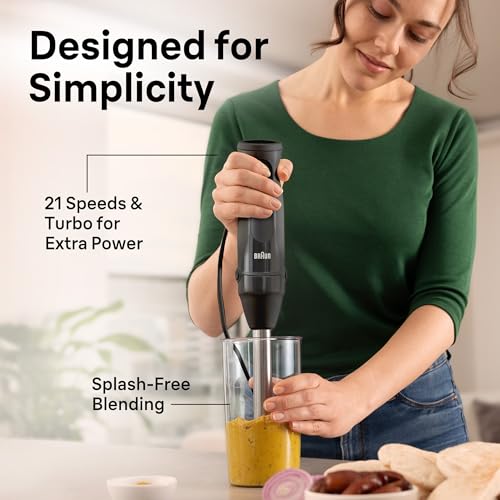
For daily use, look for one-hand controls that are easy to hold down, a safety lock that is not annoying, simple twist-on attachments, and parts that rinse clean without trapping food around the blade guard. Cordless convenience only helps if the blender is ready to grab, assemble, blend directly in the pot, and clean quickly; also check whether the shaft is detachable and whether attachments are dishwasher-safe if that matters to you. Owners consistently highlight this category’s handling advantages, saying lightweight stick designs reduce cleanup versus transferring food to a full blender and that easy-swap attachments make quick jobs like smoothies, whisking, frothing, chopping, and pot blending more convenient.
Performance
Performance matters because it determines whether your blender can turn everyday ingredients into the texture you actually want, from silky smoothies and soups to evenly chopped vegetables or smooth baby food. Look for a blender that handles both soft and tough ingredients without leaving chunks, gritty bits, or uneven results, and watch for models that struggle with frozen fruit, leafy greens, ice, or thick mixtures unless you stop and stir often.
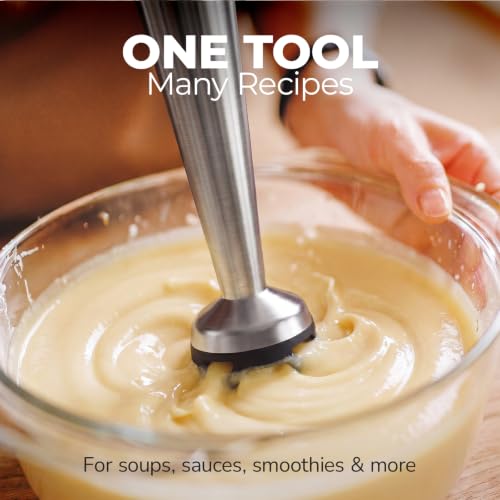
Match performance to the texture you actually need: for silky soups, emulsified dressings, pesto, smoothies, or baby-food-style purées, look for a blade geometry and guard design that pull food through without creating excessive suction or splashing. If you blend in shallow pans or wide bowls, avoid models that only perform well when fully submerged in a narrow beaker. Owner reports back up the importance of strong real-world blending: many users describe fast, smooth results in soups, sauces, purées, smoothies, protein shakes, frozen fruit, fine pastes, bisques, and tougher ingredients, though very strong units may require better technique to prevent splatter or over-processing soft foods.
Power
You’ll notice blending power most when you’re crushing ice, making nut butters, or working with frozen fruit and fibrous greens. Look for a motor that can handle tough ingredients without stalling or overheating, but don’t judge by wattage alone—jar design, blade geometry, and speed control also affect how efficiently that power turns into smooth results.
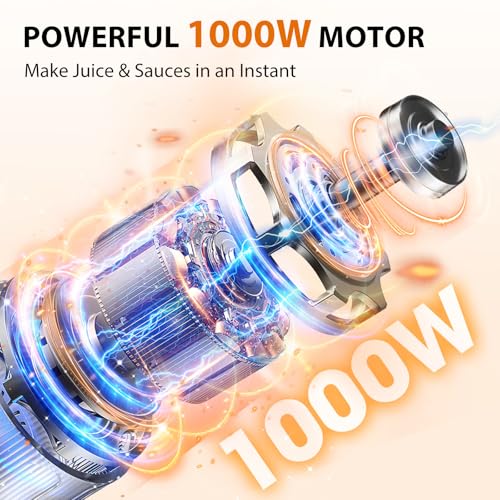
Do not judge cordless power by wattage claims alone; check battery voltage, speed range, runtime under load, recharge time, and whether the blender maintains torque as the battery drains. Variable speed or a true low-speed start is especially important because high torque in a cordless stick blender can grab the bottom of a pot, create suction, or fling hot liquid if it starts too aggressively. Owners frequently praise powerful motors with enough strength for creamy soups, pesto, smoothies, frozen fruit, chopping tasks, and quick everyday prep, and some specifically note that the strongest models require adjusting technique because of suction and splashing.
Features
The right features determine how well a blender fits the way you actually use it, from smoothies and soups to nut butters, crushed ice, or small-batch sauces. Look for enough speed control, pulse options, and useful presets to handle different textures without guesswork, but avoid paying for modes or attachments you won’t use. If versatility matters, check whether the jar sizes, lids, tampers, cups, or other attachments make tasks easier without adding clutter or hard-to-clean parts.
Buy the attachment set you will actually use, not the largest bundle: the most useful cordless extras are usually a narrow blending beaker, mini chopper, whisk, frother, and storage or charging setup that keeps everything accessible. Check attachment capacity and limits carefully—small choppers are handy for herbs, nuts, sofrito, and vegetables but are not replacements for full food processors, and whisks are for eggs, cream, and light batters rather than heavy dough. Owners tend to appreciate versatile kits with straightforward attachment changes, especially when they support chopping, dicing, mixing, whisking, frothing, dressings, sauces, soups, smoothies, dips, salsa, and blending directly in a pot without much hassle.
1,000,000+ shoppers use Buyer's Guide every week to find the best products and services online.

Helping millions of users make smarter purchases online.


