


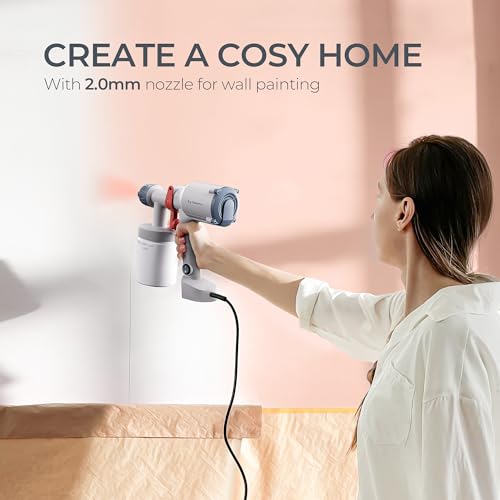



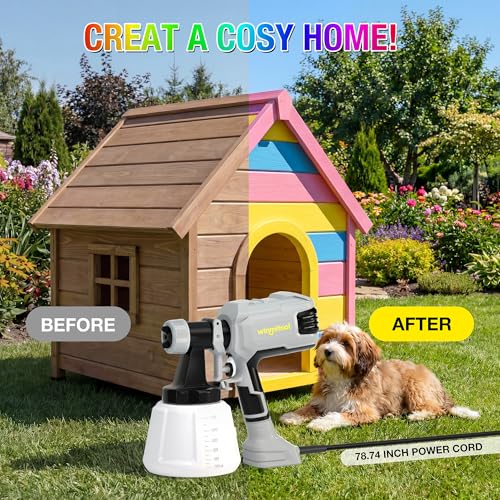


We also considered 10 others:


Our Top Choice
The order above is not editorial opinion, and it is not paid placement. It comes from what shoppers across our network actually do - which cheap paint sprayers they compare, and which they ultimately buy. We re-rank as new data comes in, so the long-term favorites have to keep earning their spot against new entrants. The full method, including how we make money.
Cheap Paint Sprayers Buyer's Guide
Cheap paint sprayers are a tradeoff: they can make fences, furniture, trim, sheds, and stains much faster than brushing, but low-cost units punish poor material matching, weak atomization, and sloppy cleanup. The sharpest buying concerns are whether the sprayer can produce an even coat with the coatings you actually use, and whether its cup size, weight, power setup, and cleaning burden fit the scale of your DIY projects.
Finish Control
Finish quality is the difference between a sprayer that saves time and one that creates sanding, rework, and frustration. In this category, adjustability matters because different coatings, surfaces, and distances need different fan shapes and flow rates.
Look for adjustable flow, multiple spray patterns, and enough pressure or motor output to maintain a fine mist without pulsing, spitting, or dumping material at the edges of the fan. For cheap handheld sprayers, the failure mode is usually not that they cannot spray at all, but that they leave orange peel, blobs, dry spray, or striping unless the coating is thinned correctly and the user keeps a steady distance and overlap. Prioritize models that let you test and tune the pattern for vertical, horizontal, and round spray so one tool can handle fences, lattice, cabinets, trim, furniture, stains, paint, and clear finishes. Owner feedback supports this as a major separator: smooth, fine coats and consistent results are praised when the technique is dialed in, while some buyers struggle to get a fine, even mist. Positive reports also connect good pressure and strong home-project performance with faster work on fences, sheds, decks, and lattice.
Material Fit
Paint sprayers are coating-delivery tools, so the sprayer has to match the liquid as much as the project. Good material guidance reduces clogs, uneven mist, wasted coating, and the temptation to over-thin beyond what the finish can tolerate.
Choose a sprayer with clear viscosity or dilution guidance, a viscosity cup or equivalent instructions, and nozzle sizes that match the materials you plan to spray. Thin stains and sealers need different flow than latex paint or urethane; too-small a nozzle clogs and spits, while too-large a nozzle can flood trim, cabinets, and furniture. Avoid any low-cost sprayer that gives vague material guidance, because cheap units have less margin for thick coatings and often need careful thinning, straining, and test spraying before the real work starts. Owner sentiment strongly favors sprayers that make this learning curve manageable, especially for first-time users with clear dilution guidance. Buyers also value included nozzles and adjustable patterns because they add flexibility across cabinets, trim, furniture, stain, paint, and urethane projects.
Handling Scale
A cheap sprayer can perform well and still be the wrong pick if its tank, weight, or power setup does not match the project. Handling affects fatigue, control, overspray risk, and how often the job is interrupted.
Match the physical setup to the job size: a small, light sprayer is ideal for furniture, trim, touch-ups, lattice, staining, and quick outdoor jobs, but a small cup means frequent refills on rooms, long fences, or large decks. Check the filled weight, balance, grip shape, and whether the hose or cord will drag through wet work; cordless convenience helps movement but should be weighed against battery runtime and consistent output. For longer sessions, a sprayer that feels fine empty can become tiring once the tank is full, so balance matters as much as headline weight. Owners consistently praise lightweight, balanced designs for making home projects less tiring, including bigger jobs with a full tank. At the same time, sentiment notes that compact sprayers are handy for small projects but less ideal for larger work when the container requires frequent refills.
Cleanup Access
Cleanup is not just convenience; it protects the spray pattern and the life of the tool. A sprayer that is hard to clean can become unreliable even if it performed well out of the box.
Favor wide-mouth cups, simple tool-free disassembly, accessible nozzles, included cleaning needles or brushes, and parts that can be rinsed immediately after use. Cheap sprayers are especially vulnerable to dried paint in the nozzle, pickup tube, seals, and air cap; if cleaning is slow or awkward, the tool may spray well once and then clog or spit on the next job. Plan to clean promptly between coats when material starts to skin over, and avoid designs with hidden passages that trap coating. Owner feedback repeatedly calls cleanup a clear plus when it is straightforward, manageable, and quick after use. Wide-mouth containers and prompt cleaning are specifically associated with making the sprayer easier to live with rather than turning cleanup into a dealbreaker.
Value Build
In this niche, value means getting a usable spray system without sacrificing the basics that determine finish and repeat use. A cheap sprayer that clogs, leaks, or feels disposable can cost more time and material than it saves.
Judge value by the complete kit and real usability, not just the lowest upfront cost: look for useful nozzles, strainers, cleaning tools, spare seals, clear instructions, and a body that does not feel flimsy around the trigger, cup threads, and nozzle assembly. For budget sprayers, avoid paying for impressive-looking wattage or accessories if owners report weak atomization, leaks, loose fittings, or inconsistent setup; the best cheap option is the one that reliably finishes your actual small-to-medium projects. A practical low-cost sprayer should feel sturdy enough for repeated DIY use while remaining simple to adjust and maintain. Sentiment shows strong appreciation for low-cost sprayers that feel like capable tools rather than toys, with buyers praising included accessories, solid build, reliable DIY performance, and strong results for the money. Owners also describe budget models as especially worthwhile for small painting or staining jobs around the house.
1,000,000+ shoppers use Buyer's Guide every week to find the best products and services online.

Helping millions of users make smarter purchases online.


