









We also considered 10 others:


Our Top Choice
Compare Features


The order above is not editorial opinion, and it is not paid placement. It comes from what shoppers across our network actually do - which cheap electric lawn mowers they compare, and which they ultimately buy. We re-rank as new data comes in, so the long-term favorites have to keep earning their spot against new entrants. The full method, including how we make money.
Cheap Electric Lawn Mowers Buyer's Guide
Cheap electric lawn mowers are best when you want low-maintenance mowing for a small, regularly kept lawn, not when you need gas-mower stamina for thick, wet, or neglected grass. The sharpest buying tradeoffs are runtime versus yard size, and compact convenience versus cutting power—especially in budget models where battery capacity, deck width, and build sturdiness are often the limiting factors.
Ease
A mower that’s easy to assemble, start, and operate saves you frustration every time you need to cut the grass. Look for clear setup instructions, intuitive controls, manageable weight, and simple height or bagging adjustments. Watch out for awkward handles, fussy start mechanisms, or features that sound useful but make day-to-day functionality more complicated.
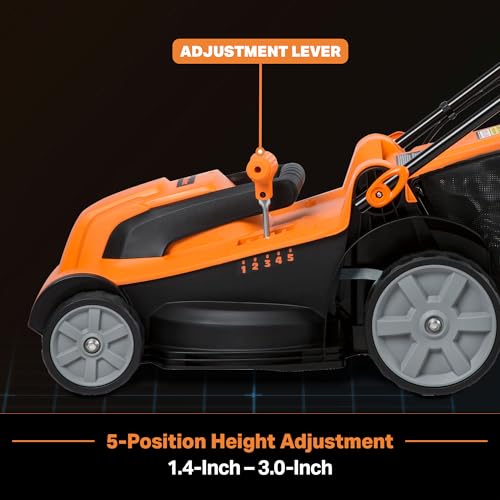
For a cheap electric mower, prioritize low-friction basics: tool-light handle assembly, a push-button start, one-lever cutting-height adjustment, an easy-on grass catcher, and a folding handle that does not require fighting knobs every time you store it. Avoid models where routine tasks—changing height, removing the bag, routing a cord, or swapping batteries—look fiddly, because budget mowers are bought for convenience and small-lawn speed, not tinkering. Owner feedback supports this: shoppers repeatedly praise inexpensive electric mowers that arrive nearly assembled, avoid gas/oil/pull-starting, start easily, push simply, and store without much hassle.
Cutting
You want a mower that leaves an even, clean finish without repeatedly bogging down, missing blades of grass, or forcing you to make extra passes. Look for strong cutting performance across different grass heights and conditions, enough cutting capacity for your lawn size, and effective mulching if you prefer to return clippings to the yard rather than bag them.
Match the mower to the grass you actually cut: for regularly maintained small lawns, a budget electric can work well, but thick, wet, or overgrown grass demands sharper blades, higher voltage or amperage, multiple height settings, and a slower walking pace. Look for real mowing functions—mulching, bagging, or side/rear discharge—rather than assuming every low-cost model can clear clippings well; cheap undersized decks can bog down, leave stragglers, or clog if asked to cut too low in one pass. Owners often report clean, even results in small to mid-size yards, with some saying these mowers handle surprisingly tall grass, but the strongest satisfaction appears when expectations are kept to maintained residential lawns rather than heavy brush-like growth.
Battery
Battery life matters because it determines whether a cordless mower can finish your lawn on a single charge without forcing you to stop and wait. Look for a runtime that matches your yard size and grass conditions, and remember that thick, wet, or tall grass can drain batteries faster than ideal-condition estimates. Also check charging time and whether the battery is removable or compatible with other tools, since that affects how easy it is to keep mowing when power runs low.
If choosing cordless, size the battery around worst-case mowing, not the brochure runtime: tall grass, damp grass, high blade load, self-propel use, and frequent restarts can cut runtime sharply. For anything beyond a small city lot, check whether extra battery packs are available, whether the mower can accept higher-capacity packs, and how long a recharge takes; otherwise a cheap cordless mower may turn a simple mow into a two-session job. Owner sentiment is notably mixed here: many small-yard users finish on one charge, sometimes with power left, while others report around 30 minutes or less, slower charging than desired, or the need for a second battery on larger or tougher lawns.
Handling
Handling matters because the easier a mower is to push, steer, and control, the less tiring it will be to cover your yard—especially around trees, beds, slopes, or tight corners. Look for a weight and wheel design that match your terrain, and consider self-propelled drive if you have hills or a larger lawn, but watch that the mower still feels easy to slow, turn, and maneuver in confined spaces.
Choose handling based on terrain and storage, not just weight: a very light mower is easier to lift and turn, but it still needs stable wheels, a comfortable handle height, and enough deck balance that it does not bounce or scalp uneven ground. On slopes, look for secure grip, predictable rolling resistance, and consider self-propel only if the added weight and battery drain are worth it; for flat small lawns, lightweight push models often make self-propel unnecessary. Owners consistently value compact, lightweight electric mowers because they are easy to push, lift, control around corners and tight spots, and put away, with self-propelled versions earning praise when users want minimal effort.
Size
The mower’s size affects where you can store it, how easily you can move it through gates or around obstacles, and how comfortable it is to use in tight areas. If you have limited garage or shed space, look for a compact size, folding handle, or vertical storage option, but make sure the cutting deck is still wide enough to suit your lawn. Watch the overall dimensions and handle height, not just the deck size, so you do not end up with a mower that is awkward to maneuver or store.
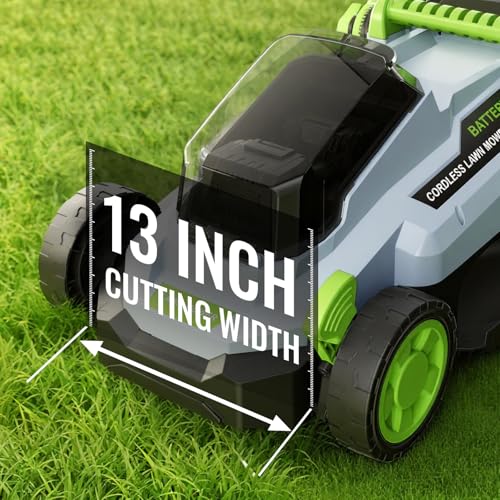
For cheap electric mowers, deck size is a tradeoff: narrower decks are easier to store and maneuver through gates, beds, and small side yards, but they require more passes and more battery or cord time. Before buying, measure gate openings, storage space, and the actual mowable area; a compact mower is ideal for small lawns and townhome yards, while a larger lawn may expose the limits of a small deck, small bag, or limited runtime. Owner feedback aligns with this use case: buyers like compact electric mowers for small to medium yards, tight spaces, folding storage, and simple garage or shed placement, but they are generally framed as small-yard tools rather than large-lawn workhorses.
Noise
A mower’s noise level affects your comfort, your neighbors, and when you can reasonably mow without being disruptive. If you want a quieter experience, look for lower decibel ratings and consider electric models, while remembering that cutting thick grass or using high blade speeds can make any mower sound louder in real use.
Noise is a real advantage of cheap electric mowers, especially if you mow near neighbors, shared fences, early-evening hours, or small urban lots, but still check for blade whine, vibration, and rattly plastic parts rather than assuming every electric model is equally quiet. Lower noise does not remove safety concerns: you still need hearing judgment, eye protection, and awareness of people or pets nearby because the quieter motor can make the spinning blade seem less hazardous than it is. Owners repeatedly describe electric mowers as much quieter and less intrusive than gas models, with some also noting reduced vibration and a cleaner-feeling experience without fuel or oil storage.
1,000,000+ shoppers use Buyer's Guide every week to find the best products and services online.

Helping millions of users make smarter purchases online.


