

















We also considered 10 others:


Our Top Choice
The order above is not editorial opinion, and it is not paid placement. It comes from what shoppers across our network actually do - which charger cables they compare, and which they ultimately buy. We re-rank as new data comes in, so the long-term favorites have to keep earning their spot against new entrants. The full method, including how we make money.
Charger Cables Buyer's Guide
A charger cable is only “good” if it matches the devices, wall chargers, cars, battery packs, and charging speeds in your real setup. The biggest tradeoff is convenience versus certainty: multi-tip and extra-long cables simplify everyday charging, but connector fit, fast-charge support, and long-term bend durability decide whether they stay useful.
Connector Match
Charger cables are not interchangeable just because the ends look right. The device port, charger port, and supported charging standard all have to line up for dependable charging and, when needed, data transfer.
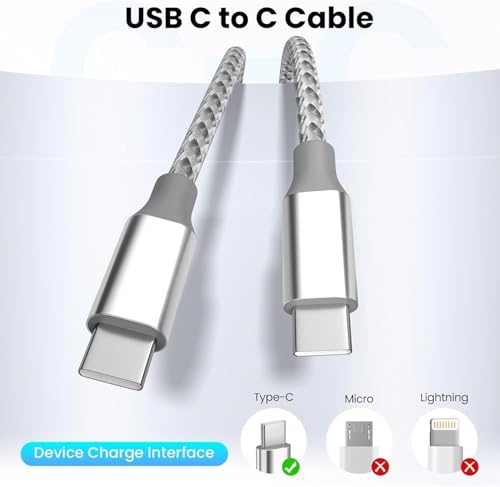
Start by mapping both ends: the charger side may be USB-A or USB-C, while the device side may be USB-C, Lightning, or Micro-USB. For Lightning devices, look for certified compatibility language; for USB-C laptops or tablets, confirm the cable is rated for the wattage you expect rather than assuming every USB-C cable can handle laptop charging. Multi-connector cables are useful for mixed households, cars, desks, and travel bags, but avoid relying on them for critical fast charging unless the listing clearly states supported outputs and device compatibility. Owner feedback strongly favors cables that cover several phone, tablet, laptop, and charger combinations, especially all-in-one or three-option designs, while also noting that compatibility and connectivity are not perfectly uniform across every setup.
Charge Speed
Fast charging depends on the cable, charger, and device working together. A weak link can make a cable behave like a standard charging cord even when another part of the setup supports higher speed.
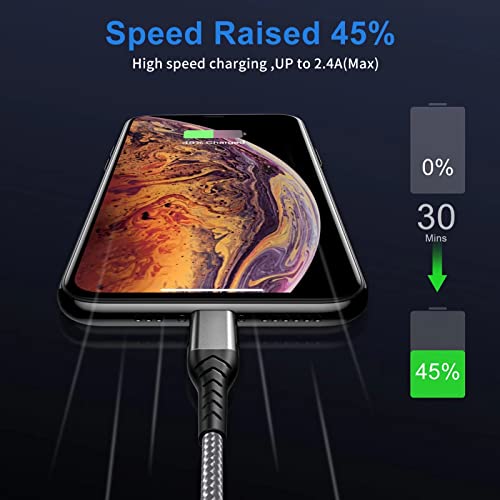
Check the stated current, wattage, and charging protocol support before buying: USB-C Power Delivery needs the right USB-C cable and charger, while many older USB-A cables top out at lower speeds. Longer cables and multi-head cables can be more convenient but may charge slower if their wiring, connectors, or adapters are not built for higher current. If you need dependable fast charging, prioritize a single-purpose cable with clear ratings over a generic “fast” claim; if you mainly charge overnight or at a desk, normal-speed reliability may matter more. Owner reports are mixed here: many cables charge smoothly or quickly in compatible setups, but others behave more like normal-speed cables or show occasional speed and connector-stability complaints.
Build Life
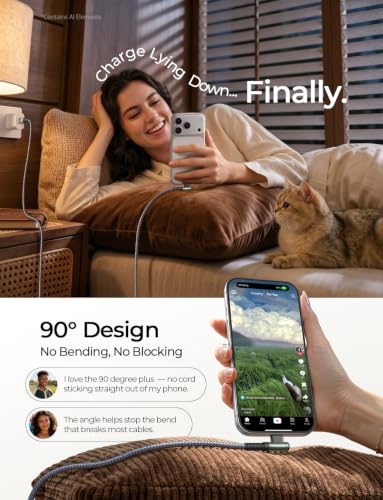
Most charger cables fail at the bend points near the connectors, not in the middle of the cord. A stronger jacket, reinforced ends, and snug connector housing help the cable survive daily plugging, pulling, car use, and bedside bending.
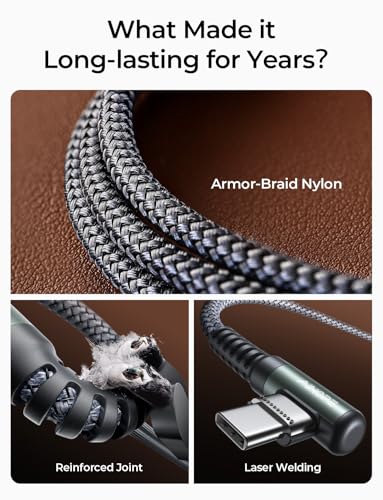
Look for reinforced strain relief where the cable meets each connector, a thick but flexible jacket, and connectors that fit snugly without wobbling. Braided nylon can help with abrasion and tangling, but it is not automatically better unless the ends are also reinforced; overly stiff cables can transfer stress to the connector. For car seats, backpacks, couches, and nightstands, avoid flimsy connector shells and thin insulation because repeated bending is the usual failure mode. Owners repeatedly praise thick braided cords, strong ends, sturdy looks, tangle resistance, and cables that hold up to daily wear, bending, car use, and long-term ownership, though some also report uneven durability where cords work well at first and become less dependable after weeks or months.
Right Length
Cable length changes how convenient charging feels in a bedroom, vehicle, office, or travel setup. Extra reach is helpful, but very long or poorly made cables can be bulkier, easier to snag, and sometimes less stable for higher-speed charging.
Choose length by location: short cables suit power banks and clean desk setups, medium lengths reduce clutter in cars, and 6-foot-plus cables are often best for bedsides, couches, and outlets behind furniture. If you buy a longer cable, make sure the connector fit is secure and the cable is rated for the charging speed you want, since reach should not come at the cost of unstable charging. For travel, consider whether a long cable will tangle or take up space, or whether one longer cable plus one compact backup is more practical. Owner sentiment strongly supports 6-foot and 6.6-foot cables because they make it easier to reach outlets and use a phone while charging, especially at desks, bedsides, and in vehicles.
All-in-One Use
Multi-ended charger cables can replace several cords, which is valuable when different people or devices need different connectors. Their downside is added complexity: adapters, shared wiring, and small removable ends create more places for fit or reliability problems.
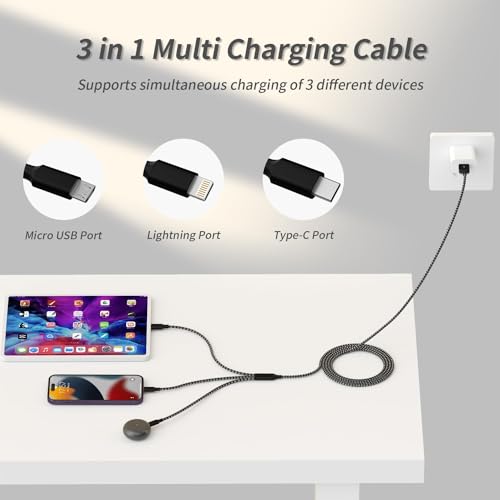
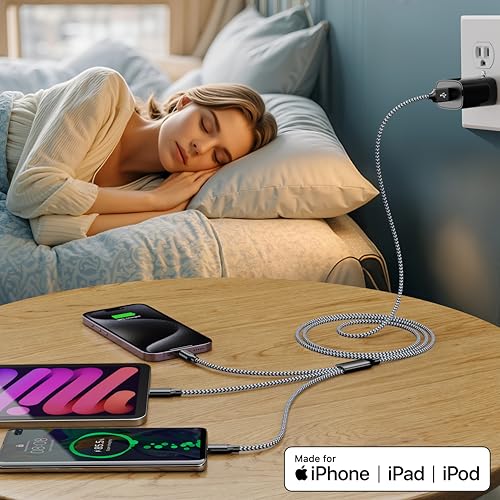
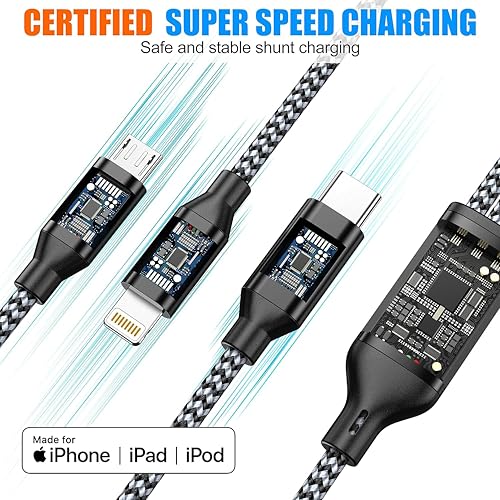
For shared spaces, glove boxes, guest rooms, and travel kits, a multi-tip cable can be the smartest choice because it covers USB-C, Lightning, and older Micro-USB gear without carrying separate cords. Check whether it is meant to charge one device at a time or multiple devices at once, and do not assume it supports full-speed charging for every attached device. Prefer designs with secure tips, clear labels, and sturdy connector housings; loose interchangeable ends are easy to misplace and can create intermittent charging. Owners like all-in-one and three-option cords because one cable can replace multiple chargers across households, cars, desks, and travel setups, but feedback also shows that reliability and compatibility can vary by device and setup.
Pack Value
A low-cost cable is not a bargain if it charges slowly, fits poorly, or fails quickly. Value in this category comes from getting enough dependable cables in the right lengths for the places you actually charge.
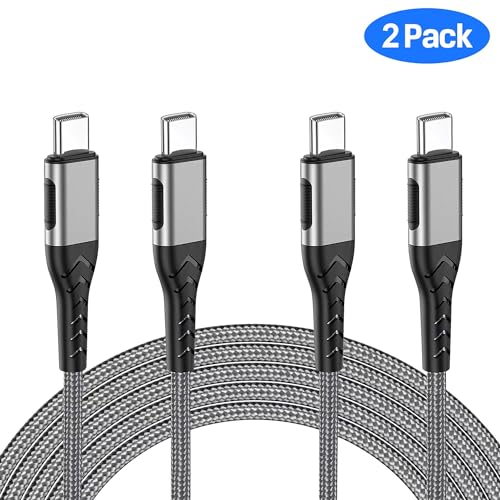
Think in charging stations: one cable for the bedside, one for the desk, one for the car, and one for a travel bag may be more useful than buying a single cord and constantly moving it. Multi-packs are best when the cables have the same connector fit, length, and build quality you would accept individually; avoid packs that look economical but give vague charging ratings or flimsy ends. Replacement cables should feel sturdy enough for daily use and long enough for the outlet layout, not merely cheap. Owner feedback supports this: two-packs and longer replacement cords are often seen as strong value, especially when they feel well made, replace multiple chargers, and avoid the flimsy feel associated with basic generic cords.
1,000,000+ shoppers use Buyer's Guide every week to find the best products and services online.

Helping millions of users make smarter purchases online.


