




















We also considered 10 others:


Our Top Choice
The order above is not editorial opinion, and it is not paid placement. It comes from what shoppers across our network actually do - which cell signal boosters they compare, and which they ultimately buy. We re-rank as new data comes in, so the long-term favorites have to keep earning their spot against new entrants. The full method, including how we make money.
Cell Signal Boosters Buyer's Guide
Cell signal boosters are a tradeoff between promise and site reality: the same kit can transform one weak-signal home and barely help another if the outdoor donor signal, carrier bands, or antenna layout are wrong. Careful shoppers should focus less on advertised square footage and more on tower signal, band compatibility, antenna separation, and the practical work of mounting and tuning the system.
Donor Signal
A cell signal booster amplifies an existing tower signal; it cannot generate coverage from nothing. The outdoor antenna location, tower direction, and quality of the signal it receives often matter more than the amplifier’s headline rating. This is why two homes with the same booster can have very different results.
Start by proving there is usable signal outside before choosing a booster. Walk the property, roofline, attic, and exterior walls with a phone in field-test mode if possible, because bars are too vague; the best mounting spot is often not where indoor service feels weakest. A directional outdoor antenna is usually the right choice for rural or fringe service aimed at one tower, while an omnidirectional antenna makes more sense only where several carriers already have decent outdoor signal nearby. Avoid expecting a booster to create service where there is no donor signal at all, or where terrain, distance, trees, or building materials block the tower too severely. Owner reports strongly support this: some homes went from nearly unusable service to strong indoor coverage, while others saw only a small lift or no boost, with results tied to starting outdoor signal, antenna placement, carrier bands, terrain, and tower distance.
Band Fit
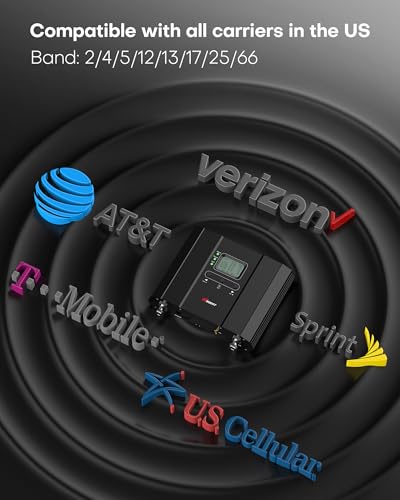
Carrier compatibility is not just a brand-name checklist; it depends on the frequency bands active at your location. A booster that is excellent for one network or band can do little for another if the local tower is using unsupported spectrum. Careful band matching helps avoid buying a unit that amplifies the wrong signal.
Match the booster to the carrier bands actually used at the installation site, not just to a broad claim like “works with 5G.” For calls, a strong LTE/VoLTE band match can matter as much as a 5G label, and many consumer boosters support only certain low-band or LTE-linked 5G frequencies rather than every 5G layer. Check the supported bands against each carrier and phone in the household, especially if multiple networks need service, and choose certified equipment that is approved or registerable where required. Owners repeatedly praised boosters that worked across major carriers and improved both 4G LTE and 5G-labeled service, including households using different networks; they also noted that matching the booster to carrier bands was part of successful setup.
Coverage Layout
Indoor coverage depends on both amplifier strength and how the rebroadcast signal is distributed through the building. A single indoor antenna may be enough for an open area but weak for separated rooms or shielded construction. Good layout planning prevents dead zones and feedback between antennas.
Size the system around the rooms that need service, not the largest advertised square-foot number. Coverage ratings assume favorable outdoor signal and open indoor layouts; metal buildings, basements, long hallways, multiple floors, and dense walls often need higher indoor antenna placement, a panel antenna aimed into the problem area, or multiple indoor antennas with proper splitters and low-loss cable. Keep the outside and inside antennas far enough apart, and preferably separated by roofing, walls, or vertical distance, so the system does not oscillate, reduce gain, or shut itself down. Owner feedback points to the same pattern: boosters were praised for covering homes, offices, problem rooms, and even metal buildings, but successful installs often depended on correct indoor placement and enough coverage design for the actual space.
Install Tuning
Small changes in antenna direction, height, and cable routing can make a large difference in booster performance. Installation is usually within reach for a capable DIYer, but it is not the same as plugging in a router. Better tuning aids and clearer hardware reduce wasted time and failed placements.
Look for a kit that makes tuning practical: clear antenna-aiming instructions, a signal meter or app-style feedback, tower-finding guidance, enough coax, weather-resistant mounts, and connectors that fit the planned cable route. Expect real installation work—mounting the outdoor antenna high enough, aiming it precisely, routing cable, sealing penetrations, and using grounding or lightning protection where appropriate. If you cannot drill, climb, route cable, or experiment with antenna angles, choose a setup path that supports easier mounting or budget for help. Owners often found DIY installation manageable and straightforward once the antenna was positioned well, but they also reported trial and error, cable runs, heights, drilling, and sometimes confusing manuals or scattered instructions.
Stable Service
A good booster should turn marginal reception into dependable communication, not merely display a higher bar count. Voice, data, and hotspot reliability depend on signal quality and stability as well as raw strength. Testing real use cases after installation is the best way to confirm the system is actually solving the problem.
Judge performance by usable service, not bars alone. The right booster should improve the tasks that fail today: stable voice calls, fewer drops, usable browsing, reliable hotspot or work connections, and consistent uplink as well as downlink. Automatic gain control and overload protection are important because an overdriven system can reduce output or become unstable, while a weakly matched system may show more bars without fixing calls or data. Owner sentiment is strongest here: many buyers described fewer dropped calls, clearer voice quality, better internet speed, usable data, and near-dead indoor service becoming practical for daily use.
Hardware Value
Cell boosters are systems, so weak accessories can limit an otherwise capable amplifier. Durable antennas, low-loss cable, and reliable connectors help preserve signal strength from the tower to the rooms that need it. The best value is the setup that solves the coverage problem without forcing unplanned replacement parts or professional rework.
Evaluate the whole signal chain, not just the amplifier box. Outdoor antennas, indoor antennas, coax type and length, connectors, mounts, splitters, power supply, weather sealing, heat management, warranty, and support all affect final performance and long-term value. Thin or excessive coax can eat up the gain you paid for, while flimsy outdoor hardware can fail in weather or lose alignment. Owners commonly felt the purchase was worthwhile when it solved expensive rural or in-home coverage problems, and they also praised solid build quality, durable accessories, and complete kits; value was less certain when installation conditions were not favorable.
1,000,000+ shoppers use Buyer's Guide every week to find the best products and services online.

Helping millions of users make smarter purchases online.


