Best Car Seats Updated June 2026
Best Car Seats
2026 Buyer's GuideUpdated June 2026
Sort by:
1

10.0

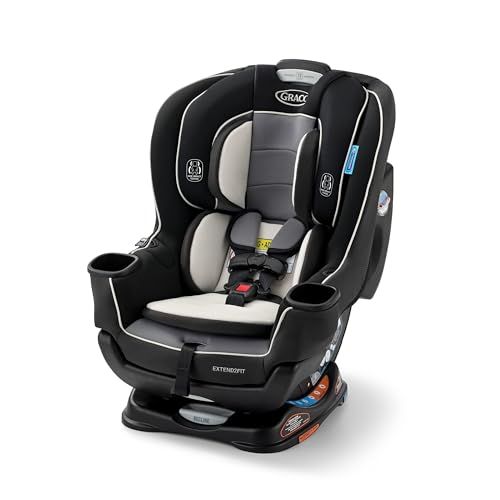
Graco 4Ever DLX 4-in-1 Baby Car Seat, Infant to Toddler Car Seat, 10 Years of Use, Rear-Facing, Forward-Facing, Highback Booste...
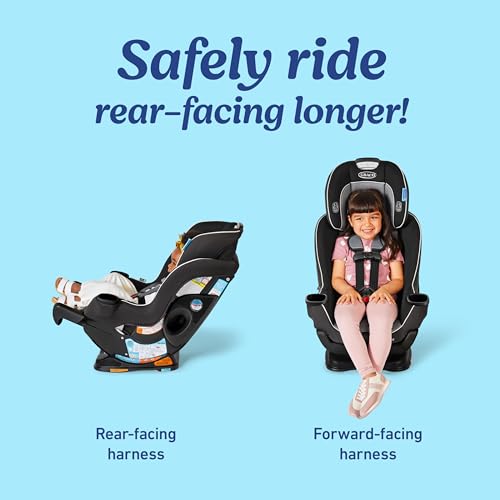
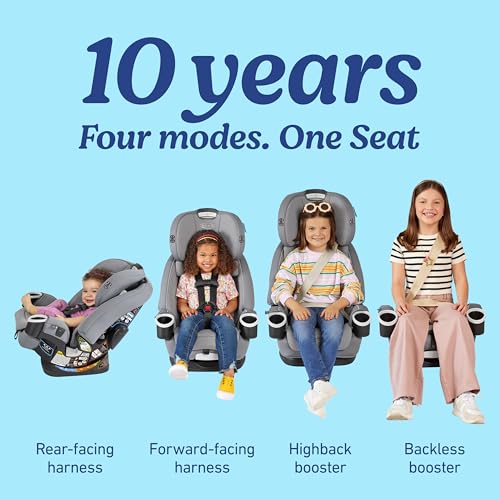
Type: 4-in-1 forward and rear facing & booster seat
Age Range: For children up to 120 lbs
Recline: 6 positions
Harness: 5-point system adjustable with headrest
Weight Limit: 120 lbs

10.0

1
Graco 4Ever DLX 4-in-1 Baby Car Seat, Infant to Toddler Car Seat, 10 Years of Use, Rear-Facing, Forward-Facing, Highback Booste...
Type: 4-in-1 forward and rear facing & booster seat
Age Range: For children up to 120 lbs
Recline: 6 positions
Harness: 5-point system adjustable with headrest
Weight Limit: 120 lbs
2

9.8

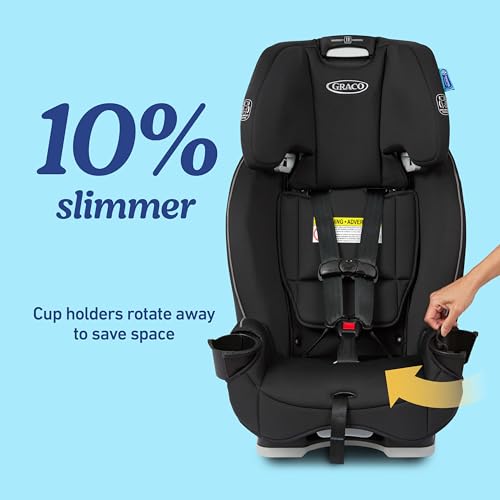
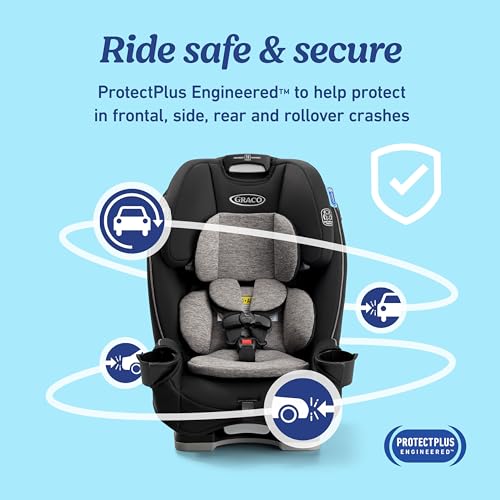
Graco Slimfit 3-in-1 Convertible Car Seat, Slim Car Seat with Space-Saving Design, Highback Booster Seat with 10-Position Headr...
Type: 3-in-1 forward and rear facing & booster seat
Age Range: For children 5 - 100 lbs
Recline: 4 positions
Harness: 5-point system with 10 levels
Weight Limit: 100 lbs
Compare

9.8

2
Graco Slimfit 3-in-1 Convertible Car Seat, Slim Car Seat with Space-Saving Design, Highback Booster Seat with 10-Position Headr...
Type: 3-in-1 forward and rear facing & booster seat
Age Range: For children 5 - 100 lbs
Recline: 4 positions
Harness: 5-point system with 10 levels
Weight Limit: 100 lbs
3

9.4

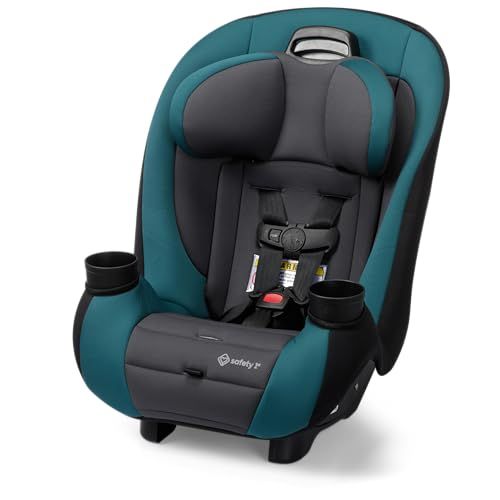
Safety 1st Grow and Go All-in-One Convertible Car Seat, Rear Facing, 5-40 lbs, Forward Facing (30–65 lbs), High Back Booster Se...
Type: 3-in-1 forward and rear facing & booster seat
Age Range: For infants and toddlers
Recline: 3 positions
Harness: 5-point system adjustable with headrest
Weight Limit: 100 lbs
Compare

9.4

3
Safety 1st Grow and Go All-in-One Convertible Car Seat, Rear Facing, 5-40 lbs, Forward Facing (30–65 lbs), High Back Booster Se...
Type: 3-in-1 forward and rear facing & booster seat
Age Range: For infants and toddlers
Recline: 3 positions
Harness: 5-point system adjustable with headrest
Weight Limit: 100 lbs
Compare
4

9.3

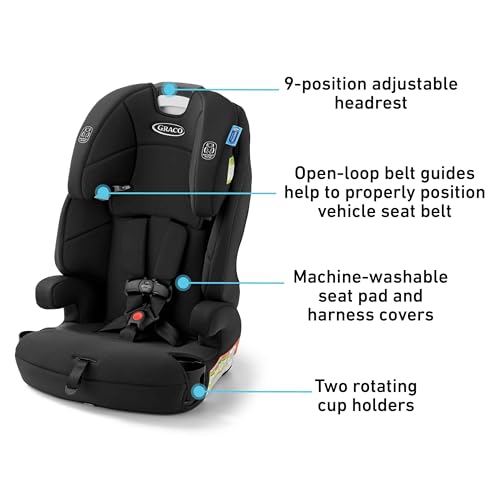
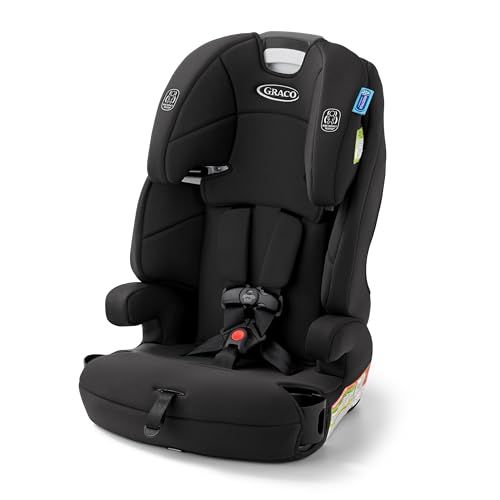
Graco® Tranzitions 3-in-1 Harness Booster Car Seat, Forward Facing Car Seat, Highback, to Backless Booster, Proof
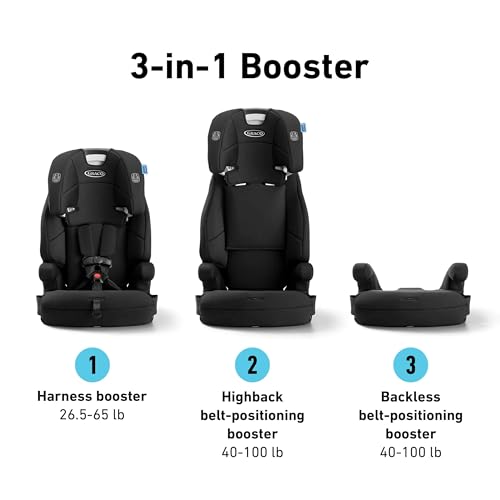
Type: Booster seat
Age Range: For children between 26.5 - 100 lbs
Recline: None
Harness: 5-point system adjustable with headrest
Weight Limit: 100 lbs
Compare

9.3

4
Graco® Tranzitions 3-in-1 Harness Booster Car Seat, Forward Facing Car Seat, Highback, to Backless Booster, Proof
Type: Booster seat
Age Range: For children between 26.5 - 100 lbs
Recline: None
Harness: 5-point system adjustable with headrest
Weight Limit: 100 lbs
Compare
5

9.1

Safety 1st Ellaris 3-in-1 Convertible Car Seat, Slim Fit Design, Rear & Forward-Facing, 5-Position Headrest, Travel-Friendly wi...
Type: 3-in-1 forward and rear facing
Age Range: For children between 5 - 65 lbs
Recline: 5 positions
Harness: 5-point system adjustable with headrest
Weight Limit: 65 lbs

9.1

5
Safety 1st Ellaris 3-in-1 Convertible Car Seat, Slim Fit Design, Rear & Forward-Facing, 5-Position Headrest, Travel-Friendly wi...
Type: 3-in-1 forward and rear facing
Age Range: For children between 5 - 65 lbs
Recline: 5 positions
Harness: 5-point system adjustable with headrest
Weight Limit: 65 lbs
6

9.0

Graco® TriRide 3-in-1 Reclining Car Seat, Clybourne - Rear & Forward Facing Car Seat, Highback Booster, Adjustable Headrest
Type: 3-in-1 forward and rear facing & booster seat
Age Range: For children up to 57" in height
Recline: 6 positions
Harness: 5-point system adjustable with headrest
Weight Limit: 100 lbs
Compare

9.0

6
Graco® TriRide 3-in-1 Reclining Car Seat, Clybourne - Rear & Forward Facing Car Seat, Highback Booster, Adjustable Headrest
Type: 3-in-1 forward and rear facing & booster seat
Age Range: For children up to 57" in height
Recline: 6 positions
Harness: 5-point system adjustable with headrest
Weight Limit: 100 lbs
Compare
7

8.9

Graco Slimfit 3-in-1 Convertible Car Seat, Slim Car Seat with Space-Saving Design, Highback Booster Seat with 10-Position Headr...
Type: 3-in-1 forward and rear facing & booster seat
Age Range: For infants and toddlers
Recline: 4 positions
Harness: 5-point system adjustable with headrest
Weight Limit: 100 lbs
Compare

8.9

7
Graco Slimfit 3-in-1 Convertible Car Seat, Slim Car Seat with Space-Saving Design, Highback Booster Seat with 10-Position Headr...
Type: 3-in-1 forward and rear facing & booster seat
Age Range: For infants and toddlers
Recline: 4 positions
Harness: 5-point system adjustable with headrest
Weight Limit: 100 lbs
8

8.8

Safety 1st Grand 2-in-1 Booster Car Seat, Converts from High Back to Belt-Positioning Booster, High Back Seat for Kids 40-65, a...
Quality
Easy to install
Comfort
Value for money
Fit
Lightweight

8.8

8
Safety 1st Grand 2-in-1 Booster Car Seat, Converts from High Back to Belt-Positioning Booster, High Back Seat for Kids 40-65, a...
Quality
Easy to install
Comfort
Value for money
Fit
Lightweight
9

8.6

Graco SnugRide Lite LX Infant Car Seat, Lightweight Rear-Facing Seat for Babies 4–30 lb, 4-Position Adjustable Base, Latch Inst...
Type: Rear facing
Age Range: For infants up to 32" in height
Recline: 4 positions
Harness: 5-point system with 3 levels
Weight Limit: 35 lbs
Compare

8.6

9
Graco SnugRide Lite LX Infant Car Seat, Lightweight Rear-Facing Seat for Babies 4–30 lb, 4-Position Adjustable Base, Latch Inst...
Type: Rear facing
Age Range: For infants up to 32" in height
Recline: 4 positions
Harness: 5-point system with 3 levels
Weight Limit: 35 lbs
Compare
10

8.5

Graco® Tranzitions 3-in-1 Harness Booster Car Seat, Forward Facing Car Seat, Highback, to Backless Booster, Eloise
Quality
Installation
Comfort
Fit
Safety
Value for money

8.5

10
Graco® Tranzitions 3-in-1 Harness Booster Car Seat, Forward Facing Car Seat, Highback, to Backless Booster, Eloise
Quality
Installation
Comfort
Fit
Safety
Value for money

Our Top Choice

1

10.0

Graco 4Ever DLX 4-in-1 Baby Car Seat, Infant to Toddler Car Seat, 10 Years of Use, Rear-Facing, Forward-Facing, Highback Booste...
Type: 4-in-1 forward and rear facing & booster seat
Age Range: For children up to 120 lbs
Recline: 6 positions
Harness: 5-point system adjustable with headrest
Weight Limit: 120 lbs

10.0

1
Graco 4Ever DLX 4-in-1 Baby Car Seat, Infant to Toddler Car Seat, 10 Years of Use, Rear-Facing, Forward-Facing, Highback Booste...
Type: 4-in-1 forward and rear facing & booster seat
Age Range: For children up to 120 lbs
Recline: 6 positions
Harness: 5-point system adjustable with headrest
Weight Limit: 120 lbs

Compare Features

Weight Limit
Best Car Seat
1. Graco 4Ever DLX 4-in-1 Car Seat
GRACO Preview GRACO Preview
GRACO
at Amazon
2. Graco Slimfit 3-in-1 Convertible Car Seat
GRACO Preview GRACO Preview
GRACO
at Amazon
3. Safety 1st Grow and Go Convertible Car Seat
SAFETY 1ST Preview SAFETY 1ST Preview
SAFETY 1ST
at Amazon
Popular
4. Graco Tranzitions 3-in-1 Car Seat
GRACO Preview GRACO Preview
GRACO
at Amazon
5. Safety 1st Ellaris Convertible Car Seat
SAFETY 1ST Preview SAFETY 1ST Preview
SAFETY 1ST
at Amazon
6. Graco TriRide 3-in-1 Reclining Car Seat
GRACO Preview GRACO Preview
GRACO
at Amazon
7. Graco Slimfit 3-in-1 Convertible Car Seat
GRACO Preview GRACO Preview
GRACO
at Amazon
8. Graco SnugRide Lite LX Car Seat
GRACO Preview GRACO Preview
GRACO
at Amazon
Deal
$5 Coupon
Deal $5 Coupon
Type
4-in-1 forward and rear facing & booster seat 3-in-1 forward and rear facing & booster seat 3-in-1 forward and rear facing & booster seat Booster seat 3-in-1 forward and rear facing 3-in-1 forward and rear facing & booster seat 3-in-1 forward and rear facing & booster seat Rear facing
Type
4-in-1 forward and rear facing & booster seat 3-in-1 forward and rear facing & booster seat 3-in-1 forward and rear facing & booster seat Booster seat 3-in-1 forward and rear facing 3-in-1 forward and rear facing & booster seat 3-in-1 forward and rear facing & booster seat Rear facing
Age Range
For children up to 120 lbs For children 5 - 100 lbs For infants and toddlers For children between 26.5 - 100 lbs For children between 5 - 65 lbs For children up to 57" in height For infants and toddlers For infants up to 32" in height
Age Range
For children up to 120 lbs For children 5 - 100 lbs For infants and toddlers For children between 26.5 - 100 lbs For children between 5 - 65 lbs For children up to 57" in height For infants and toddlers For infants up to 32" in height
Recline
6 positions 4 positions 3 positions None 5 positions 6 positions 4 positions 4 positions
Recline
6 positions 4 positions 3 positions None 5 positions 6 positions 4 positions 4 positions
Harness
5-point system adjustable with headrest 5-point system with 10 levels 5-point system adjustable with headrest 5-point system adjustable with headrest 5-point system adjustable with headrest 5-point system adjustable with headrest 5-point system adjustable with headrest 5-point system with 3 levels
Harness
5-point system adjustable with headrest 5-point system with 10 levels 5-point system adjustable with headrest 5-point system adjustable with headrest 5-point system adjustable with headrest 5-point system adjustable with headrest 5-point system adjustable with headrest 5-point system with 3 levels
Weight Limit
120 lbs 100 lbs 100 lbs 100 lbs 65 lbs 100 lbs 100 lbs 35 lbs
Weight Limit
120 lbs 100 lbs 100 lbs 100 lbs 65 lbs 100 lbs 100 lbs 35 lbs

Why These Features Matter:

A car seat isn’t just “a safety thing.” It’s a large plastic roommate that lives in the backseat for years, collects smashed crackers in its seams, and occasionally has to be installed in a dark parking lot while someone is crying (child, adult, or both). The best car seat for real life is the one that’s safe and doesn’t make every errand feel like a small logistical failure.

This guide isn’t about brand bragging rights. It’s about the features that quietly determine whether the seat becomes a dependable piece of daily infrastructure—or a permanent source of low-grade rage.

1) Installation That Doesn’t Require a Philosophy Degree

The difference between “easy install” and “actually easy install” is enormous. The seats people end up loving tend to have a belt path that’s clearly marked, a LATCH system that tightens without a full-body workout, and some kind of built-in leveling help that doesn’t require crawling into the footwell with a flashlight.

  • Look for: obvious belt routing; accessible LATCH connectors; a tightener that can be pulled smoothly (not in micro-yanks); a level indicator that’s readable at a glance.
  • Nice in real life: a seat that “locks in” with a satisfying, non-mysterious click—less guesswork, fewer re-installs.
  • Quiet win: clear labels on the seat itself. Manuals vanish. Stickers don’t.

2) Fit: Your Backseat Is Not a Showroom Backseat

A car seat can be perfect on paper and still make a normal car feel like a penalty box. The real issue is how much space it steals front-to-back (rear-facing seats are notorious) and side-to-side (especially if there’s a third passenger, another car seat, or a dog with strong opinions).

  • Look for: a compact front-to-back profile for rear-facing mode; a base that doesn’t flare out aggressively.
  • If three-across is even a remote possibility: prioritize narrower footprints and simpler sides (those big “side wings” can crowd neighbors fast).
  • City-living detail: seats with a smaller footprint are easier when parallel parking forces everyone to load kids curbside, quickly, and without theatrics.

Honest caveat: “Slim” can come with trade-offs—less plush padding, fewer cup holders, fewer creature comforts. The best balance is the one that keeps the driver’s seat from being shoved forward like it’s on a slider at a nail salon.

3) The Everyday Touch Points: Buckles, Straps, and the Physics of Wriggly Children

The daily experience comes down to a few inches of hardware. A buckle that’s too stiff, straps that twist like headphone cords, or a chest clip that slides like it’s greased—these are the small annoyances that become a long-term relationship problem.

  • Look for: smooth strap adjusters that don’t snag; harness straps that resist twisting; a buckle that feels secure without requiring thumb strength training.
  • Comfort detail that matters: shoulder pads that stay put instead of migrating to the armpit area.
  • In winter: harness adjusters should still work when everything is cold and rigid (including hands).

Honest caveat: some “easy-release” buckles can feel slightly less refined—great for speed, less great if they rattle or feel cheap. The sweet spot is sturdy, not stubborn.

4) Cleaning Reality: Crumbs, Yogurt, and the Myth of “Wipeable”

Car seat fabric marketing is optimistic. “Wipeable” usually means “wipeable if the mess is fresh and you caught it before it bonded with the fibers.” The best seats acknowledge that kids are basically tiny food critics who eat in moving vehicles.

  • Look for: covers that come off without removing the entire harness; machine-washable fabric that doesn’t come back weirdly crunchy; fewer crevices where snacks go to retire.
  • Small luxury: darker, heathered fabrics that hide the inevitable mystery smudge without looking like tactical gear.
  • Good design tell: fabric that snaps or zips back on neatly—no wrestling, no “why is this piece leftover?” moment.

Honest caveat: the plushest, nicest-looking fabrics often show stains faster. The most practical upholstery is rarely the most photogenic. Choose based on who actually lives in the car.

5) Convertibility: The Long Game (and the Heavy Plastic Truth)

Convertible and all-in-one seats sound like the responsible choice—and they often are. Fewer purchases, fewer transitions, fewer “wait, do we need a new one now?” conversations. But they can also be large, heavy, and extremely committed to living in one vehicle.

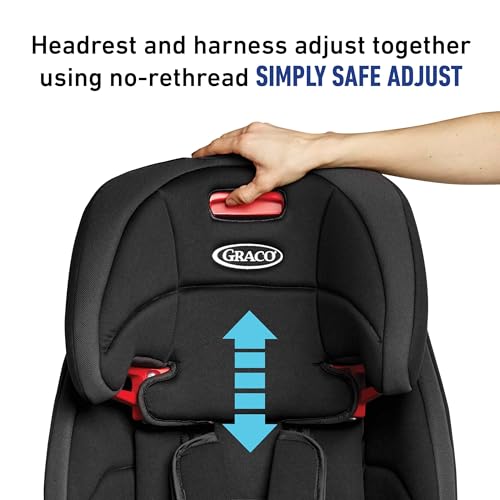
  • Look for: simple height adjustments; clear transition steps; headrest and harness that move together (less rethreading drama).
  • If the seat might move between cars: prioritize lighter weight and easier install over “does everything forever.”
  • Practical compromise: a seat that converts well is only useful if it’s pleasant to use in each stage, not just technically compatible.

Honest caveat: “One seat from baby to booster” can mean “good at two stages, fine at the rest.” If a seat feels clunky now, it rarely becomes charming later.

6) Travel and Transfers: Stairs, Ubers, Grandparents, and Other Plot Twists

Some households have a single car and a single seat that never moves. Many don’t. The moment travel becomes part of life—taxis, ride-shares, flights, caregiver swaps—weight and portability go from “nice-to-have” to “oh no.”

  • Look for: a seat that’s manageable to carry; clear install cues; compatibility with common vehicle setups.
  • Consider: a dedicated travel seat if frequent flying is a thing. Lightweight matters more than premium padding at 5 a.m. in an airport.
  • Unspoken perk: seats that install fast reduce the pressure of being watched by a line of strangers while you tug a belt like it insulted you.

Honest caveat: lightweight seats can feel less substantial and may have fewer comfort extras. That’s the trade: portability versus plush.

7) Comfort That’s Actually Useful (Not Just Fluffy)

Kids don’t need a throne, but they do need a seat that keeps their head from flopping forward during naps and doesn’t turn long rides into a sweaty meltdown festival. Comfort is also about ventilation, fabric feel, and how the seat holds a small body in place without creating hot spots.

  • Look for: supportive headrest shape; breathable fabric; cushioning that feels firm rather than squishy (squish compresses fast).
  • Real-life bonus: a canopy or shade feature can help if the sun hits one side of the car like a spotlight.
  • Nap math: recline options can matter more than people expect—especially on longer drives.

Honest caveat: some supportive seats feel “stiffer” at first touch. That’s not always a negative; it can mean the padding won’t flatten into sadness after six months.

8) Cup Holders and Storage: The Tiny Amenities That Cause Big Feelings

Cup holders are rarely about cups. They’re about snacks, tiny toys, the one rock that must come home, and the pacifier that’s somehow always missing. A good setup keeps the backseat from becoming a constant scavenger hunt.

  • Look for: cup holders that are easy to clean and not positioned exactly where knees want to be.
  • Practical detail: removable cup holders sound fussy until they’ve been rinsed after a milk spill.
  • Watch out for: bulky add-ons that make the seat wider—fine for one kid, disastrous for three-across.

Things to Know Before Buying (So You Don’t End Up Hate-Installing It)

  • Try the “car math” first: measure your backseat and consider who sits where. A seat that forces the front passenger into a permanent crouch won’t be loved.
  • Be honest about seat transfers: if it moves between cars weekly, prioritize ease and weight over “does 12 configurations.”
  • Expect a learning curve: even the easiest seats take a few tries to master. The good ones become routine quickly.
  • Choose sanity features: no-twist straps, easy cover removal, and readable indicators matter more than fancy fabric names.
  • Assume mess: pick colors and materials that don’t punish you for letting a kid eat a granola bar in the backseat (which will happen).

How to Pick the Right “Best Car Seat” for Your Actual Life

For a single-car household with a roomy backseat, a heavier convertible seat can make sense—install it once, leave it, forget it exists (a compliment). For smaller cars, frequent travel, or caregiver swaps, lighter and simpler tends to win over feature-stuffed and bulky. And for anyone doing three-across, the “best” seat is usually the one that behaves like a polite neighbor: narrow, straightforward, and not constantly elbowing everything around it.

A great car seat doesn’t demand admiration. It just quietly works, day after day, while the backseat fills with the soundtrack of crackers being opened and tiny shoes being kicked off for reasons nobody fully understands.