

- Budgeting & Goals: Auto-categorize spending + Smart Money
- Investing: Guided investing & fractional shares
- Unique Features: Cash advance, cashback features
- Bank Sync & Alerts: Links accounts, real-time alerts
- Best For: Cost-conscious users wanting automated saving tips
- Disclosure: Try for 30 days before you're charged. Plans start at $14.99/mo. Fees auto-renew until canceled. Cancel in the app. Terms apply.

How Budgeting Apps Can Change Your Financial Future

5 Ways Budgeting Apps Save You Money—Without You Noticing

Why Budgeting Apps Are the New Personal Finance Superpower

.png)

4,200+ shoppers have used Buyer's Guide in the last week to help find the best Budgeting Apps.
Learn more about our rankings.

Expert Analysis
Our team of experts highlights useful information so you can easily compare products to find the one that's right for you.
Award-Winning Tech
Our technology analyzes thousands of purchase trends to bring you the top product recommendations.

Brands Evaluated
Topics Considered
Hours of Research
Purchases Analyzed

Helping millions of users make smarter purchases online.


Albert Review
Overview
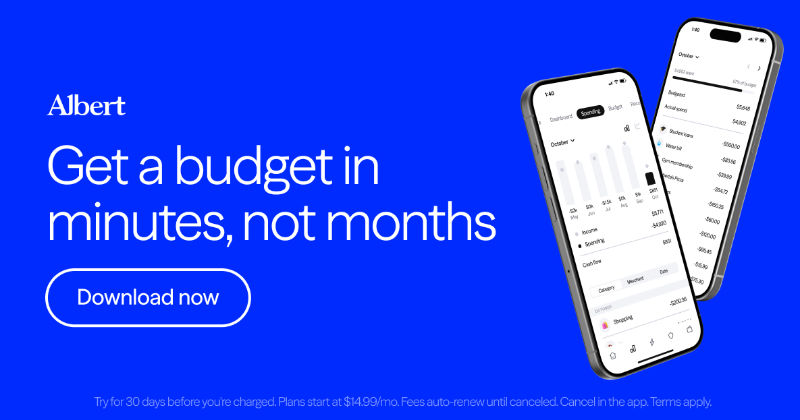
Albert aims to streamline everyday money tasks by bringing budgeting, saving, and spending insights into a single clean interface. The first thing that stands out is how quickly the app aggregates accounts and begins surfacing patterns. Within minutes of connecting checking, credit, and savings, you start seeing categorized transactions, a snapshot of recurring bills, and a simple projection of cash flow. It feels less like juggling spreadsheets and more like having a tidy dashboard that reveals where your paycheck is actually going.
Day to day, the app’s categorization is solid and improves as you correct labels. Groceries, subscriptions, transportation, and discretionary purchases are grouped in a way that makes overages easy to spot before the month gets away from you. Alerts are designed to be timely rather than noisy, flagging when a big charge posts, when a bill looks higher than usual, or when your balance dips near a risky threshold. This kind of nudge, when calibrated well, is often the difference between avoiding an overdraft fee and discovering it after the fact.
Saving is a clear focus, with tools that encourage small, regular contributions toward goals you name yourself. Whether you’re building a cushion for rent, setting aside funds for a vacation, or trying to tame an annual insurance premium, the app supports automated transfers based on rules you choose. The automation is optional but persuasive; once a goal is set, the default experience is to help you stick to it, not merely to track it passively. For many people, this shift from “I should save” to “I already saved this week” drives real behavior change.
Where Albert is at its best is in presenting next-best actions. Instead of overwhelming you with graphs, it highlights one or two decisions that might matter most today, such as pausing a forgotten subscription, moving a little extra into savings when income is strong, or preparing for an upcoming bill spike. This guidance keeps you oriented without demanding that you become a spreadsheet pro. If you prefer more control, you can still drill into transaction histories and tweak categories to your heart’s content.
No budgeting app is perfect, and Albert is no exception. Bank connections occasionally need refreshing, especially with smaller regional institutions, and some merchants can appear under vague labels until you edit them. Those tradeoffs are common across the category, but they’re worth noting if you rely on real-time precision for business expenses or if you expect every transaction to be perfectly named out of the gate. Overall, though, the balance of clarity, automation, and gentle prompts makes Albert feel approachable for beginners and efficient for seasoned budgeters.
What to Consider Before You Buy
Before committing, start by examining how the app’s budgeting philosophy aligns with your own. Albert emphasizes progress through automation and focused recommendations, which is a win if you want a co-pilot that keeps you moving without micromanagement. If you’re the type who wants to manually plan every category down to the dollar with complex rollovers, you can still get detail here, but you may prefer a more rigid envelope-style tool. Fit matters more than feature checklists; the best budgeting app is the one you’ll actually open and act on each week.
Pricing is another pivotal factor. Consider both any subscription costs and the value you expect to receive from features that are meaningful to you, such as richer insights, human support, or advanced automation. The most important question is whether the app can plausibly save you more than it costs, either by helping you reduce fees, cut recurring waste, or reach goals faster. If the paid tier is primarily unlocking convenience for tasks you rarely use, the value proposition thins out. If it spurs steady savings and prevents a couple of avoidable penalties each month, the math can work in your favor.
Connectivity and data reliability deserve careful attention. Most modern budgeting tools rely on third-party connections to sync transactions and balances. If your primary bank or card issuer is frequently problematic in other money apps you’ve used, test Albert with a trial period before paying. Reliable syncing is foundational; without it, even the most elegant insights are built on sand. For many buyers, this is the single most important consideration, because every other feature depends on accurate, timely data.
Security and privacy should be non-negotiable. Look for industry-standard encryption, clear disclosures about data usage, and straightforward controls for disconnecting accounts or deleting your information. Your comfort level here will vary, but the baseline should include secure authentication, reputable data aggregation partners, and transparent policies written in plain language. If you cannot easily understand how your data is handled, or you find it hard to revoke access, treat that as a red flag regardless of how polished the app appears.
Support quality and educational depth can influence long-term success. Some users benefit from quick help when a bank connection stalls or a charge won’t categorize correctly. Others want bite-sized lessons about building an emergency fund, paying down debt efficiently, or planning for irregular expenses. Evaluate whether Albert’s guidance style matches the way you like to learn and troubleshoot. Fast, competent support can turn minor hiccups into footnotes rather than showstoppers.
Consider also the broader financial ecosystem. If you already manage investing, retirement, or side-business finances elsewhere, think about how Albert will fit. Export options, categorization flexibility, and the ability to separate personal and business spending can reduce headaches at tax time. If you primarily live in one checking account and one credit card, integration complexity matters less, and the day-to-day convenience of alerts and saving rules takes center stage.
Finally, weigh habit formation above everything else. The most important outcome of any budgeting app is sustained behavior change: checking your money more often, trimming low-value spending, and funding the goals that matter. An app that nudges you consistently, presents clear wins, and lowers the friction to do the right thing is worth more than a feature-rich tool you rarely open. In practice, the hierarchy of importance tends to be data reliability first, habit-forming design second, and pricing third, with support and ecosystem fit close behind.
Common Questions
- Is Albert good for beginners who have never budgeted before? Yes, because it focuses on quick wins and clear next steps rather than demanding that you architect an elaborate plan from scratch. The dashboard highlights the few decisions that matter most today, which helps you build confidence before you dive into deeper customization later.
- Can I rely on the transaction categories, or will I be correcting them constantly? Categories are generally accurate and improve as you make edits, and you can train the app to remember your preferences for specific merchants. Expect occasional clean-up, especially with ambiguous vendor names, but most users find the maintenance burden light enough to keep momentum.
- What if my bank connection breaks? It happens with every modern budgeting app from time to time, especially after security updates by your bank. In most cases, reauthenticating solves it quickly. If your main institution is known to be finicky across money apps, use the trial period to stress-test syncing before paying for a subscription.
- Will Albert actually help me save more money? It can, provided you enable the automated behaviors that match your goals. Small, frequent transfers toward named targets add up, and timely alerts help you avoid fees and overspending. The app is a tool, not a miracle; consistent use is what turns insights into savings.
- How does Albert compare to a strict envelope system? Albert favors guidance and automation over hard envelopes. If you love the discipline of fixed category caps and month-to-month rollovers, you might prefer a more rigid tool. If you want an assistant that adapts to your patterns and nudges you toward better choices, Albert’s approach will feel liberating.
- Is it worth paying for premium features? The answer depends on whether you will use the extras regularly. If enhanced insights, stronger automation, or faster support help you avoid even a couple of fees or overspending spikes each month, the subscription can pay for itself. If you mostly want simple tracking, the basic experience may be sufficient.
- What about privacy and data safety? Look for transparent, plain-language policies and industry-standard security. You should be able to see what data is collected, how it is used, and how to disconnect your accounts or remove your information entirely. If you cannot verify those points easily inside the app, reconsider upgrading.
In closing, Albert succeeds by making the next dollar easier to direct with intention, not by dazzling you with charts. Its strengths are fast setup, practical nudges, and automated saving that feels almost invisible once it is in motion. If reliable syncing with your institutions checks out and the guidance style resonates with how you like to manage money, the app can be a steady ally for building better habits and reaching your goals with less friction.
Albert is not a bank. Banking services are provided by Stride Bank, N.A. and Sutton Bank, Members FDIC. Albert plans range from $14.99-$39.99. Try for 30 days before you're charged. Fees auto-renew until canceled. Cancel in the app. Terms apply. Funds in Albert Cash are held at Stride Bank, N.A. or Sutton Bank. Funds in Albert Savings accounts are held at Wells Fargo, N.A. Member FDIC. Cash and Savings account funds are eligible for FDIC insurance up to $250,000 per depositor, per FDIC insured bank, per ownership category and pass-through FDIC insurance is subject to specific conditions being satisfied. Deposit insurance covers the failure of an insured bank. Download to see if you qualify for Albert Instant Advance. Limits start at $25. Not all will qualify and few qualify for $1,000. Transfer fees may apply. See app for repayment terms. No Albert plan required for Instant. Cash back rewards are subject to terms. Albert Investing accounts are not FDIC insured or bank guaranteed and involve the risk of loss, including the loss of principal. Investment advisory services are provided by Albert Investments, LLC. Brokerage services are provided by Albert Securities, LLC, Member FINRA/SIPC.