
_logo.png)
- Budgeting & Goals: Retirement-focused goals via IRAs with bonus and recurring investments
- Investing: Full investment tracking (stocks, ETFs, fractional shares)
- Unique Features: Low to no commission trading, fractional shares, simple‑UI investing for beginners
- Bank Sync & Alerts: Bank account link, spending insights
- Best For: Those wanting a simpler entry to markets
- Disclosure: All investments involve risk and loss of principal is possible

How Budgeting Apps Can Change Your Financial Future

5 Ways Budgeting Apps Save You Money—Without You Noticing

Why Budgeting Apps Are the New Personal Finance Superpower
Helping millions of users make smarter purchases online.



Robinhood Investing App
Overview of Robinhood
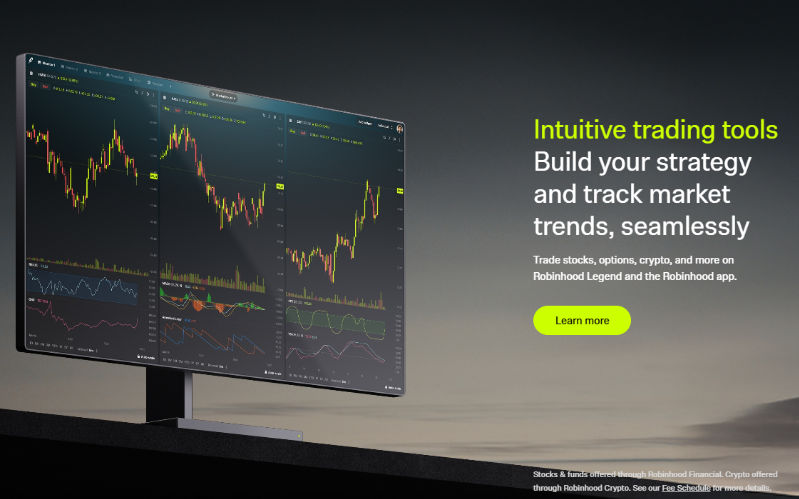
Robinhood is a mobile-first brokerage app designed to make investing more accessible to everyday users. It became popular by offering commission-free trades on stocks, exchange-traded funds, and options, all within an interface that feels more like a social app than a traditional brokerage platform. For many new investors, Robinhood is the first point of entry into the world of investing because it removes the friction of account minimums and trading fees.
The app places a heavy focus on ease of use. Account setup is straightforward, the onboarding process guides you through basic questions about your investing experience, and the interface uses clear buttons and simple charts rather than dense tables. You can see your portfolio value at a glance, review recent price movements for individual assets, and place trades with only a few taps. This simplicity is a major selling point, especially if you feel intimidated by more complex broker platforms.
At the same time, Robinhood is not just a toy. It supports features that appeal to more active traders, such as real-time market data, watchlists, price alerts, and the ability to place different order types like market, limit, and stop orders. The company has also expanded into cash management, retirement accounts, and margin investing for eligible users. These additions make it possible to keep more of your financial life under one roof, but they also introduce additional complexity and risk that you should understand before diving in.
One of the defining aspects of Robinhood is its attempt to blend education with activity. The app includes brief explanations of key terms and surface-level learning content, and news snippets appear alongside ticker pages. However, this information is relatively light compared to what you might find on more research-focused platforms. If you want deep fundamental analysis, screeners, or advanced charting tools, you may find Robinhood somewhat limited and may need to supplement it with external research tools or financial news sources.
Key Factors to Consider Before Using Robinhood
Before committing to Robinhood as your main investing platform, it is worth thinking carefully about several factors. The most obvious is cost. Commission-free trades are an attractive headline perk, especially if you make smaller or more frequent trades. Lower costs mean more of your money stays invested instead of being eaten up by fees. For many users, this is the primary reason for choosing Robinhood over more traditional brokerages that may still charge per-trade commissions or platform fees.
Ease of use and user experience are also important considerations. If you are new to investing, an intuitive interface can make the learning curve much less stressful. Robinhood’s clean design helps reduce the feeling of being overwhelmed; you can quickly navigate between your portfolio, watchlist, and individual asset pages without digging through complex menus. For some users, this frictionless experience encourages them to check their investments frequently and stay engaged with their financial goals.
On the other hand, simplicity can be a double-edged sword. Because the app makes it so easy to buy and sell, there is a risk that you might trade impulsively, chasing short-term price movements instead of maintaining a disciplined long-term strategy. If you know you are prone to emotional decisions, you may want to consider whether a more deliberate and research-heavy platform would better support your temperament. The most important factor for long-term success is not just the app you choose, but the behavior it encourages.
Another factor to weigh is the range of available features. Robinhood offers access to stocks, ETFs, and options. For many casual investors, that menu is more than enough. If your strategy is to buy and hold a diversified mix of low-cost ETFs and occasionally add a few individual stocks you believe in, the app can handle that easily. However, if you foresee needing access to certain mutual funds, bonds, or a broader universe of international securities, Robinhood’s lineup may feel restrictive.
Research and educational tools are crucial, especially if you are still learning how markets work. Robinhood provides basic company information, price charts, and headlines. This is helpful for quick checks, but it might not be sufficient if you want to dig into financial statements, analyst ratings, or advanced screening criteria. In that case, you will likely rely on other websites or tools for due diligence. The most important thing is to be honest about the kind of investor you want to be. If you value thorough research and detailed data above everything else, the app’s simplicity could become a limitation rather than a benefit.
Security and reliability should also be on your checklist. As with any brokerage, you should confirm that your account is protected by industry-standard security practices such as encryption and two-factor authentication, and understand what protections apply to your assets in the event of broker failure. Robinhood has experienced periods of high traffic where trading access was disrupted, which frustrated active traders. If you plan to trade frequently during volatile market conditions, downtime risk may be a significant concern.
Finally, consider your broader financial picture. Robinhood can be a useful tool, but it is only one piece of a healthy financial plan. Before you start trading aggressively, it is wise to ensure you have an emergency fund, manageable debt, and a clear sense of your long-term goals. The most important factors, for most people, are low costs, reasonable diversification, and disciplined behavior. If Robinhood’s design supports those priorities for you, it can be a strong starting point. If it tempts you into taking risks that do not fit your situation, you may need to set stricter personal rules or explore other platforms.
Common Questions
Is Robinhood a good choice for beginners?
For many beginners, Robinhood’s straightforward interface and commission-free structure make it appealing. It removes much of the friction around getting started and lets you experiment with small amounts of money. However, beginners should be careful not to confuse ease of use with low risk. The app does not prevent you from trading complex products or concentrating your portfolio in just a few aggressive positions. Pairing Robinhood with outside educational resources and starting with simpler strategies, like buying diversified ETFs, can help mitigate these risks.
How does Robinhood make money if trading is commission-free?
Instead of charging traditional trade commissions, Robinhood earns revenue in several other ways, such as securities lending, interest on uninvested cash, subscriptions to premium services, and routing orders through market makers who pay for that order flow. This business model is common among zero-commission brokers, but it raises questions about potential conflicts of interest. Users should understand that the way orders are routed could affect execution quality, even if it is not directly visible in the app.
Can I use Robinhood for long-term investing?
Yes, it is possible to use Robinhood for long-term buy-and-hold strategies. You can purchase shares of broad market ETFs or individual companies and hold them for many years. The challenge is that the app environment is designed to be engaging and responsive, which may tempt you to check prices constantly and trade more often than your long-term plan requires. If you choose Robinhood for long-term investing, it may help to schedule periodic portfolio reviews instead of reacting to every short-term fluctuation.
Is Robinhood safe to use?
In general, Robinhood follows standard brokerage practices regarding account protections and regulatory oversight. That said, “safe” in the context of investing depends largely on what you decide to buy and how you manage risk. Even with a secure platform, concentrating in volatile assets or using margin can dramatically increase the chance of losses. The platform itself can be structurally sound, while your individual strategy remains risky. Taking time to understand position sizing, diversification, and the potential downside of each investment is essential.
In summary, Robinhood investing app offers an accessible gateway into the markets through commission-free trades and a clean, approachable interface. It shines for users who value simplicity and low cost, and who are comfortable supplementing the app with external research and educational resources. The most important considerations before adopting it as your primary platform are your own investing behavior, your need for research tools, and your tolerance for potential trading disruptions during periods of heavy activity. If you stay disciplined, align your use of the app with a thoughtful plan, and remain aware of its limitations, Robinhood can serve as a convenient tool in building your investment portfolio.