




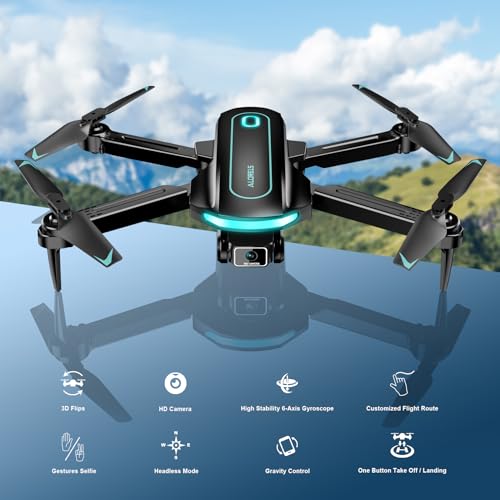


We also considered 10 others:


Our Top Choice
Compare Features


The order above is not editorial opinion, and it is not paid placement. It comes from what shoppers across our network actually do - which budget drones they compare, and which they ultimately buy. We re-rank as new data comes in, so the long-term favorites have to keep earning their spot against new entrants. The full method, including how we make money.
Budget Drones Buyer's Guide
Budget drones force a tradeoff between low cost and the features that keep a new pilot from losing or crashing the aircraft: stable positioning, usable battery warnings, and camera stabilization. The sharpest concerns are separating real flight-safety features from toy-grade marketing claims, and making sure batteries, apps, parts, and controls will still be usable after the first few flights.
Build
Build quality matters because a drone has to handle vibration, travel, minor bumps, and repeated takeoffs and landings without developing loose parts or unreliable behavior. Look for a rigid, well-finished frame, secure arms and prop mounts, good fit around the battery and camera assembly, and a reputation for consistent reliability; be wary of flimsy plastics, wobbly hinges, poor weather sealing, or designs that are difficult to repair after minor damage.
For build, separate true hobby-grade budget drones from toy-grade models by checking for brushless motors, rigid folding arms, protected propellers or included guards for beginners, replaceable props, and easy access to spare batteries and parts. If you plan to travel or fly casually, a compact sub-250 g style body can be convenient, but avoid flimsy frames with loose arms, exposed gears, or proprietary parts that cannot be replaced after a crash. Owner feedback supports this priority: shoppers often describe better budget models as surprisingly high-quality, compact, beginner-friendly, and confidence-inspiring for travel or starter use.
Ease
If you’re new to drones or buying for a child, ease of use can make the difference between a fun first flight and a frustrating crash. Look for simple setup, clear controls, beginner-friendly flight modes, stable hovering, and safety features that help you learn gradually. Be cautious of drones with complex calibration, sensitive controls, or advanced features that add a steep learning curve before you can fly confidently.
For ease of use, look for GPS hold or reliable optical-flow positioning, beginner mode, one-button takeoff and landing, altitude hold, simple calibration steps, and a return-home function that is easy to understand before the first flight. Also verify phone/app compatibility, controller layout, supported operating systems, and whether the drone can still be flown safely if the app disconnects; avoid phone-only controls if you want dependable outdoor flying. Owners commonly reinforce these points, praising beginner modes, steady hovering, easy launch, stable controls, and simple return-home behavior as the features that make first flights less intimidating.
Value
A drone’s value comes down to whether its camera quality, flight stability, safety features, battery life, and ease of use justify what you’re paying. You should look for a balanced package that matches how you’ll actually fly, and watch out for drones that seem inexpensive but require costly extras, have limited range, or lack features that help prevent crashes.
For value, do not judge a budget drone by headline specs alone; prioritize the features that actually prevent frustration: GPS, brushless motors, usable stabilization, spare batteries, replacement parts, a real controller, and safety functions such as low-battery warnings or return-home. Be skeptical of inflated “4K” claims without stabilization, exaggerated range or flight-time numbers, and obstacle-avoidance claims that may be limited or unreliable at this level. Owner sentiment lines up with this: buyers tend to feel the best budget drones overdeliver when they combine capable cameras, smart shots or multiple control modes, and enough performance to feel like an upgrade from cheaper starter drones.
Flight
Flight performance determines how confidently you can control the drone and how smooth your footage or flying experience will feel. Look for stable hovering, responsive controls, predictable handling in turns and descents, and enough speed for your intended use without feeling twitchy. Watch out for drones that drift, lag on inputs, or struggle in light wind, since those issues can make flying harder and shots less reliable.
For flight performance, match the drone to where you will actually fly: outdoor use needs GPS, brushless motors, stable hovering, meaningful wind resistance, and reliable failsafes for low battery, lost signal, or distance limits. For indoor or backyard practice, prop guards, optical-flow positioning, and low-speed modes matter more than range; avoid taking tiny toy-style drones into wind even if the listing suggests outdoor capability. Owners most often praise budget drones that hover steadily, respond predictably, handle light outdoor wind, and make flying approachable through one-key launch, return-home, and beginner-friendly control behavior.
Camera
Camera quality matters because it determines whether your drone captures sharp, stable photos and video or footage that looks shaky, soft, or washed out. Look for clear detail, good dynamic range, reliable stabilization, and useful shooting modes for the kind of scenes you want to capture. Also watch for limits like poor low-light performance, narrow field of view, or video specs that sound impressive but still produce mediocre real-world results.
For the camera, confirm whether video is stabilized by a mechanical gimbal, electronic stabilization, or only the drone’s hover stability; this matters more than the advertised resolution. Look for onboard microSD recording, smooth live view, adjustable camera tilt, usable frame rates, and clear sample footage, and avoid models where “4K” only means still photos or where footage is saved only through a laggy phone feed. Owner reports support this distinction: shoppers are happiest when budget drones produce clear outdoor footage, sharp photos, smooth live view, and stable casual video that looks better than expected for a beginner model.
Battery
Battery life determines how long you can stay in the air before you have to land, swap packs, or stop to recharge, so it directly affects how much filming, practice, or exploring you can do in one outing. Look for realistic flight-time expectations, not just ideal lab numbers, and consider how quickly batteries charge, whether spares are easy to carry, and how performance changes in wind, cold, or more demanding flight modes.
For battery, check real usable flight time, not just the maximum claim, and favor bundles with multiple batteries, a charging hub or USB-C charging, available replacement packs, and clear low-battery warnings. Budget drones often lose flight time in wind, cold, or aggressive flying, so avoid models with hard-to-buy proprietary batteries or no reliable return-home behavior when voltage drops. Owners repeatedly point to extra included batteries as a major advantage, saying they reduce downtime, extend short flight sessions, and make casual flying feel more worthwhile.
1,000,000+ shoppers use Buyer's Guide every week to find the best products and services online.

Helping millions of users make smarter purchases online.


