Pasta Makers for Home Kitchens
Posted on Saturday, May 16, 2026
To keep this site free for consumers, we receive compensation for customer referrals.
Pasta Makers for Home Kitchens
There is something strangely satisfying about turning a pile of flour and eggs into fresh pasta in your own kitchen. Maybe it is the rhythm of rolling dough, the dramatic flour-covered countertop, or the simple fact that homemade pasta somehow makes an ordinary dinner feel like an event. A pasta maker does more than produce noodles. It changes the entire experience of cooking.
For many households, pasta making becomes part hobby, part dinner prep, and part social activity. Some people use a pasta maker for quiet weekend cooking projects, while others turn it into a full kitchen gathering with family or friends shaping ravioli, cutting fettuccine, and arguing about whose dough is too dry.
Fresh Italian-style pasta has a different texture, bite, and overall feel than dried boxed pasta. The category of pasta makers exists to help home cooks recreate that fresh experience with more consistency and control.
Why Homemade Pasta Feels Different
Fresh pasta changes the pace of cooking. Instead of opening a package and boiling water immediately, the process becomes more hands-on. Dough is mixed, rested, rolled, folded, and cut. The kitchen gets louder, messier, and usually more entertaining.
That is part of the appeal.
Pasta making tends to pull people into the kitchen naturally. Children like cranking rollers and cutting strands. Guests gather around the counter offering unhelpful advice about flour amounts. Someone inevitably creates one noodle twice the size of the others. The process feels less like routine meal prep and more like a collaborative cooking project.
Even people who rarely bake or cook elaborate meals often find pasta making approachable because the results are immediate and visible. You can literally watch dinner take shape in front of you.
Manual Versus Electric Pasta Makers
One of the first decisions in the category is whether to choose a manual or electric pasta maker. Both approaches can produce fresh pasta, but they create very different cooking experiences.
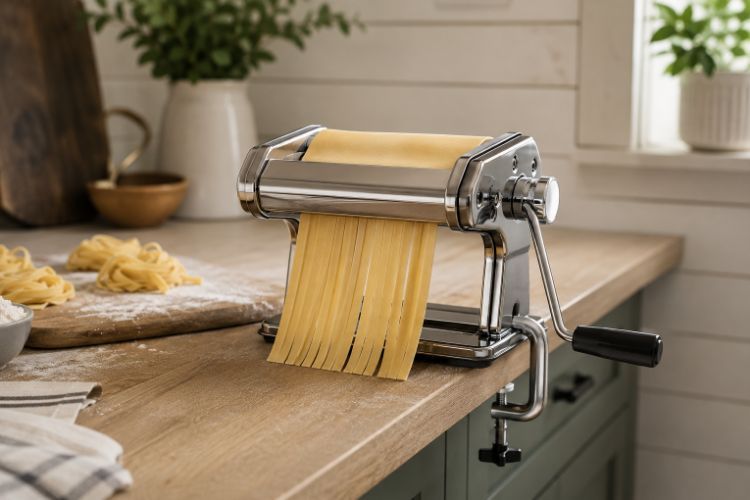
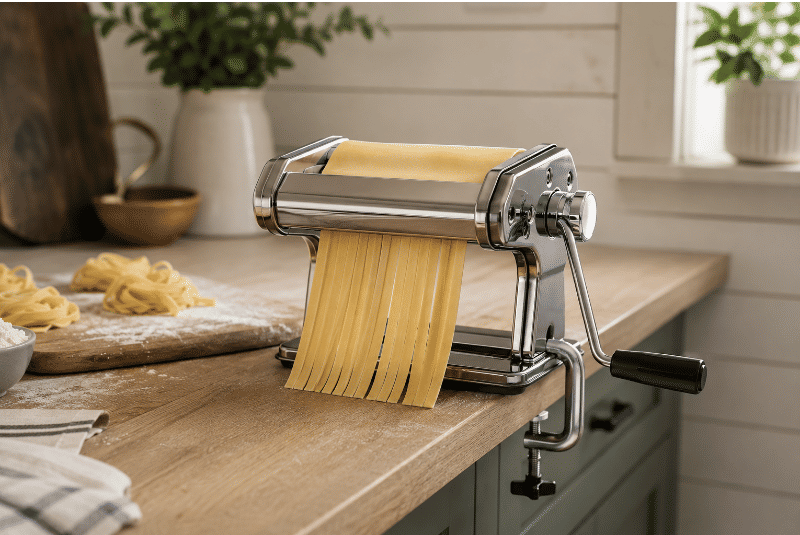
Manual pasta makers usually rely on a hand crank system that rolls dough through adjustable rollers. Many home cooks enjoy the physical involvement because it feels traditional and interactive. The slower pace can actually become part of the fun, especially during group cooking sessions.
Electric pasta makers automate portions of the process. Some mix dough internally and extrude pasta shapes automatically, while others simply motorize the rolling process. These systems may reduce physical effort and speed up production, particularly for larger batches.
The trade-off often comes down to convenience versus involvement. Some people enjoy the ritual of hand rolling pasta, while others prefer a streamlined approach that fits into busy weeknight cooking.
Popular Pasta Styles for Home Cooking
Different pasta makers support different pasta styles, and that can shape the entire cooking experience. Flat sheet rollers are commonly used for fettuccine, lasagna sheets, and ravioli preparation. Extrusion-style machines may produce tubular or shaped pasta varieties.
Interestingly, many households start with simple noodles and gradually expand into more elaborate projects. Once someone successfully makes fresh spaghetti, it becomes surprisingly tempting to attempt stuffed pasta, layered dishes, or delicate ribbon cuts the following weekend.
Fresh pasta also changes sauce pairings. Lighter sauces often cling differently to fresh noodles, and the softer texture creates a more delicate overall dish. That is part of why homemade Italian pasta feels distinct even when the ingredients are relatively simple.
Features That Matter During Real Cooking
Pasta makers are often evaluated by appearance or attachment count, but everyday usability usually matters more than extra complexity. Certain features directly affect how enjoyable the process feels over time.
- Roller Adjustability: Multiple thickness settings allow greater control over texture and pasta style. Thin sheets work differently for ravioli than they do for heavier noodles.
- Clamp Stability: Stable attachment systems help reduce movement during rolling. A machine sliding across the counter can quickly become frustrating.
- Cleaning Access: Dough residue tends to collect in rollers, cutters, and crevices. Simpler designs may be easier to maintain after repeated use.
- Attachment Compatibility: Some systems support interchangeable cutters or shaping accessories that expand the types of pasta possible at home.
- Motor Assistance: Motorized support can make repeated rolling easier, especially for larger quantities or thicker dough.
- Counter Space Requirements: Certain pasta makers store compactly, while others occupy more permanent kitchen space.
- Material Construction: Heavier materials may create a more stable rolling experience and reduce vibration during use.
- Dough Capacity: Electric systems with larger mixing chambers may better support family-sized cooking sessions or entertaining.
Many of these details become more noticeable after several uses rather than during initial setup.
The Social Side of Pasta Making
Homemade pasta has a way of turning dinner into an activity instead of just a task. That social aspect is one reason pasta makers continue attracting interest even among people who already have easy access to prepared food.
A pasta night naturally creates roles for everyone involved. Someone mixes dough. Someone feeds the rollers. Someone cuts strands too long and creates chaos near the drying rack. It is difficult to make fresh pasta quietly.
That atmosphere often becomes part of the tradition. Some households reserve pasta making for holidays, Sunday dinners, or gatherings with friends. Others use it as a slower weekend activity that breaks up the routine of faster weekday meals.
Unlike highly technical kitchen appliances, pasta makers invite participation. The process feels approachable, even when the first batch turns out slightly uneven.
Practical Expectations for Beginners
Fresh pasta usually takes more time than people initially expect. Dough consistency changes with humidity, flour type, and resting time. The first attempt may produce noodles that look charmingly imperfect rather than restaurant-ready.
That is normal.
In fact, part of the appeal is that homemade pasta feels personal. Uneven edges, slightly irregular cuts, and flour-covered counters tend to become part of the experience rather than signs of failure.
Storage and drying space are also worth considering. Fresh pasta can quickly occupy more kitchen area than expected, especially during larger cooking sessions.
Where Pasta Makers Fit Into Modern Kitchens
Pasta makers appeal to a wide range of cooking styles. Some people approach them as culinary hobby tools, while others use them for regular family meals. The category sits somewhere between cooking appliance and shared kitchen activity.
Fresh pasta also brings a tactile element back into cooking. In an era of increasingly automated kitchen tools, rolling and shaping dough by hand feels surprisingly engaging. The process encourages slower cooking, experimentation, and conversation in a way many countertop appliances do not.
Understanding how pasta makers fit into your cooking habits, available kitchen space, and preferred level of involvement can make narrowing down the category much easier. Buyer’s Guide can be a useful research resource for evaluating different pasta maker styles and features. Visit our website.

Related Blog Posts