Ice Maker Features That Matter
Posted on Monday, March 02, 2026
To keep this site free for consumers, we receive compensation for customer referrals.
Ice Makers: A Practical Buying Guide
Ice makers are appliances designed to produce ice automatically, eliminating the need for traditional freezer trays. They are commonly used in kitchens, home bars, offices, and hospitality settings where consistent ice production is part of daily routine. Understanding how ice makers function and how different configurations vary can make evaluating options more straightforward.
While the concept is simple, ice makers differ significantly in capacity, installation type, ice shape, and maintenance requirements. These distinctions influence convenience, output consistency, and suitability for specific environments. Before selecting a unit, it helps to understand how the category works and where certain features matter most.
How Ice Makers Operate
Most ice makers follow a similar process: water enters a mold or freezing chamber, ice forms through refrigeration, and the cubes are released into a storage bin. Sensors monitor ice levels and trigger new cycles as needed. The speed of this cycle varies depending on the appliance’s design and intended output capacity.
Some models connect directly to a water line, while others require manual refilling of a reservoir. The difference affects installation complexity and long-term convenience. Built-in drainage systems may also be present in certain configurations, influencing where the unit can be placed.
Types of Ice Makers
The ice maker category includes several primary configurations, each designed for a different setting and level of demand.
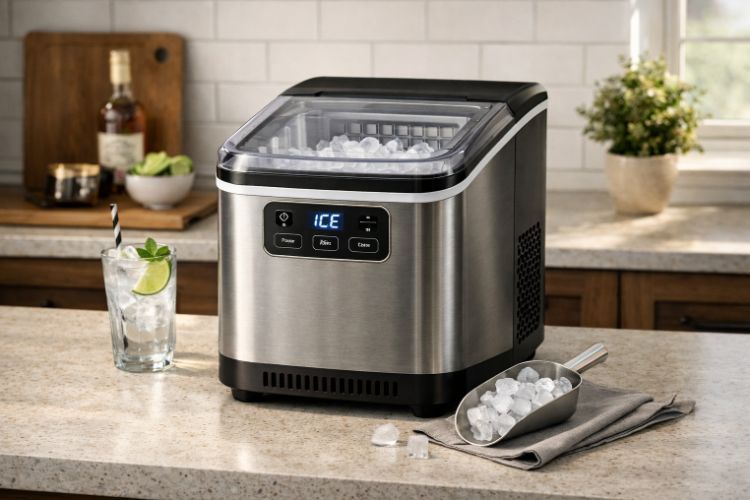
Portable Countertop Units: These compact appliances are designed for flexibility. They typically use refillable water reservoirs and plug into standard outlets. Countertop models are often chosen for small kitchens, recreational vehicles, or occasional use.
Undercounter or Built-In Units: Installed beneath cabinetry, these models connect to a dedicated water line. They are generally intended for consistent daily production and integrate more seamlessly into permanent kitchen layouts.
Refrigerator-Integrated Ice Makers: Many refrigerators include internal ice production systems. These are convenient but share freezer space and may have lower independent production capacity compared to standalone units.
Commercial-Scale Systems: Designed for high-volume environments, these units often feature larger storage bins and faster production cycles. They require more space and may involve more complex installation considerations.
Ice Shapes and Formats
Ice makers do not all produce the same type of ice. Cube size, density, and shape can influence melting speed and intended use.
Common formats include bullet-shaped ice, crescent cubes, full cubes, nugget-style pieces, and flake ice. Denser cubes tend to melt more slowly, while smaller or softer forms are easier to chew and blend. The preferred format often depends on beverage type, cooling speed needs, and user preference.
Key Features to Evaluate
When comparing ice makers, certain features directly affect usability and long-term performance:
- Production Capacity: Measured by how much ice can be produced within a set timeframe. Higher-capacity systems are suited for larger households or entertaining.
- Storage Bin Size: Determines how much ice can be held at one time. Larger bins reduce the need for frequent emptying.
- Water Source: Manual-fill reservoirs offer flexibility, while direct-line connections provide automation.
- Ice Size Selection: Some models allow users to choose between different cube sizes.
- Drainage System: Gravity or pump-assisted drainage affects placement options.
- Control Interface: Digital panels, indicator lights, and timers can improve ease of use.
- Cleaning and Maintenance Alerts: Some units include reminders to descale or sanitize.
- Noise Level: Ice production involves mechanical cycling, and operational sound may matter in open living spaces.
Understanding how these features align with daily habits helps narrow options efficiently. Not all users require high output or advanced controls, and prioritizing relevant features simplifies decision-making.
Performance and Usability Considerations
Production speed varies by size and configuration. Smaller portable ice makers may begin producing ice relatively quickly but store limited quantities. Built-in systems often take longer to install but may provide more consistent supply over time.
Temperature and ambient conditions also influence performance. Ice makers typically operate most efficiently within specific room temperature ranges. Placement in excessively warm environments may affect output consistency.
Routine cleaning is an important operational factor. Mineral buildup from water can affect taste and internal components. Units designed with accessible reservoirs and removable parts tend to simplify maintenance.
Design Constraints and Practical Limits
Ice makers are designed to produce and store ice, not to function as freezers. Stored ice may gradually melt and refreeze depending on insulation and storage conditions. This is normal behavior and varies by model.
Space requirements should also be considered. Portable models require countertop clearance and ventilation space, while built-in units require cabinet measurements and proper water connections. Electrical requirements may vary based on size and intended use.
Energy consumption is another factor to evaluate. Larger or continuously operating systems may draw more power than occasional-use countertop models. Reviewing operational specifications can help determine suitability for your environment.
Where Ice Makers Make Sense
Ice makers are most practical in households or settings where ice is used daily or in large quantities. Home entertaining, beverage preparation, and outdoor gatherings are common scenarios. In workspaces, break rooms, and shared environments, dedicated ice production can reduce reliance on freezer trays.
Smaller living spaces may benefit from compact, portable designs that do not require permanent installation. Conversely, larger kitchens with consistent usage patterns may prioritize integrated or undercounter configurations.
Understanding your average daily use, available space, and willingness to manage installation or plumbing helps clarify which category type aligns with your needs.
Evaluating Options with Confidence
Ice makers vary widely in format, output, and installation requirements. Identifying whether portability, capacity, or automation matters most will guide a more focused evaluation process. Each configuration serves a distinct purpose, and trade-offs are part of selecting the right fit.
With a clear understanding of production capacity, storage limits, maintenance expectations, and placement constraints, comparing options becomes more manageable. For additional category insights and structured buying guidance, visit our site to continue your research independently.

Related Blog Posts