
Choosing the Right Pool Cleaner
Posted on Wednesday, April 01, 2026
To keep this site free for consumers, we receive compensation for customer referrals.
Choosing the Right Pool Cleaner
Pool cleaners have evolved from simple manual tools into highly automated systems that handle much of the routine work involved in maintaining a clean swimming environment. As pool use increases in spring and summer, having a reliable cleaning solution becomes less of a convenience and more of a practical necessity. Understanding how different types of pool cleaners operate can help clarify what level of involvement, maintenance, and consistency you can expect.
Modern pool cleaners—particularly robotic models—have reshaped expectations around pool upkeep. Instead of frequent manual skimming and vacuuming, many pool owners now rely on systems that operate independently, reducing the time and effort required to keep water clear and surfaces debris-free. Choosing the right option starts with understanding how these systems fit into everyday pool care.
How Pool Cleaners Work in Practice
Pool cleaners are designed to remove debris, dirt, and buildup from the pool floor, walls, and sometimes the waterline. Depending on the type, they may rely on the pool’s existing filtration system or operate independently with their own motors and filters.
Some cleaners move in predefined patterns, while others use sensors or mapping systems to navigate the pool more dynamically. The level of coverage, cleaning precision, and cycle duration can vary significantly, which makes it important to align functionality with your pool’s size and shape.
Types of Pool Cleaners Available
The category includes several distinct types, each offering a different balance of automation, complexity, and user involvement.
Manual Cleaners
These require direct operation using poles and hoses. While they offer control over specific areas, they depend entirely on user effort and time.
Suction-Side Cleaners
Connected to the pool’s filtration system, these cleaners use suction to move and collect debris. They tend to operate continuously but may rely heavily on the pool’s pump performance.
Pressure-Side Cleaners
These use water pressure to move around the pool and collect debris into a separate bag. They can handle larger debris but may require additional equipment to function effectively.
Robotic Pool Cleaners
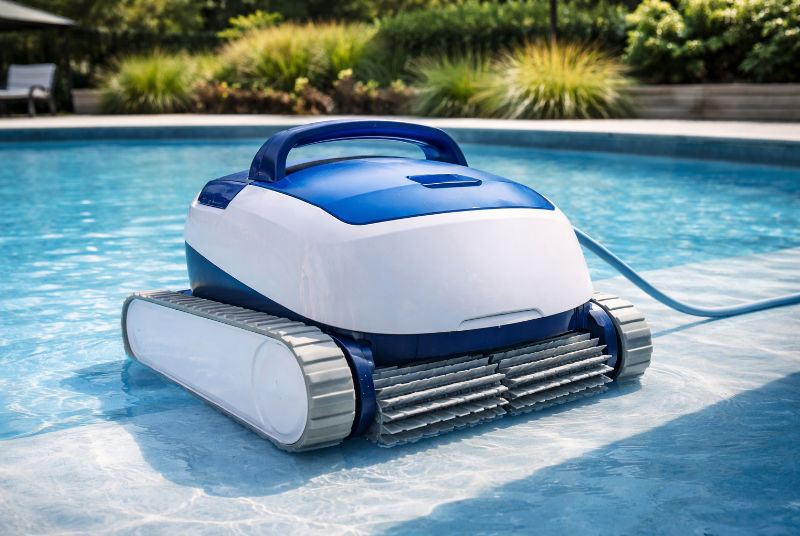
Self-contained units that operate independently of the pool’s system, robotic cleaners use internal motors and filtration to clean surfaces. They are typically programmable and designed for minimal user intervention.
Why Robotic Pool Cleaners Stand Out
Robotic pool cleaners have become a central part of the category due to their ability to simplify maintenance routines. Once placed in the pool, they can handle cleaning cycles with little to no supervision, making them particularly appealing for regular use during peak swim season.
These cleaners often include features like scheduled operation, wall-climbing capability, and fine filtration systems. This allows them to address both visible debris and smaller particles that can affect water clarity. For many pool owners, this level of automation reduces the need for frequent manual cleaning.
Another key aspect is consistency. Because robotic cleaners operate on set cycles, they can maintain a more uniform level of cleanliness over time. This predictability can make overall pool care feel more manageable, especially when combined with regular chemical balancing and filtration.
Features That Shape Cleaning Performance
Beyond the type of cleaner, specific features play a significant role in how effectively a unit performs in real-world conditions.
- Navigation System: Determines how the cleaner moves through the pool, whether randomly or through mapped paths.
- Cleaning Coverage: Some cleaners focus on the floor, while others extend to walls and waterlines.
- Filtration Capability: The ability to capture fine debris can influence water clarity and reduce strain on the main filtration system.
- Cycle Duration: Cleaning times vary, with some systems offering multiple cycle options for different levels of debris.
- Cable or Hose Management: Design elements that reduce tangling can improve usability and reduce interruptions.
Getting Your Pool Ready for Spring
As pools transition out of the off-season, cleaning becomes one of the first priorities. Leaves, dirt, and other debris often accumulate over time, making initial cleanup more intensive. A pool cleaner—especially an automated one—can significantly reduce the effort required during this stage.
After removing any cover and clearing large debris manually, running a cleaner through multiple cycles can help restore baseline cleanliness. This process supports other steps like balancing water chemistry and checking filtration systems, creating a more streamlined path to getting the pool ready for regular use.
Spring is also a practical time to reassess whether your current cleaning setup meets your needs. If manual cleaning has become time-consuming or inconsistent, transitioning to a more automated solution may align better with how the pool is used during the season.
Everyday Usability and Maintenance
Ease of use is a central consideration when evaluating pool cleaners. Systems that require minimal setup and simple maintenance routines tend to integrate more smoothly into regular schedules. For robotic cleaners, this often means periodically emptying a filter compartment and ensuring the unit is stored properly between uses.
Weight, portability, and storage also affect usability. A cleaner that is easy to lift and handle is more likely to be used consistently, which in turn supports better overall pool conditions. These small practical details can have a noticeable impact over time.
Noise levels and energy usage may also factor into the experience, particularly for cleaners that run frequently. While these elements vary, they can influence how seamlessly the cleaner fits into your environment.
Trade-Offs and Practical Limits
While robotic cleaners offer a high level of automation, they typically involve more upfront setup and require access to a power source. Suction and pressure-side cleaners, on the other hand, integrate with existing systems but may place additional demand on pumps and filters.
No cleaner eliminates the need for all manual intervention. Occasional brushing, skimming, and maintenance checks are still part of responsible pool care. Understanding this balance helps set realistic expectations for what a cleaner can and cannot do.
Pool shape, size, and surface material can also influence performance. Not all cleaners navigate steps, corners, or irregular layouts with equal effectiveness, which is an important consideration when narrowing down options.
Where Pool Cleaners Make the Most Impact
Pool cleaners are particularly valuable in environments where debris accumulates quickly or where regular manual cleaning is impractical. They support more consistent water conditions and can reduce the variability that comes with less frequent maintenance.
For households that use their pool often, especially during warmer months, automated cleaning can help maintain a ready-to-use environment with less day-to-day effort. This shift allows more time to focus on enjoying the pool rather than maintaining it.
Different users approach this category with different priorities. Some may prioritize simplicity and low involvement, while others may focus on integrating the cleaner into a broader pool maintenance routine.
Making a More Informed Choice
Choosing the right pool cleaner comes down to understanding how much automation you want, how your pool is used, and what level of maintenance fits your routine. Robotic options have introduced a more hands-off approach, while other types continue to offer simpler, system-based solutions.
As you prepare your pool for the season, considering how a cleaner fits into your overall setup can help create a more efficient and manageable experience. With a clear sense of your priorities, evaluating different configurations becomes more straightforward. For more guidance on pool equipment and maintenance strategies, check out our site for more information.


