Choosing the Right Light Therapy Lamps
Posted on Friday, February 20, 2026
To keep this site free for consumers, we receive compensation for customer referrals.
Choosing the Right Light Therapy Lamps
Light therapy lamps are designed to simulate specific qualities of natural light, typically to support circadian rhythm regulation, mood balance, and daytime alertness. These devices are commonly used in environments with limited daylight exposure or during seasons when sunlight is reduced. Understanding how light therapy lamps function — and what differentiates one model from another — is essential before evaluating available options.
While many units appear similar at first glance, their performance characteristics, light intensity, size, and design features can vary significantly. Choosing the right light therapy lamp depends less on aesthetics and more on how well the specifications align with your intended use and environment.
How Light Therapy Lamps Work
Light therapy lamps emit bright, diffused light intended to mimic the intensity of outdoor daylight without producing significant ultraviolet radiation. The primary purpose is to deliver a specific light intensity, measured in lux, at a comfortable sitting distance. Exposure typically occurs during morning hours to support natural sleep-wake cycles.
Unlike standard household lighting, light therapy lamps are engineered to provide concentrated brightness within a defined field. Proper positioning and duration of exposure influence how effectively the device fits into a daily routine.
Key Performance Specifications to Evaluate
Understanding technical specifications can make comparing light therapy lamps more straightforward. Rather than focusing on appearance alone, consider how measurable features affect usability and consistency.
- Light Intensity (Lux Output): Many light therapy lamps are rated to deliver a specific lux level at a designated distance. Higher lux ratings may allow shorter exposure times, while lower intensities may require sitting closer or extending sessions.
- Distance Requirements: Some units provide their stated intensity only at very close range. Reviewing recommended positioning helps determine whether the lamp will fit comfortably on a desk or table.
- UV Filtering: Light therapy lamps are typically designed to filter out ultraviolet rays. Confirming this feature helps ensure the light remains within intended safety parameters.
- Color Temperature: Measured in Kelvin, color temperature influences whether the light appears cooler (bluish-white) or warmer. Many light therapy lamps use cooler tones to resemble daylight.
- Adjustable Brightness Settings: Dimmable controls allow gradual adjustment, which can help users adapt exposure levels based on sensitivity or time of day.
- Size and Light Surface Area: Larger panels distribute light more broadly, reducing the need for precise positioning. Compact units may be more portable but require closer alignment.
- Timer Functions: Built-in timers support consistent session durations and simplify daily integration.
These specifications provide a practical foundation for narrowing options based on environment and comfort preferences.
Common Types and Design Formats
Light therapy lamps are available in several general formats, each suited to different spaces and usage habits.
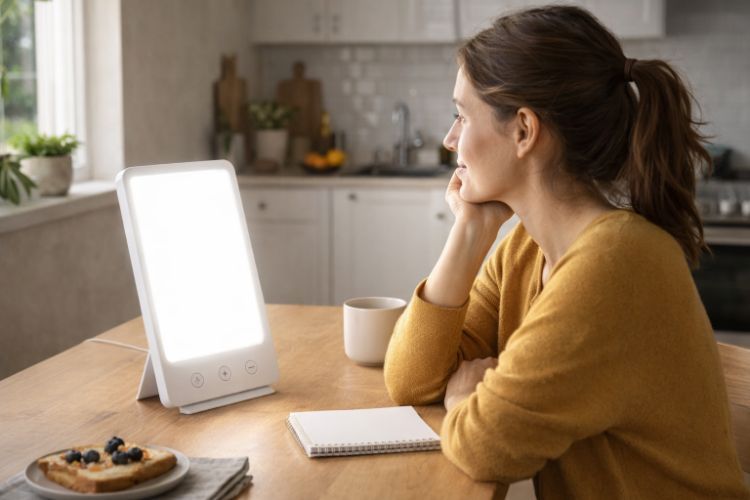
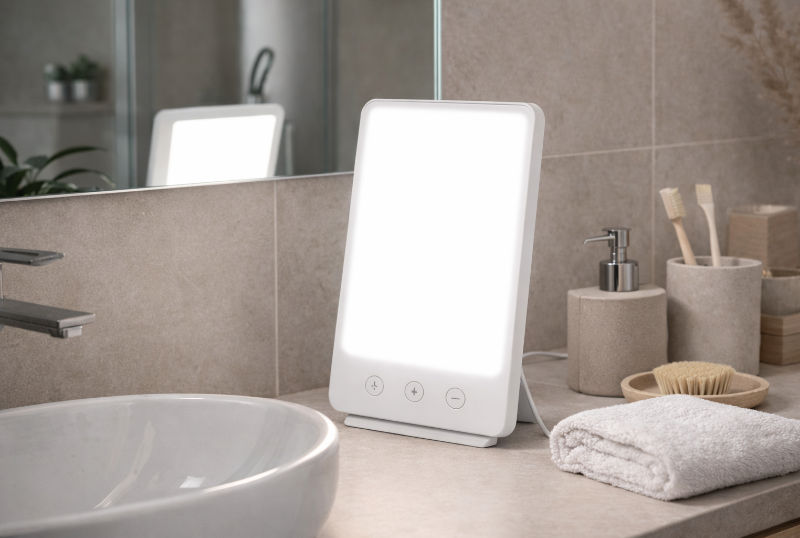
Panel-Style Lamps: These feature flat, rectangular light surfaces intended for desktop placement. They are often used during reading, working, or other seated activities.
Compact or Portable Units: Smaller devices prioritize portability and convenience. They may suit travel or shared living spaces where storage is limited.
Floor or Freestanding Models: Larger freestanding formats provide broader illumination and may integrate into living areas without occupying desk space.
Dawn Simulation Lamps: These devices gradually increase brightness in the morning to simulate sunrise. They are often used near the bedside rather than at a desk.
Each format addresses different spatial and routine considerations. Evaluating how and where the lamp will be used can clarify which configuration aligns with your daily schedule.
Practical Setup and Daily Use Considerations
Incorporating a light therapy lamp into a routine requires realistic expectations about placement and timing. Most units are designed for indirect exposure, meaning users do not stare directly into the light but position it within their peripheral field of vision.
Desk height, seating position, and surrounding room lighting all influence perceived brightness. Lamps placed too far away may not deliver their intended intensity. Conversely, overly close positioning may feel uncomfortable for some individuals.
Noise level, heat output, and overall footprint also affect daily usability. Slim, energy-efficient designs may integrate more easily into workspaces or small apartments.
Trade-Offs and Design Constraints
Light therapy lamps are engineered to replicate certain aspects of daylight, but they do not replace natural sunlight entirely. They are limited to indoor use and depend on consistent user engagement to fit effectively into a routine.
Higher brightness levels may require larger light panels or closer seating distances. Portable units trade surface area for convenience. Freestanding formats may offer broader illumination but require dedicated floor space.
Expectations should also be calibrated around comfort. Some individuals may prefer adjustable intensity settings to ease into regular exposure. Others may prioritize minimalist design to blend with existing décor.
Where Light Therapy Lamps Make Sense
This category is most practical for individuals who experience reduced daylight exposure due to geographic location, seasonal changes, shift work schedules, or indoor-oriented lifestyles. Home office workers often integrate light therapy lamps into morning routines, while apartment dwellers may use them in rooms with limited window access.
Students, remote professionals, and individuals adjusting to new sleep schedules may also evaluate this category as part of broader environmental lighting improvements. The suitability of a particular model depends largely on personal sensitivity to light, available space, and schedule consistency.
Building Confidence in Your Evaluation
Choosing the right light therapy lamps involves more than selecting a visually appealing device. It requires understanding intensity ratings, placement requirements, and how design features align with your daily environment. Small specification differences can meaningfully influence comfort and usability over time.
By clarifying your space constraints, preferred session length, and desired light distribution, comparing options becomes more manageable. Check out our page for our top picks that provide category insights to evaluate product types with clarity and independence.
With a clear understanding of how light therapy lamps function and where they fit into everyday life, narrowing your choices becomes a more confident and informed process.

Related Blog Posts