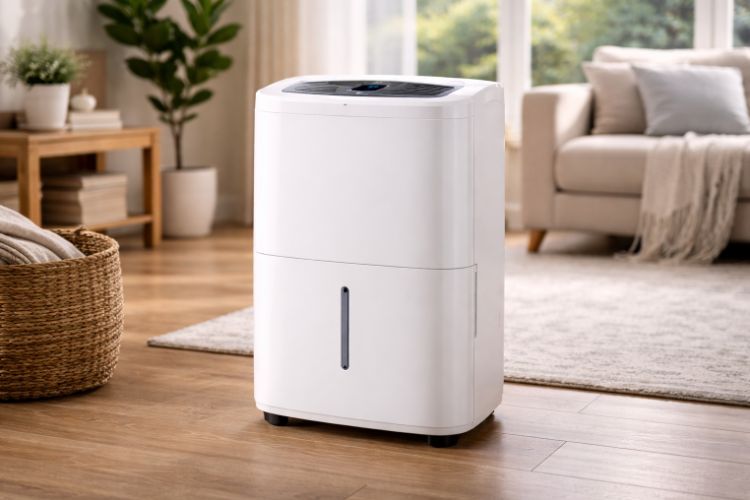
Choosing Portable Dehumidifiers for Home Use
Posted on Wednesday, April 08, 2026
To keep this site free for consumers, we receive compensation for customer referrals.
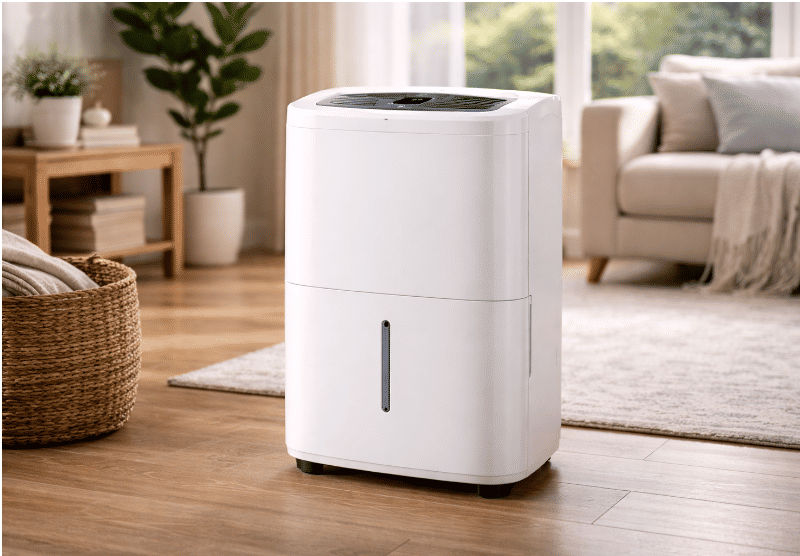
Choosing Portable Dehumidifiers for Home Use
Portable dehumidifiers are designed to reduce excess moisture in indoor environments, helping maintain balanced humidity levels across different living spaces. They are commonly used in areas where dampness, condensation, or musty air can develop, such as basements, bedrooms, and laundry areas. Understanding how portable dehumidifiers function and what differentiates one model from another can make evaluating options more straightforward.
This category is defined by mobility and adaptability. Unlike built-in systems, portable units can be repositioned as needed, allowing users to target specific rooms or seasonal problem areas. Before selecting a unit, it helps to understand how performance, size, and features align with the conditions in your home.
How Portable Dehumidifiers Work in Home Environments
Portable dehumidifiers draw in humid air, remove moisture through condensation, and release drier air back into the room. The collected moisture is typically stored in an internal tank or directed through a drainage system. This continuous cycle gradually reduces overall humidity levels, contributing to a more stable indoor environment.
The effectiveness of a unit depends on room size, initial humidity levels, and how frequently the device operates. Some units are designed for intermittent use, while others are intended for longer, continuous operation in persistently damp conditions.
Types and Configurations to Consider
Portable dehumidifiers come in several formats, each suited to different home layouts and moisture levels. Recognizing these variations helps narrow down which configuration aligns with your needs.
Compact units are typically used in smaller spaces such as closets or bathrooms. They are lightweight and easy to move but generally handle lower moisture volumes.
Mid-capacity models are designed for standard living areas like bedrooms or home offices. These units balance portability with moderate moisture removal capabilities.
Higher-capacity units are often used in larger or more humid spaces such as basements. While still portable, they may be heavier and require more consistent drainage management.
Some designs include integrated pumps for continuous drainage, while others rely on manual tank emptying. The choice between these options often depends on how frequently the unit will be used and whether a nearby drain is available.
Key Features That Influence Performance
When comparing portable dehumidifiers, several features directly affect how they perform in real-world conditions. Understanding these elements can clarify how different models may behave in your home.
- Moisture removal capacity: Indicates how much water the unit can extract within a given timeframe. Higher capacity is generally suited for larger or more humid areas.
- Tank size: Determines how often the unit needs to be emptied. Larger tanks reduce maintenance frequency but may increase overall size.
- Drainage options: Continuous drainage systems reduce the need for manual emptying, particularly in long-term use scenarios.
- Humidity controls: Adjustable settings allow users to target specific humidity levels rather than running the unit continuously.
- Portability features: Wheels and handles can make repositioning easier, especially in multi-room use.
- Noise output: Sound levels vary and may influence placement in bedrooms or shared living areas.
- Energy usage: Operational efficiency can vary depending on size, settings, and usage patterns.
How Performance Varies in Everyday Use
Performance is not only determined by specifications but also by how the unit is used within a space. Placement plays a significant role; positioning the dehumidifier in an open area with good airflow typically improves effectiveness. Obstructions or tight corners may limit air circulation and reduce efficiency.
Environmental conditions also matter. In consistently damp areas, a unit may need to run more frequently or continuously to maintain desired humidity levels. In contrast, spaces with occasional humidity spikes may only require periodic operation.
Temperature can influence performance as well. Some units operate more effectively in warmer conditions, while others are designed to function in cooler environments such as basements.
Design Considerations and Practical Constraints
While portability is a defining feature, size and weight still affect usability. Larger units may offer higher capacity but can be more difficult to move between floors or tight spaces. Smaller units are easier to handle but may require more frequent emptying or longer operation times.
Maintenance is another practical consideration. Regular cleaning of filters and monitoring of water tanks helps maintain consistent operation. Units with accessible components may simplify this process over time.
Power access and cord length can also influence placement options. In some cases, users may need to position the unit near outlets or drainage points, which can limit flexibility.
Where Portable Dehumidifiers Make the Most Sense
Portable dehumidifiers are often used in spaces where humidity levels fluctuate or where installing a permanent system is not practical. Common use cases include basements with limited ventilation, bedrooms affected by seasonal humidity, and laundry areas where moisture accumulates during use.
They can also be useful in transitional living situations or multi-level homes where different areas experience varying humidity conditions. The ability to relocate the unit allows users to address moisture where it is most noticeable.
For households dealing with localized dampness rather than whole-home humidity concerns, portable units offer a targeted approach without requiring structural changes.
Trade-Offs and Expectations to Keep in Mind
Portable dehumidifiers offer flexibility, but they also come with certain limitations. They typically manage humidity within a defined area rather than across an entire home. This means multiple units may be needed in larger or multi-room environments.
Noise levels can vary, particularly at higher fan speeds. While some units operate quietly, others may be more noticeable, especially in quiet settings. Balancing performance with sound considerations is often part of the selection process.
Water removal requires ongoing attention unless continuous drainage is used. Manual emptying can become a routine task depending on humidity levels and tank size.
Understanding these trade-offs helps set realistic expectations and ensures the chosen unit aligns with how it will be used day to day.
Approaching Your Decision with Clarity
Choosing a portable dehumidifier involves aligning capacity, features, and design with the specific conditions of your home. Factors such as room size, humidity levels, and intended usage patterns all play a role in narrowing down suitable options.
Rather than focusing on a single specification, it often helps to consider how different features interact in real use. A balanced combination of capacity, ease of use, and placement flexibility can make ongoing operation more manageable.
With a clear understanding of how portable dehumidifiers function and what influences their performance, comparing options becomes more structured. For more in-depth category insights and guidance, you can explore additional resources on our website.

Related Blog Posts