





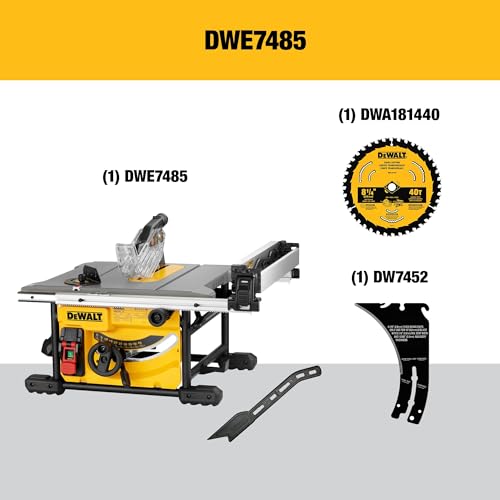


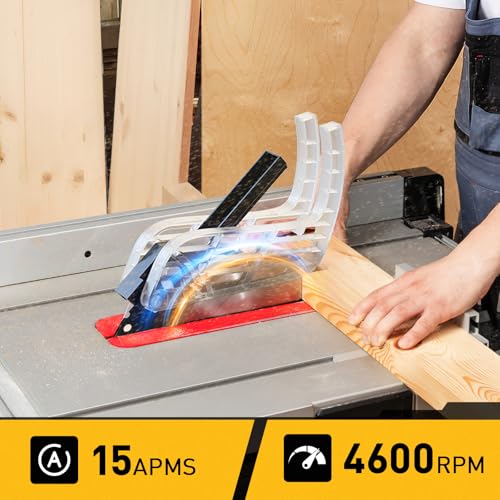








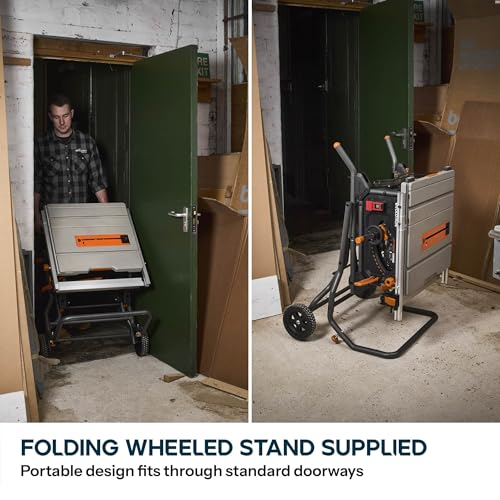


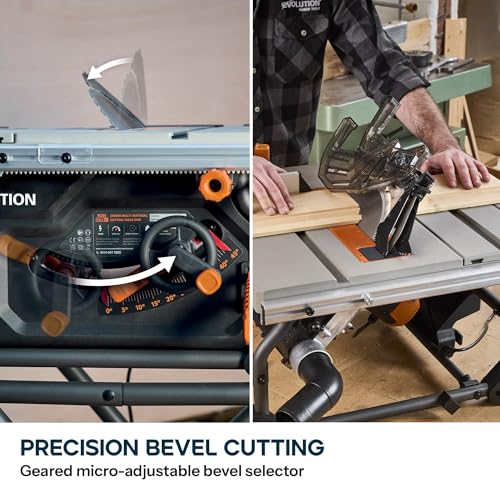
We also considered 10 others:


Our Top Choice
The order above is not editorial opinion, and it is not paid placement. It comes from what shoppers across our network actually do - which benchtop table saws they compare, and which they ultimately buy. We re-rank as new data comes in, so the long-term favorites have to keep earning their spot against new entrants. The full method, including how we make money.
Benchtop Table Saws Buyer's Guide
Benchtop table saws trade cabinet-saw mass for portability, storage ease, and jobsite usefulness, so the best pick is the one that stays accurate and controlled despite being compact. The sharpest concerns are fence/blade alignment, safe kickback control, enough power for real lumber and sheet goods, and whether lighter construction holds up after setup, transport, and repeated calibration.
Cut Accuracy
Benchtop table saws are often bought for space savings, but they still need to produce repeatable cuts. A saw that cannot hold alignment wastes material, makes joinery frustrating, and can become less safe if stock twists or binds during the cut.
For a benchtop table saw, prioritize a fence that locks parallel to the blade, a flat enough tabletop, accessible blade-to-miter-slot adjustment, and clear bevel/rip scales that can be calibrated. Avoid saws where the fence flexes when locked, the miter gauge has excessive side play, or common alignment checks require awkward disassembly, because small errors show up quickly in cabinet parts, flooring rips, and sheet-goods work. Owner sentiment strongly supports making accuracy a top filter: buyers praised saws that cut true, felt smooth, and were accurate either right out of the box or after only light calibration.
Power Range
A benchtop saw has less mass than a stationary cabinet saw, so underpowered cutting can show up as burning, chatter, or wandering cuts. The right power-and-blade combination lets the user feed stock steadily instead of pushing hard, which improves both finish quality and control.
Match the motor, blade system, and feed stability to the materials you actually cut: plywood, hardwood, trim stock, pressure-treated lumber, laminate, or occasional non-wood material when the saw and blade are rated for it. Look for clean cuts without bogging, a blade guard and riving knife that remain usable during typical rip cuts, and enough torque to avoid forcing the feed rate; avoid relying on a general-purpose blade for finish work if tearout matters. Owners highlighted performance as a strength when saws delivered surprising power, clean edges, and good results in hardwood and plywood, and they also valued included multi-material capability where appropriate.
Work Capacity
Benchtop saws are compact, but the workpiece is often not. Capacity affects whether the saw can safely support plywood panels, long trim, shelving, flooring, and thicker stock without tipping, binding, or needing improvised support.
Check the real working capacity, not just the tabletop footprint: rip width to the right of the blade, outfeed support needs, depth of cut at 90 and 45 degrees, bevel range, and whether extensions or a sliding table stay square under load. For sheet goods and jobsite remodeling, a larger table or sliding support can make cuts safer and more accurate, but it must lock solidly and not introduce wobble. Owner feedback shows shoppers notice this tradeoff, with table size called out as a draw and sliding-table-style features viewed as standout extras for the category.
Safety Control
Table saw injuries often happen fast, and compact saws can move or vibrate more than heavier machines. Safety hardware and intuitive controls help keep the workpiece controlled and make it easier to shut the saw down without reaching near the blade.
Do not treat safety parts as optional on a benchtop saw: look for a tool-free riving knife or splitter, blade guard, anti-kickback pawls where useful, push-stick storage, a large easy-off switch, stable footing, and dust collection that keeps the cut line visible. The best setup is one where the guard and riving knife are easy enough to install that they actually stay on for through-cuts; avoid designs that make safety gear fussy, flimsy, or incompatible with normal ripping. Owner sentiment specifically valued safety features as part of a stronger feature set, which matters because kickback and hand placement risks are central concerns in this category.
Setup Ease
Benchtop table saws are chosen partly because they can be moved where the work is. If setup is slow or alignment shifts whenever the saw is carried, the portability advantage disappears and accuracy suffers.
For garage, driveway, or jobsite use, look for a saw that can be assembled, aligned, moved, and stored without turning every use into a project. Key details include manageable weight, solid handles or stand compatibility, simple fence and blade calibration, onboard storage for guards and wrenches, and clear setup instructions; avoid units that require repeated recalibration after moving. Owner reports support this as a major buying factor: setup was described as straightforward, with buyers appreciating that the saw could be put into service quickly without a complicated adjustment process.
Build Value
Benchtop saws must balance cost, weight, and rigidity. Weak locks, flexing parts, or fragile accessories can turn an attractive feature list into inconsistent cuts and more maintenance over time.
Judge value by the parts that affect long-term use: fence rigidity, table and trunnion stability, bevel-lock feel, miter slot quality, switch durability, stand or base stiffness, and whether plastic components are protected during shipping and normal handling. A feature-rich saw is only a good buy if the mechanisms remain square and the accessories do not feel like weak points; inspect promptly for broken parts and verify that all adjustments lock firmly. Owner sentiment was positive on value, with buyers describing strong bang for the buck and broad satisfaction, but it also flags sturdiness as a watch-out when plastic parts arrive broken or build quality feels less robust.
1,000,000+ shoppers use Buyer's Guide every week to find the best products and services online.

Helping millions of users make smarter purchases online.


