





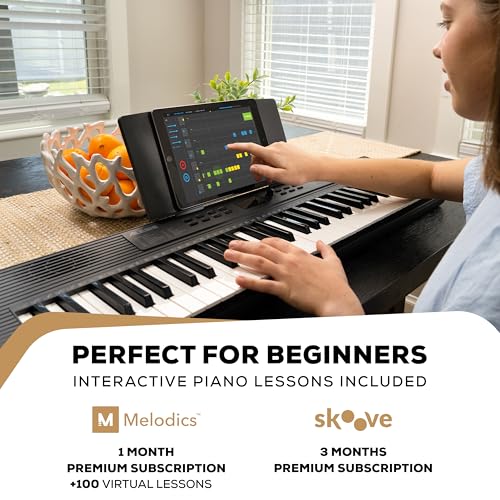

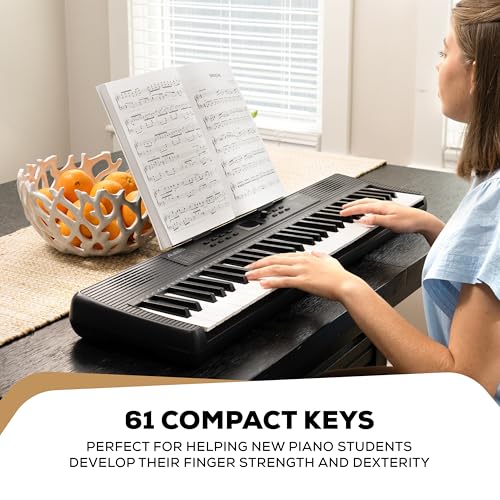


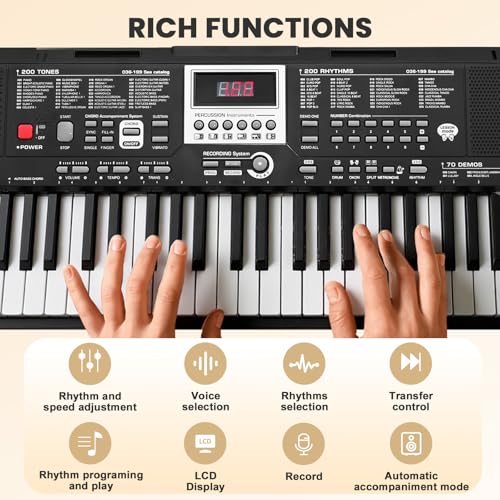
We also considered 10 others:


Our Top Choice
Compare Features


The order above is not editorial opinion, and it is not paid placement. It comes from what shoppers across our network actually do - which beginner piano keyboards they compare, and which they ultimately buy. We re-rank as new data comes in, so the long-term favorites have to keep earning their spot against new entrants. The full method, including how we make money.
Beginner Piano Keyboards Buyer's Guide
Beginner piano keyboards sit between two goals: making practice inviting on day one and not becoming a toy the learner outgrows after a few months. The sharpest checks are whether the keys build transferable piano technique—full-size, touch-sensitive, preferably weighted or at least convincingly responsive—and whether the package is stable, quiet-practice ready, and practical for the space where lessons will actually happen.
Quality
A piano keyboard should feel solid and dependable every time you sit down to play, so pay attention to build quality, keybed sturdiness, and whether the body flexes or rattles under normal use. If it includes a stand, make sure it feels stable at your playing height and doesn’t wobble, shift, or make the keyboard feel unsafe during more energetic playing.
For this niche, judge quality by the parts that affect daily practice: a stable chassis that does not flex, keys that return evenly without sticking or rattling, a secure music rest, a stand that does not wobble under a child’s hands, and jacks/power connections that feel snug. Avoid ultra-light “starter” sets if the stand, stool, or pedal looks flimsy, because beginners tend to press hard, move around, and practice in short unsupervised bursts. Owner feedback supports looking for sturdy starter builds: buyers often describe entry-level models and all-in-one kits as solid, nicer than expected, and practical for apartments or moving around the home, especially when the essentials are included in one purchase.
Learning
If you’re buying for a beginner or child, the right keyboard can make early practice feel approachable instead of frustrating. Look for age-appropriate size, simple controls, built-in lesson or practice features, and keys that support good technique; be cautious of toy-like models that may be fun at first but can limit progress.
Prioritize learning features that reinforce real piano habits rather than distract from them: full-size keys, touch sensitivity, a sustain pedal input, headphone practice, clear metronome/tempo controls, and enough keys for lesson books—ideally 88 if the learner is taking traditional piano lessons. Lighted keys and screens can help very new players follow songs, but they should not replace reading music or listening for rhythm; if a teacher is involved, confirm the keyboard meets that teacher’s minimum key count and action expectations. Owner sentiment backs this split: learners and kids are often reported to start quickly on approachable keyboards, while weighted or touch-sensitive keys receive particular praise for feeling closer to an acoustic piano and lasting beyond the first stage.
Features
The right features can make a keyboard easier to practice on and more enjoyable to use day to day, especially if you want built-in lessons, metronomes, recording, accompaniment styles, or light-up keys for guidance. Look for controls that are simple to understand, useful accessories like a stand, bench, headphones, or pedal if you need them, and enough functionality to support your goals without burying basics under confusing menus or novelty effects.
Choose features around the practice routine you need: headphones for quiet apartments, an adjustable bench or stool for proper posture, a music rest for books, a sustain pedal for early repertoire, USB/MIDI or app connection if lessons use software, and a power adapter rather than relying only on batteries. Be cautious with huge sound-effect lists, microphones, and percussion modes if they come at the expense of key feel, stability, or a usable pedal, because beginners need consistent repetition more than novelty. Owner feedback suggests bundles can be genuinely useful when they include practical extras such as stands, stools, headphones, music rests, pedals, bags, lessons, and easy setup; light-up keys and LCD guidance are also commonly appreciated for helping beginners practice songs more easily.
Value
You want a piano keyboard that gives you strong core performance for what you spend, especially realistic key feel, dependable sound quality, useful learning or connectivity features, and solid build quality. Watch out for models that seem feature-packed but compromise on the basics, since extras matter less if the keys feel cheap, the speakers are weak, or the instrument won’t support your playing as you improve.
Value in a beginner keyboard is not the lowest upfront spend; it is avoiding a second purchase too soon. A better-value choice usually has full-size keys, touch response, reliable tuning, a stable stand, quiet-practice capability, and accessories you would otherwise need immediately, while still leaving room to upgrade later if the learner commits. Owner reports support this: shoppers frequently see starter keyboards and complete kits as strong value when they feel better built than expected, cover the essentials, and include useful items like a seat, stand, headphones, microphone, stickers, or other basics in one box.
Sound
Sound quality shapes how satisfying and realistic your playing feels, especially if you’re using the keyboard to learn dynamics, practice regularly, or perform for others. Look for natural piano tones with clear bass and treble, enough volume for your space, and speakers that don’t distort when played loudly; be wary of thin, artificial sounds or notes that fade unnaturally.
For piano learning, listen first to the main acoustic-piano voice: it should be in tune across the keyboard, sustain naturally, and respond differently when played softly versus firmly if touch sensitivity is included. Built-in speakers should be clear at home-practice volume without buzzing, but also test the headphone output because many beginners practice quietly; avoid models where loud volume masks thin tone or uneven samples. Owner sentiment lines up with realistic expectations: clearer, more piano-like tones and properly tuned sound earn strong praise for practice, while several buyers note that entry-level sound can be good enough for beginners but should not be expected to match more advanced instruments or dedicated learning apps.
Portability
Think about where you’ll play and store the keyboard, because size and weight can make the difference between an instrument you use often and one that stays tucked away. If you need to move it between rooms, take it to lessons, or store it in a closet, look for a lighter, more compact design; if it will stay in one spot, a larger keyboard may feel more stable but will be harder to relocate.
Match portability to the learner’s actual use: an 88-key board is still much easier than an acoustic piano but can be long and awkward, while folding or battery-powered models are better for travel, shared rooms, campers, or practice away from home. Check the tradeoff carefully: portable designs should still have full-size keys, a stable playing surface, enough battery life for a session, and a protective bag or case; very light stands can wobble, and some compact models may compromise key feel. Owner feedback supports the convenience angle—buyers like manageable weight, compact builds, folding designs, and built-in batteries for moving around or traveling—while also noting that full-size packages can be cumbersome and that expectations about stand stability and semi-weighted feel can vary.
1,000,000+ shoppers use Buyer's Guide every week to find the best products and services online.

Helping millions of users make smarter purchases online.


