


















We also considered 10 others:


Our Top Choice
Compare Features


The order above is not editorial opinion, and it is not paid placement. It comes from what shoppers across our network actually do - which battery powered heaters they compare, and which they ultimately buy. We re-rank as new data comes in, so the long-term favorites have to keep earning their spot against new entrants. The full method, including how we make money.
Battery Powered Heaters Buyer's Guide
Battery-powered heaters trade usable heat for portability: batteries drain quickly at space-heater wattages, so the best choice is usually a close-range personal warmer rather than a whole-room replacement. Before comparing comfort features, verify whether the unit truly heats from a battery, what battery pack it requires, its real runtime on heat, and whether it has tip-over, overheat, and charging/battery protections.
Size
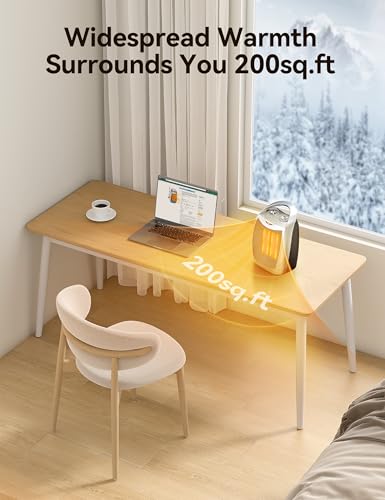
Size matters because a space heater needs to fit where you’ll actually use it without blocking walkways, vents, doors, or furniture. Look for a footprint and height that suit your room, desk, or bedside area, and remember that some compact heaters still need clear space around them for safe airflow and heat dispersal.
For size, buy around the actual heated area you need, not just the footprint: a genuinely battery-powered unit should be treated as a desk, tent-vestibule, vehicle-emergency, or bedside close-range heater, while “small room” claims may require outlet-level wattage. Check the listed watts, battery capacity, carrying weight with the battery installed, stable base size, and required clearance around the hot outlet; avoid ultra-tiny units if they sacrifice runtime, airflow, or safety spacing. Owner feedback supports compact models for this use case: shoppers often like small, quiet heaters that fit on desks, in offices, bathrooms, bedrooms, cubicles, and other tight spaces, and many are pleased when a compact unit delivers strong targeted warmth without getting in the way.
Controls
Clear, intuitive controls make a space heater easier and safer to use, especially if you’ll be adjusting it often from a bed, desk, or couch. Look for simple temperature and mode settings, readable buttons or displays, and a remote control if you want to change settings without getting up. Watch out for controls that are tiny, poorly labeled, overly complicated, or hard to use in low light.
For controls, prioritize battery-aware controls: selectable low/medium/high heat, a real thermostat or temperature limit, timer shutoff, battery-level display, lockout against accidental activation in a bag, and automatic shutoff when tipped or overheated. Eco modes and thermostats matter more on battery units because cycling can stretch runtime, while simple on/off heaters may feel warm briefly and then drain the pack fast; if there is a remote, confirm it does not replace essential onboard controls. Owner sentiment lines up with this: buyers strongly appreciate thermostat-style settings, Eco cycling, timers, remotes, oscillation, and multiple heat levels because they can maintain comfort, shut off automatically at a target temperature, and adjust warmth without constantly getting up.
Noise
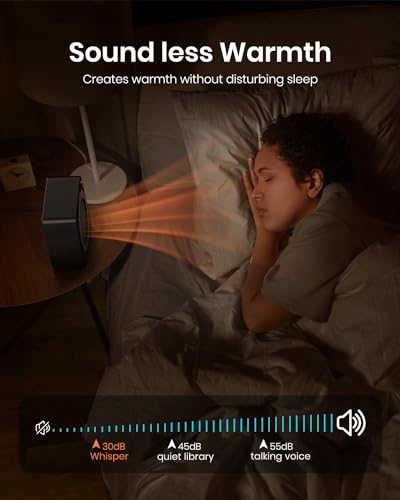
Noise level matters if you plan to use a space heater in a bedroom, office, nursery, or anywhere quiet, since fan hums, clicks, or cycling sounds can become distracting over time. Look for models described as quiet or low-noise, and pay attention to whether the sound is a steady background hum or an intermittent on-off noise that may be more noticeable.
For noise, decide whether the heater must be usable beside a bed, at a desk, in a vehicle, or during calls, because most battery-capable heaters that move meaningful heat use a fan; fanless radiant designs may be quieter but usually warm a smaller spot. Look for a published decibel rating, separate fan speeds, and no rattling battery compartment, and remember that “quiet” does not mean silent if airflow is required. Owner feedback is generally favorable for compact heaters used near desks, beds, living spaces, and TVs, with many finding them quiet enough for daily routines, but some buyers still notice fan noise and do not consider them silent.
Value
A space heater’s value comes down to how well its heat output, controls, safety features, and build quality match what you pay. Look for a model that fits the room size you actually need to warm and includes useful features you’ll use, while being wary of paying extra for flashy extras that don’t improve comfort, safety, or durability.
For value, judge cost by delivered heat per runtime, not by sticker price alone: confirm whether the battery and charger are included, whether it uses proprietary packs, how many minutes it runs on the heat setting you will actually use, and how replacement batteries affect total cost. A battery heater is usually best value as targeted supplemental heat or emergency personal warmth, not as a substitute for central heat or a corded room heater; avoid paying for “whole-room” promises if the battery capacity cannot support that output. Owner sentiment supports the targeted-use value case: buyers often feel these compact heaters are worthwhile when they warm a desk, bathroom, office, or other close-range area efficiently and reduce the need to heat a larger space.
1,000,000+ shoppers use Buyer's Guide every week to find the best products and services online.

Helping millions of users make smarter purchases online.


