









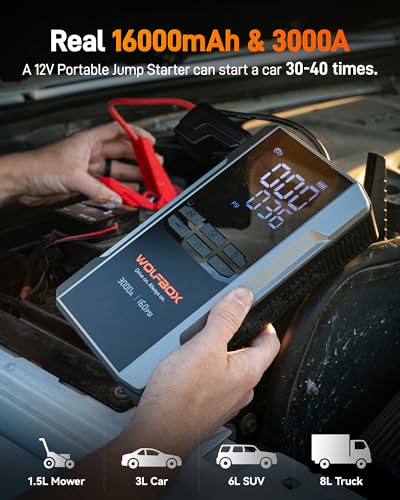
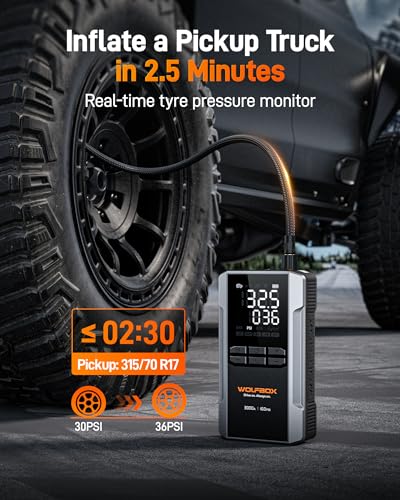


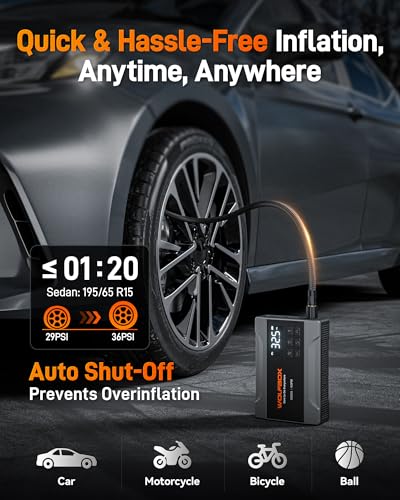







We also considered 10 others:


Our Top Choice
Compare Features


Why These Features Matter:
A jump starter is one of those objects you don’t think about until you’re wearing the wrong shoes, it’s sleeting sideways, and your car answers the key with a sad little click. At that moment, you don’t care about a heroic spec sheet. You care about three things: Will this start my car? Will I be able to use it without a PhD? And where has this been hiding, and why is it dead too?
The best jump starters are basically calm, competent friends: they show up charged, don’t require you to interpret blinking hieroglyphics, and don’t take up half your trunk like an ’80s boombox. Below are the features that actually change daily life (and roadside life), plus the little annoyances no one mentions until you’ve already bought one.
Power That’s Actually Useful (Not Just Impressive-Sounding)
Most people buy too small, or buy something comically overbuilt and then never charge it because it’s the size of a hardcover dictionary. The sweet spot is a jump starter that can reliably start your specific vehicle in real conditions: cold mornings, an older battery, a car that’s been sitting at the airport lot for a week.
- What to prioritize: Reliability for your engine size and battery type, plus consistent performance when it’s cold.
- The lived-experience tell: It works on the first or second try without you having to “reset” anything or re-clamp three times while cars whoosh by.
- Note: If you drive a standard sedan or small SUV, you usually don’t need the most monstrous option. If you drive a big truck, have a higher-displacement engine, or live where winter feels personal, it’s worth sizing up.
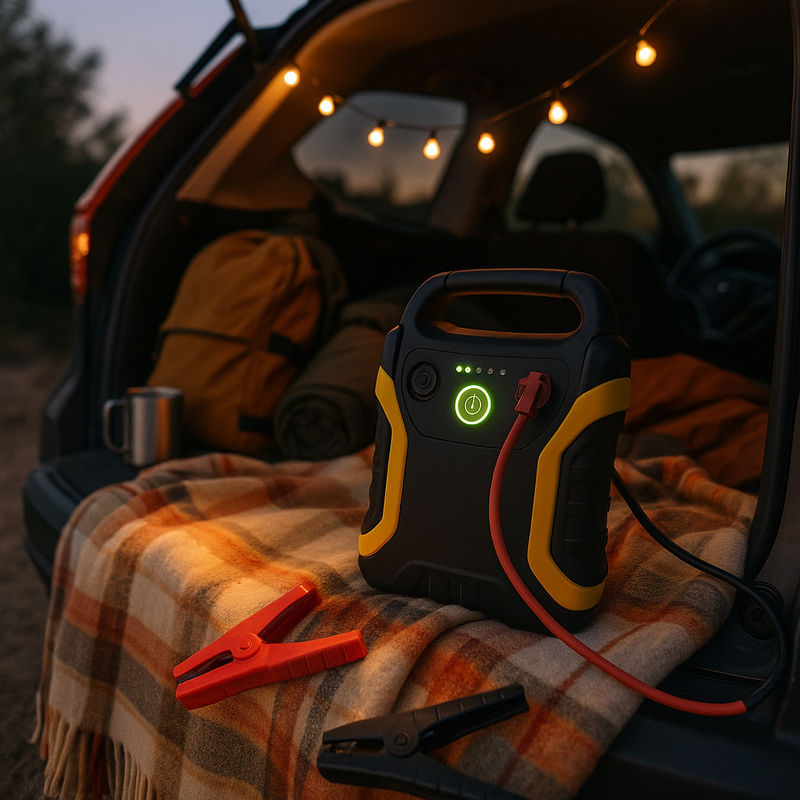
Clamp Design: The Difference Between “Easy” and “A Full-Body Stress Event”
Clamps are where good jump starters reveal themselves. The best ones feel solid and grippy, with enough jaw opening to attach cleanly without slipping off the terminal the second you look away. The worst ones are fiddly little crab claws that make you question your fine motor skills.
- Look for: Clamps that open wide, bite firmly, and have clear red/black markings you can read in dim light.
- Why it matters: You’re often doing this at night, in rain, or while holding your phone flashlight in your mouth like a Victorian orphan.
- Small but huge: Cable length. Too short and you’re doing an awkward crouch-twist while trying not to drop the unit into a puddle.
Foolproof Safety Features (Because Everyone Gets Nervous Around Car Batteries)
Even if you’re the type who changes their own wiper blades and knows what a socket wrench is, jump-starting still makes most people slightly tense. Good safety protections don’t just prevent disaster; they lower the emotional temperature.
- Features that matter in real life: Reverse polarity protection, spark-proof design, and clear error indicators.
- What “good” feels like: The unit tells you—plainly—what’s wrong (clamps reversed, bad connection) instead of blinking seven times and expecting you to consult a PDF.
- Caveat: “Smart” protections sometimes mean the unit refuses to start a very dead battery without a specific override step. That’s not a dealbreaker, but you should know before you’re stranded.
Battery Capacity & Standby Life: The Real Betrayal Is a Dead Jump Starter
A jump starter that lives in your trunk is basically a tiny pet: it needs occasional attention. The best ones hold charge well over time, so you’re not discovering (too late) that your emergency device also needs rescuing.
- Prioritize: Low self-discharge, clear battery indicator, and a charging routine that fits your life.
- Practical guidance: If you’re the kind of person who remembers to water plants, you can handle “check every few months.” If you’re not, choose a unit known for long standby time.
- Annoyance to watch for: Battery indicators that are overly optimistic. “Three bars” can mean “one sad attempt left” in the cold.
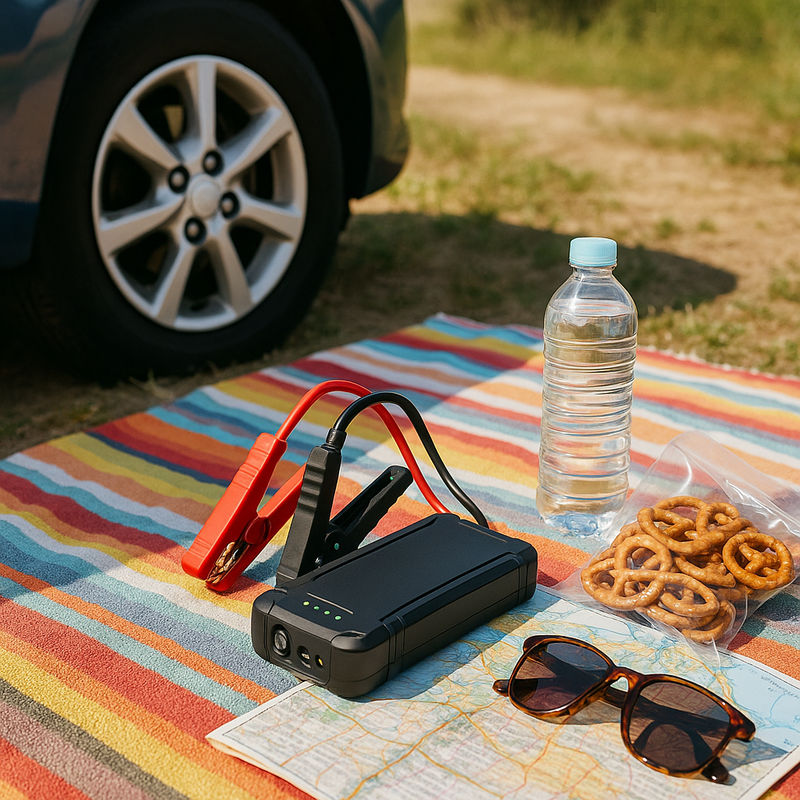
Charging It: USB-C Is a Blessing, Proprietary Cables Are a Curse
The charging situation matters more than brands want to admit. In an ideal world, your jump starter uses the same cable as your phone, your laptop, and the miscellaneous tangle in your kitchen drawer. Proprietary chargers are how gear becomes landfill.
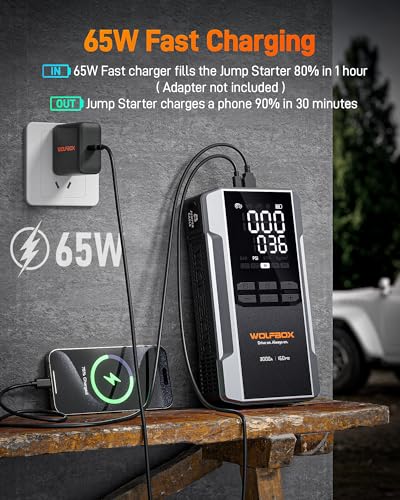
- Look for: USB-C charging (ideally both input and output) and the ability to top up from a car charger.
- Why it matters: You’ll actually charge it if it’s easy. If it requires digging out a special cable, it will quietly die in your trunk like a neglected Tamagotchi.
- Honest caveat: Some units charge slowly. If you only remember to charge things 20 minutes before leaving, you may want faster charging or a habit shift. (I can’t sell you a new personality, sadly.)
Size, Weight, and Where It Lives (Trunk, Glove Box, or Under the Stroller)
Jump starters tend to “live” somewhere semi-permanent: trunk organizer, under the passenger seat, the same tote bag as reusable grocery bags and one rogue soccer cleat. If it’s bulky or heavy, it migrates out of your car—right before you need it.
- Best for small-space reality: Compact units you can stash without reorganizing your whole life.
- What to consider: If you have a tiny sedan trunk, or you’re hauling kid gear, you want something that doesn’t demand its own zip code.
- Little detail that matters: A case. Not for aesthetics—so the clamps don’t snag on everything and so you’re not scraping around for a loose cable at midnight.
Usability: Buttons, Lights, and Not Making You Feel Stupid
The best jump starter interface is boring in the way good design is boring: obvious power button, clear status lights, straightforward labeling. The worst ones make you feel like you’re trying to operate a nightclub smoke machine.
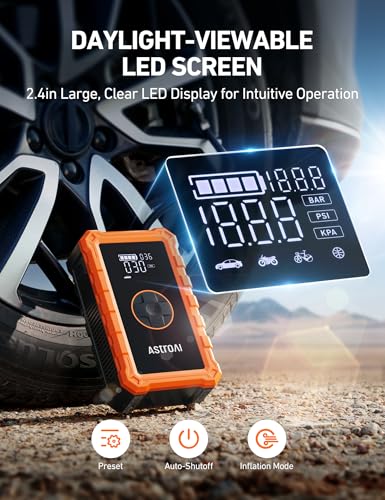
- Look for: A readable display or clear LEDs, minimal button combos, and instructions you can understand in one skim.
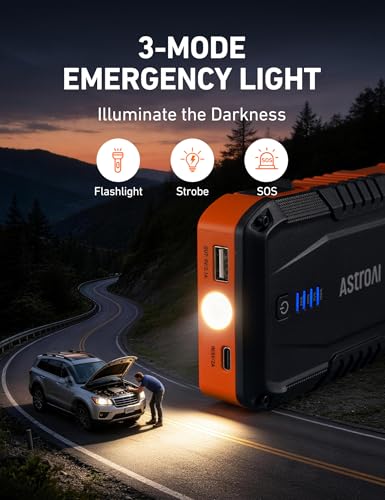
- Flashlight feature: Surprisingly useful, often annoying. Some are bright enough to actually help; others are basically a polite suggestion of light. Bonus points if it has a steady beam (not just SOS strobe you’ll trigger accidentally and feel deeply embarrassed about).
- Noise level: Most are quiet, but some have fans or relays that click loudly. Not a dealbreaker—just startling if you’re already stressed.
Extra Ports: Nice-to-Have, Not the Main Event
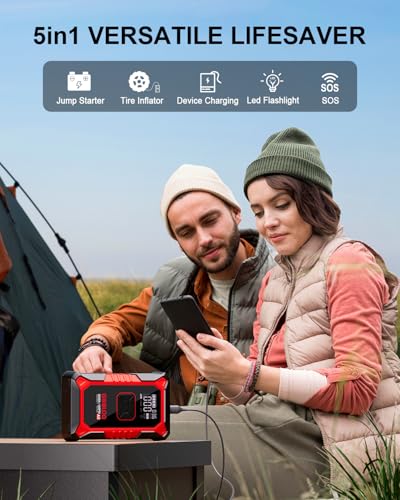
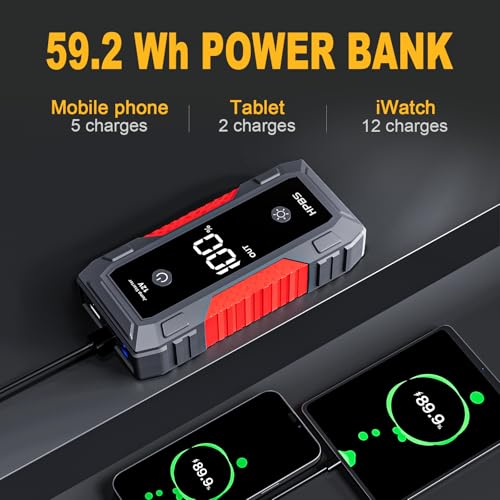
Many jump starters double as power banks. That’s genuinely handy if you’re camping, road-tripping, or just the designated “my phone is at 2%” friend. But don’t let a pile of ports distract you from the primary job: starting the car.
- Worth having: At least one USB port that can charge a phone reliably, and maybe a higher-output port if you travel with tablets.
- Don’t overpay for: A million adapters you’ll lose immediately.
- Caveat: Using it as a power bank means you’ll deplete the battery you actually need for emergencies. If you’re going to do this, commit to charging it more often.
Cold Weather, Heat, and the Trunk Problem
Trunks are not climate-controlled sanctuaries. They’re metal boxes that freeze in winter and bake in summer. Batteries don’t love either. If you live somewhere with extremes, treat temperature tolerance as a real feature, not a footnote.
- Cold-weather reality: Performance drops when it’s freezing—the exact moment you’re most likely to need it.
- Hot-weather reality: Heat can shorten battery lifespan over time.
- Guidance: If your climate is brutal, consider storing it in the cabin (under a seat) rather than the trunk, and charge-check it more regularly.
Things to Know Before You Buy (So You Don’t Hate It Later)
- You’re buying a system, not a brick: The whole experience is clamps + cable length + charging method + case + clarity of instructions.
- Plan a “calm day” practice run: Do one dry run in daylight. Future You, shivering in a parking lot, will feel oddly grateful.
- Keep it accessible: If it’s buried under Costco paper towels, it will be emotionally unavailable when you need it.
- Maintenance is minimal, but real: Put a recurring reminder on your phone every 3–4 months to check charge. It’s annoying. It’s also the difference between preparedness and performance art.
A Practical Checklist
- Compact enough that you’ll actually keep it in the car
- Clamps that feel sturdy, with cables long enough to work without gymnastics
- Clear error messaging / safety protections that reduce panic
- USB-C charging (or at least a charging method you won’t lose)
- A charge indicator you can read at a glance
- A simple case so it doesn’t become a tangled, dusty trunk artifact
Honest Caveats (Because Perfect Products Don’t Exist)
You will almost certainly pay extra for a better user experience: sturdier clamps, clearer instructions, more dependable battery behavior in the cold. And even with a great jump starter, there’s a point where a battery is so dead (or so old) that you’re postponing the inevitable. Consider a jump starter an excellent emergency tool—not a substitute for replacing a failing battery.
But if you choose one with the right mix of power, usability, and charging sanity, it becomes the kind of object you forget about—which is exactly what you want… until the day it saves you in a parking lot, and you feel like a small, competent god.
1,000,000+ shoppers use Buyer's Guide every week to find the best products and services online.

Helping millions of users make smarter purchases online.

