





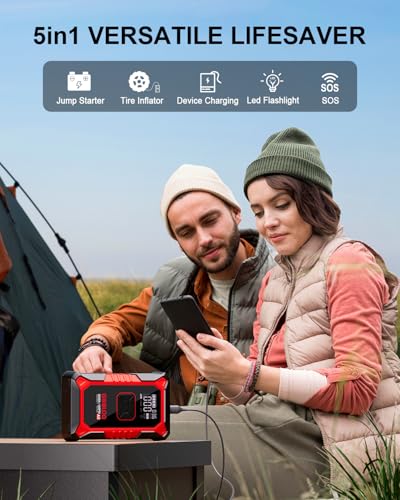


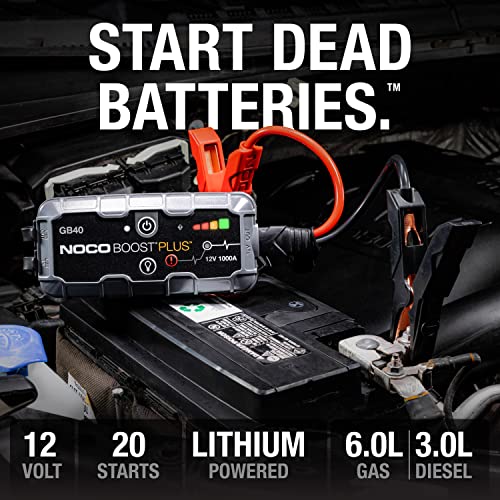


We also considered 10 others:


Our Top Choice
Compare Features


The order above is not editorial opinion, and it is not paid placement. It comes from what shoppers across our network actually do - which jump starters they compare, and which they ultimately buy. We re-rank as new data comes in, so the long-term favorites have to keep earning their spot against new entrants. The full method, including how we make money.
Jump Starters Buyer's Guide
Jump starters are a tradeoff between portable emergency convenience and having enough real starting current for your biggest, coldest, most deeply discharged battery scenario. The sharpest concerns are not just advertised peak amps, but engine compatibility, charge retention in storage, clamp/safety quality, and whether the unit can handle a battery that is too dead for automatic detection.
Power
You need enough cranking strength to start your vehicle reliably, especially in cold weather, with an older battery, or when the engine is larger than average. Look for a jump starter rated for your vehicle type and engine size, and pay attention to real-world starting performance rather than just the biggest peak-amp number. Be wary of units that work only on lightly drained batteries or require repeated attempts before they can deliver a successful jump.
Match the jump starter to the largest engine you may need to start, not just your daily driver: diesel engines, large V8s, trucks, farm equipment, and deeply discharged batteries need much more reserve than a small commuter car. Check real-world engine displacement ratings, 12V vs. 24V compatibility, cold-weather performance, and whether there is a manual override/boost mode for batteries too dead for automatic detection. Owner feedback strongly supports prioritizing surplus power: buyers consistently value units that restart dead vehicles quickly, including large engines, diesels, farm equipment, hybrids, V8 trucks, luxury vehicles, lawn equipment, and even equipment with very low or completely dead batteries.
Build
A jump starter needs to survive being stored in a trunk, dropped, and used in bad weather, so solid build quality directly affects whether it works when you need it. Look for a tough, well-sealed housing, secure ports and cables, and sturdy clamps with strong springs and clean, well-aligned jaws; flimsy plastic, loose connections, or weak clamps can make starts unreliable and less safe.
For jump starters, build quality is a safety issue: look for heavy clamps with strong spring tension, thick cables, reverse-polarity and spark protection, overcurrent protection, protected ports, and a casing that can survive being stored in a trunk or shop. Avoid flimsy clamps, vague safety labeling, and packs that feel like phone power banks with jumper leads added as an afterthought. Owners tend to reward units that feel like serious emergency or shop equipment, describing sturdy clamps, robust construction, clear instructions, and confidence-inspiring safety features that make the tool less intimidating than traditional jumper cables.
Battery
A jump starter is only useful if it still has enough charge when your battery dies, so you should look for one with strong charge retention and clear battery-level indicators. Pay attention to how many starts it can deliver per charge, how long it takes to recharge, and whether it needs frequent top-offs, especially if you plan to leave it in a glove box or trunk between uses.
The internal battery must hold charge for months between emergencies, because a jump starter that self-discharges in the glovebox is useless when the car will not start. Check recharge interval recommendations, charge-status visibility, storage-temperature limits, USB-C or 12V recharge options, and whether the pack can deliver multiple starts before recharging. Owner sentiment backs this up: buyers especially appreciate jump starters that hold a charge for long stretches, handle multiple jump starts with reserve left, recharge conveniently, and double as emergency power for phones, lights, or 12V accessories.
Ease
When your battery is dead, you want a jump starter that’s straightforward to connect and operate without guesswork. Look for clear clamps, simple controls, readable indicators, and safety prompts that make the process easy in poor lighting or bad weather. Watch out for designs with confusing menus, hard-to-read screens, awkward cables, or instructions that are only clear after you’ve already needed them.
Choose a jump starter you can use correctly while stressed, in the dark, or in bad weather: clear polarity markings, obvious status lights, simple clamp sequencing, audible or visual error warnings, and a flashlight matter. If it has a manual override for fully dead batteries, make sure the instructions are clear because that mode can bypass some automatic protections. Owners repeatedly praise straightforward setup, simple clamps and controls, strong clamp grip, built-in safety features, and the ability to jump a vehicle alone without waiting for another car or feeling the usual fear of sparks and wrong connections.
Size
Size matters because you’ll usually keep a jump starter in your vehicle until you need it, so it should fit easily in a glove box, console, trunk cubby, or emergency kit without getting in the way. Look for a compact, lightweight unit that’s easy to carry and position near the battery, but watch out for designs that shrink too much and compromise cable reach, battery capacity, or ruggedness.
Pick the smallest unit that still honestly covers your engine and climate needs; ultra-compact lithium packs are easy to store but can be underpowered for large diesels or repeated cold-weather jumps, while larger booster packs are harder to keep in every vehicle. Also check whether the case, cables, and clamps fit where you plan to store them and can reach awkward battery terminals. Owner feedback shows why size matters: shoppers like compact, lightweight packs that fit in a car, bag, glove compartment, trunk, or carry pouch while still delivering enough power for typical cars, vans, light trucks, and multiple emergency starts.
Value
You want a jump starter that feels worth its cost not just on the day you buy it, but when it actually saves you from being stranded. Look for value for money in the balance of reliable starting power, battery life, build quality, safety features, and useful extras—while watching out for cheap units that overpromise capacity or premium models that charge more for features you may never use.
Judge value by rescue reliability, not by the lowest advertised peak-amp number: a good buy includes adequate engine capacity, safety protections, durable clamps, a charger/cables, a storage case, and enough battery reserve to work after months in the vehicle. Avoid paying for extras you will not maintain or use, but do value features that replace roadside help, jumper cables, or a second vehicle. Owners generally see strong value when a unit repeatedly saves dead batteries without drama, performs like a practical alternative to bulky booster packs or roadside assistance, includes the needed accessories, and delivers dependable jump-start performance for the money.
1,000,000+ shoppers use Buyer's Guide every week to find the best products and services online.

Helping millions of users make smarter purchases online.


