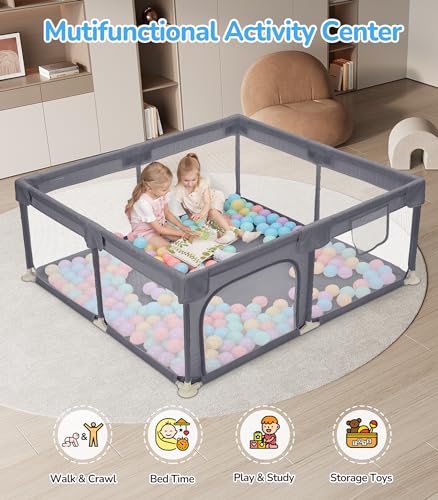
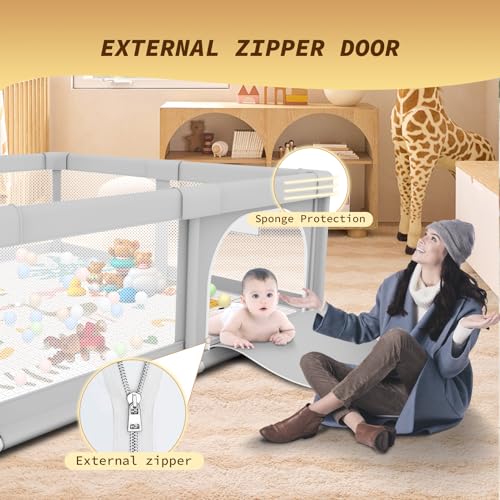
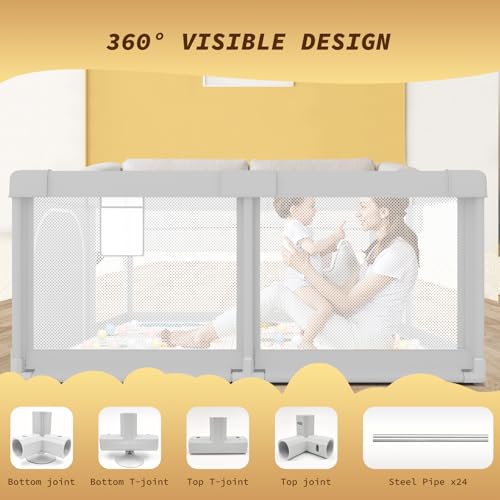
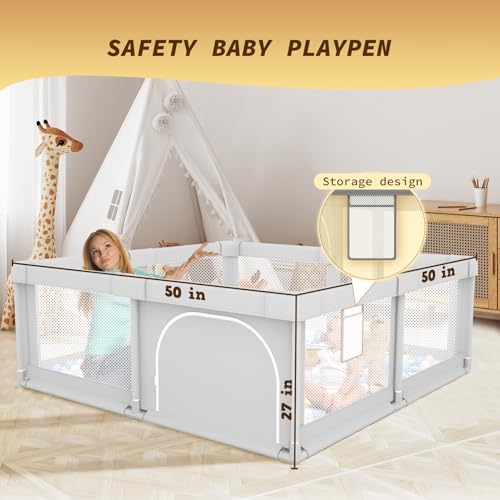
We also considered 10 others:
Our Top Choice
The order above is not editorial opinion, and it is not paid placement. It comes from what shoppers across our network actually do - which baby playpens they compare, and which they ultimately buy. We re-rank as new data comes in, so the long-term favorites have to keep earning their spot against new entrants. The full method, including how we make money.
Baby Playpens Buyer's Guide
A baby playpen has to be roomy enough for real movement but stable enough for a child who pulls, leans, shakes, and eventually tries to climb. The sharpest buying concerns are safe containment, floor comfort, and whether the frame and anchors still feel trustworthy as a baby becomes a stronger toddler.
Safe Containment
A baby playpen is only useful if it stays upright, closed, and free of reachable hazards while a child crawls, pulls up, cruises, or tests the walls. Stability and latch security matter more as babies become stronger and more mobile.
Choose a playpen that creates a real barrier for your child’s current stage: tall enough for standing toddlers, with a latch or zipper a child cannot easily open, smooth covered joints, breathable mesh, and no horizontal footholds that invite climbing. Treat suction cups and light anchoring as helpers, not the whole safety system—on textured floors, rugs, or dusty tile they may not hold well, so the frame itself should resist pushing, leaning, and shaking. Owners consistently value baby playpens as a practical safe zone that lets caregivers set an active child down with more peace of mind, but they also flag suction, stability, fragile hinges, broken plastic, and loose parts as the areas most likely to undermine that confidence.
Footprint Fit
The right playpen size is a balance between giving a child enough movement and preserving usable household space. A pen that is too small becomes frustrating quickly, while one that is too large may be hard to place safely.
Measure the actual open footprint before buying, not just the box size, and leave room around it for doors, furniture, vents, outlets, and caregiver access. For crawlers and early walkers, a larger rectangular or square area gives more useful movement than a narrow pen; for smaller rooms, adjustable panels can help shape the enclosure around safe zones or block off hazards. Owner feedback strongly favors roomy layouts, including large rectangular and 50x50-style designs, because they hold toys and give babies space to crawl, roll, sit, and play without necessarily taking over the entire room.
Floor Comfort
Babies spend much of their playpen time sitting, crawling, rolling, and sometimes falling from low positions. The floor surface affects comfort, traction, cleaning, and how safely the child can practice movement.
Check whether the playpen includes a padded base, a thin fabric floor, or no bottom at all; many baby playpens need a separate firm play mat to make hard floors comfortable. Avoid relying on pillows, loose blankets, or overly soft bedding for infants, especially if the child may nap there; a firm, edge-to-edge mat sized to the interior is safer and easier to keep flat. Owners specifically call out unpadded bottoms as a common drawback, with many expecting to add their own floor pad for comfort.
Setup & Moving
Baby gear often gets moved, cleaned, stored, or reconfigured more than shoppers expect. A playpen that is frustrating to assemble is less likely to be used consistently in the safest location.
Look for tool-free assembly, clearly labeled tubes or panels, connectors that lock without forcing, and a design that can be taken apart without damaging plastic joints. If you plan to move the playpen between rooms, check both assembled weight and whether it fits through doorways; some “portable” pens are easy to disassemble but awkward to carry fully built. Owners repeatedly praise quick, straightforward setup and the ability to assemble, take apart, and move playpens when needed, even when there are many pieces.
Build Quality
Playpens take repeated side pressure from children learning to stand, cruise, bounce, and climb. Durability is not just about lifespan; broken connectors, torn mesh, or loose parts can also become safety concerns.
Inspect the stress points: corner joints, hinge pins, plastic connectors, fabric seams, mesh tension, zipper tracks, and the top rail where toddlers pull and lean. Lightweight construction can be fine for young crawlers, but bigger babies, climbers, and daily use demand stronger tubing, reinforced stitching, and parts that do not flex sharply under pressure. Owners often describe good playpens as sturdy, useful, and worth buying for everyday containment, but mixed reports mention ripping, flimsy parts, breakage, fragile hinges, and loose parts as the main long-term failure modes.