We also considered 10 others:
Our Top Choice
Compare Features
Why These Features Matter:
Robot vacuums are rarely about clean floors in some abstract sense. They’re about the very specific indignities of daily life: the gritty halo around the litter box, the crumbs that migrate from the high chair to places a human spine shouldn’t have to reach, the mystery dust bunnies that appear the second you put on black socks.
A good robot vacuum doesn’t replace your real vacuum. It replaces the constant low-grade feeling that your floors are quietly judging you. The difference between a robot you love and one you resent is usually not suction numbers — it’s whether it fits the way you actually live (and how much babysitting it requires before it’ll do the job you bought it to do).

The Features That Actually Make a Robot Vacuum Worth Owning
Navigation That Doesn’t Feel Like Pet-Sitting
You can tell within a week if you bought a “smart” robot or a charmingly confused bumper car. The best navigation isn’t about bragging rights — it’s about not hearing the little machine repeatedly thud into the same chair leg like it’s trying to solve a personal vendetta.
- Room mapping you can edit: Being able to label “kitchen” and “nursery” sounds fussy until you realize it means targeted cleanups instead of a whole-house joyride.
- Reliable “no-go” zones: Essential if you have a shag rug you love, a pet water bowl you’re tired of mopping up, or one cable you can’t seem to hide like an adult.
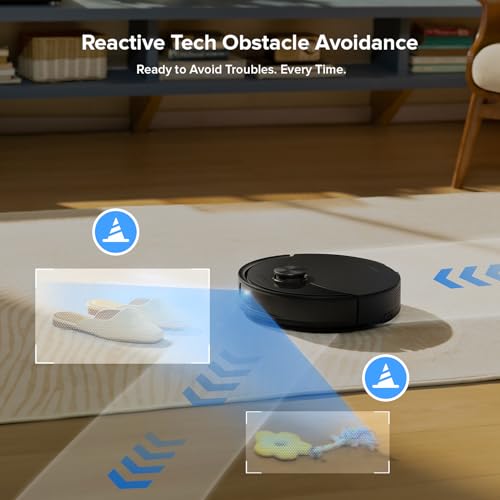
- Obstacle avoidance that’s actually useful: Socks, charging cords, kid craft debris, the cat’s toy mouse — real floors are full of little traps. The better robots dodge more and cry for help less.
Even excellent navigation can be humbled by a sunny patch of floor (glare), mirrored furniture, or a dining chair arrangement that changes daily because your household treats chairs like mobile sculpture.
Suction Is Nice; Brush Design Is the Real Personality Test
People fixate on suction like they’re buying a leaf blower. In actual living rooms, brush design decides whether your robot becomes a heroic daily helper or a hairball sculpture you have to perform surgery on every Sunday night.
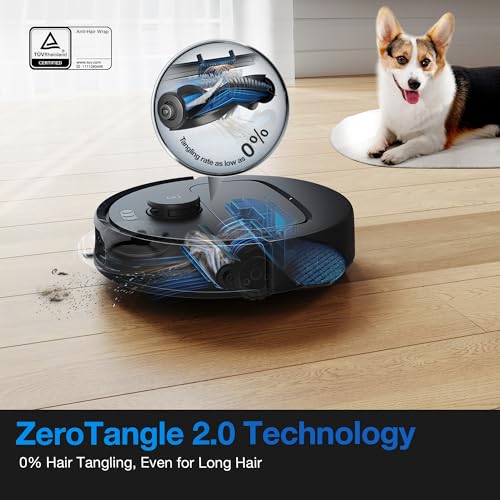
- Anti-tangle rollers: If your home sheds — people with long hair, dogs with undercoats, that one rug that quietly disintegrates — you want brushes that don’t turn into a felted wig.
- Edge and corner performance: Robots love the middle of the room. You need one that remembers the dusty baseboards exist.
- Carpet behavior: Some robots power up on rugs; others get dramatic and beach themselves like tiny whales. If you have medium-pile carpet, this matters more than any marketing claim.
Small reality: No robot loves fringe. If you have vintage kilims with tassels, expect some negotiation (no-go zones, rug tape, or resigned acceptance).

The Bin Situation: The Least Exciting Feature, the Most Important
Here’s the part no one romanticizes: emptying the bin. If you’re going robot to avoid chores, you don’t want a machine that demands constant attention like an overwatered houseplant.
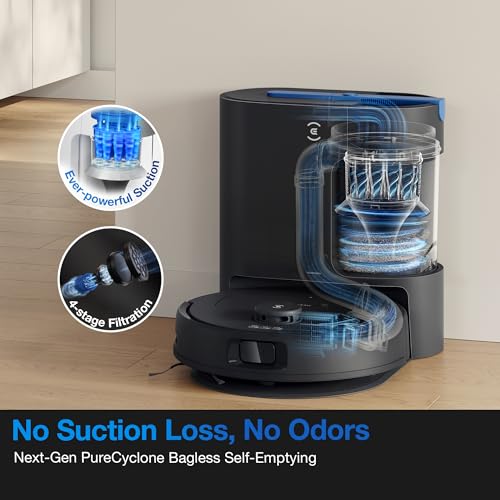
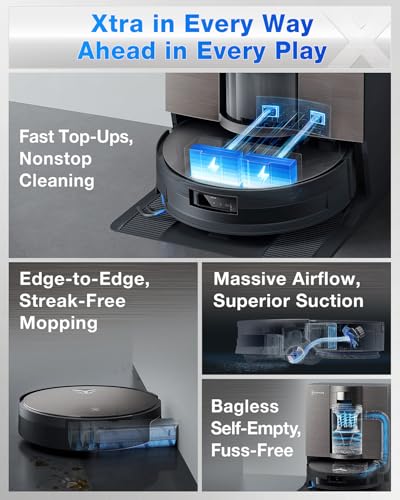
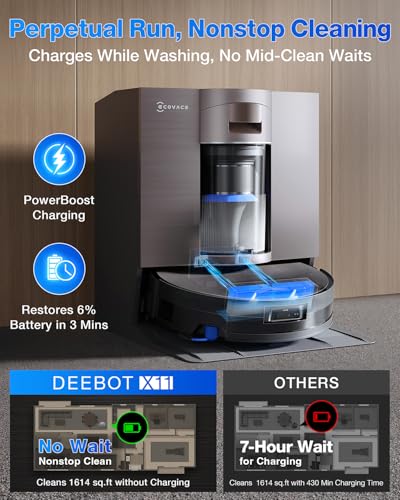
- Self-emptying docks: These are not “extra.” They’re the difference between “I run it daily” and “I run it when I remember, which is never.”
- How messy the emptying is: Some bins puff dust back into your face like a petty revenge. Better systems keep the grit contained.
- Bin capacity vs. your reality: Small apartment with minimal shedding? Fine. Kids + pets + cooking? A tiny bin fills up in the time it takes to unload the dishwasher.
Honest caveat: Self-empty docks take up space and they’re not subtle-looking. If your home is very “beautiful minimal console table,” you may have feelings about a big plastic tower living in your hallway.
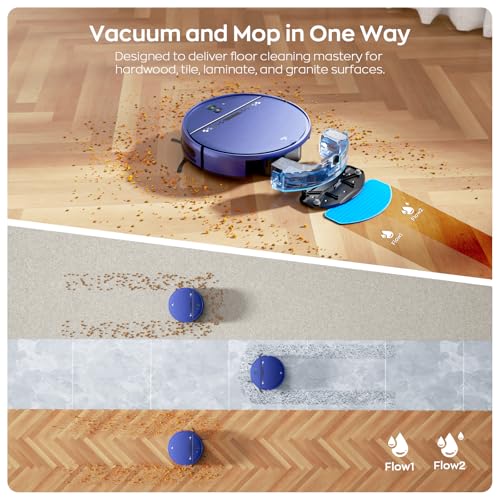
Mopping: Helpful, But Don’t Let It Lie to You
Robot mopping can be genuinely useful — but it’s not a substitute for a real mop the way some people hope it will be. Think: maintenance wipes, not post-dinner-party restoration.
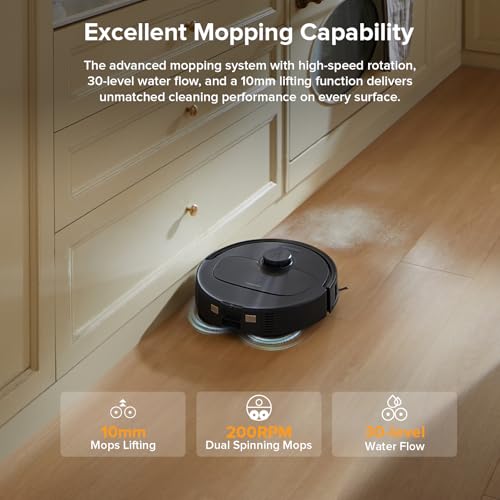
- Vibration/scrubbing motion: The ones that actually scrub do more than drag a damp pad around like a tired bartender wiping a counter.
- Lift-or-avoid rugs: If it can’t lift the mop or reliably avoid carpet, you’ll spend your life setting up little boundaries like you’re training a puppy.
- Water tank management: Refilling is easy. Forgetting to empty/clean can get… swamp-adjacent.
What it’s great for: Sticky kitchen footprints, daily dust film, the “why is the hallway always gray?” phenomenon.
What it’s not great for: Dried pasta sauce, deep grout lines, or any situation involving jam.
Noise: The Total Dealbreaker
Noise is where robot vacuums reveal their true relationship to domestic peace. Some hum quietly like a white-noise machine. Others sound like they’re angrily grinding pepper.
- Quiet mode that’s actually quiet: If you work from home, take calls, or have a baby who treats sudden noise as betrayal, this matters.
- Dock emptying volume: Self-emptying docks can be startling — a brief, loud whoosh that sounds like a tiny jet engine clearing its throat.
- Night schedules: Great in theory; questionable if your floors creak or your robot likes to bump furniture like it’s making rounds.
Battery Life Matters Less Than Whether It Finishes the Job
Long battery claims are cute. What you want is a robot that cleans your place without turning it into a two-act performance (“clean,” then “recharge,” then “clean,” then “get stuck under the sofa”).
- Return-and-resume: Useful for larger homes, but also for cluttered ones where the robot loses time doing little three-point turns.
- Consistent coverage: The best robots leave floors looking evenly “handled,” not strangely patchy like it got bored halfway through the living room.

Maintenance: How Much Time Do You Want to Spend Being a Robot Mechanic?
A robot vacuum is only “low effort” if it stays low effort. Pay attention to how often you’ll be asked to clean sensors, detangle brushes, replace filters, and unjam wheels that have swallowed a twist tie.
- Brush and filter access: Tool-free is ideal. If you need a tiny screwdriver, you will simply not do it.
- Parts cost and availability: Filters and brushes are consumables, like razor heads. If replacements are annoying to find, your robot will slowly decline like a neglected sourdough starter.
- Hair management: If you have shedding pets, plan on a weekly check. If you have two shedding pets, plan on becoming very familiar with the phrase “main brush.”
App and Controls: You Want Convenience, Not a New Hobby
The best app experience is the one you barely notice — set it, name the rooms, make a couple rules, and move on with your life.
- Simple schedules: “Run after breakfast on weekdays” is the dream. If scheduling requires an engineering degree, it won’t happen.
- Room-by-room cleaning: Crucial for spot problems (kitchen) and emotional needs (“company is coming in 20 minutes”).
- Multiple floor maps: If you live in a townhouse or have a finished basement, this saves you from carrying the robot around like a purse.
Minor annoyance to expect: Updates. Sometimes your robot will ask for a firmware update at the exact moment you want it to clean because you just dropped a bagel.
How to Choose Based on Your Actual Home (Not Your Fantasy Home)
If You Have Pets
- Prioritize: anti-tangle brush design, strong pickup on rugs, a self-empty dock, and easy bin/filter cleaning.
- Be honest about: litter tracking. You want a robot that can handle the gritty perimeter zone without flinging litter like confetti.
If You Have Kids (Or Frequent Small Visitors With Snack Energy)
- Prioritize: obstacle avoidance, strong edge cleaning, and an app that lets you send it to the kitchen immediately.
- Plan for: toys. Even good robots will occasionally attempt to eat a tiny LEGO and then act wounded about it.
If You Live in a Small Apartment
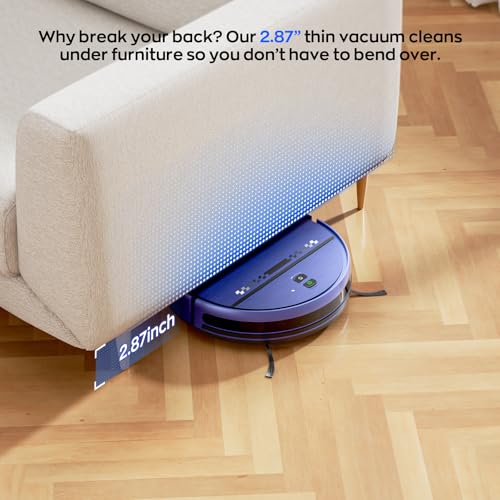
- Prioritize: a slimmer robot that fits under furniture, good corner cleaning, and quiet operation.
- Consider skipping: the giant dock, if you truly have nowhere to put it and don’t mind emptying the bin every couple days.
If You Have Rugs You Care About
- Prioritize: smart mapping/no-go zones, reliable rug detection, and mop-lift (if you want mopping at all).
- Expect: some trial and error. Your robot may need a few “house rules” before it stops treating fringe as a personal challenge.
Things to Know Before You Buy (So You Don’t Immediately Hate It)
- You still have to pre-tidy. Robot vacuums are not clutter negotiators. They thrive in a home that has learned the ancient art of “pick up the floor.”
- They don’t love cables. If your living room looks like the back of a TV, you’ll need cable management or you’ll be doing robot rescues.
- They’re better at maintenance than miracles. If you haven’t vacuumed in a month, do a normal vacuum once, then let the robot keep it nice.
- They will get stuck sometimes. Even the smart ones. Under a low sofa, on a thick threshold, on a bath mat that bunches. Consider it the price of outsourcing.
The Bottom Line
A robot vacuum is at its best when it becomes part of the background rhythm of your home — like making coffee or unloading the dishwasher: not glamorous, but quietly life-improving. Choose for the annoyances you actually have (hair, crumbs, rugs, cables, noise), not the imaginary future where your floors are always empty and your chairs stay pushed in.
If you get the features right, you’ll stop thinking about vacuuming entirely — which is, frankly, the most luxurious outcome most of us can realistically hope for.