

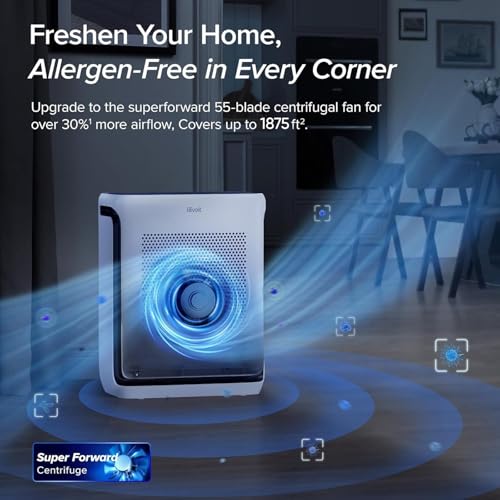
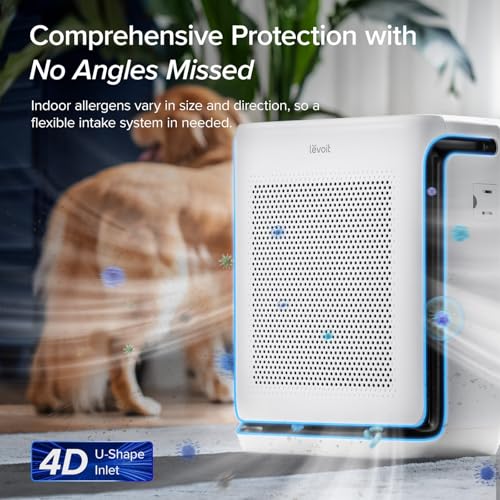


- Coverage: 1,800 sq ft in 1 hour
- Particle Removal: 99.99%
- Filter Type: H13 True HEPA
- Dimensions: 8.5" wide x 15.6" deep x 19.8" tall
- Ideal For: Allergens, dust, pet dander, smoke, odors, mold, VOCs




Levoit Vital 200S-P Smart Air Purifier
Overall Experience and Performance

The Levoit Vital 200S-P Smart Air Purifier is designed for people who want a capable, largely hands-off purifier that can handle everyday indoor air problems like dust, pet dander, smoke, and seasonal pollen. In real-world use, it stands out for combining strong cleaning performance with a user-friendly experience. It’s the type of purifier you can place in a bedroom or main living area, set to Auto, and then mostly forget about until it’s time to replace the filter. The unit’s response to changing air conditions is one of its biggest practical benefits, especially if you cook frequently, live with pets, or notice that outdoor air quality fluctuates throughout the day.
Air cleaning effectiveness depends on a few interacting elements: fan power, filter efficiency, the size of the room, and how well air circulates around the purifier. The Vital 200S-P is built to move a substantial amount of air, and it pairs that airflow with a multi-stage filtration approach. In typical use, you can expect noticeable reduction in airborne dust accumulation and fewer lingering odors when the purifier is run consistently. People with allergies often care less about “instant results” and more about maintaining lower particulate levels all day and overnight; this model is well suited to that goal because it can run quietly at lower speeds while still steadily scrubbing the air.
Noise is another part of performance that matters as much as cleaning power. Many purifiers can clean well on higher settings but become distracting, especially in a bedroom or home office. The Vital 200S-P tends to be most livable when used strategically: Auto mode for daily swings in air quality, lower manual settings for sleep, and higher settings during obvious pollution events like frying, vacuuming, or when windows have been open on a high-pollen day. If your priority is the absolute fastest cleanup after smoke or cooking, any purifier will need to run at higher fan speeds, and that will produce more noise. The key benefit here is that you can choose a quieter baseline without feeling like you’re giving up the core purpose of owning a purifier.
One area that’s easy to underestimate is placement and airflow. Like most air purifiers, the Vital 200S-P performs best with open space around it so it can pull in dirty air and push out clean air without short-cycling. If it’s tucked into a corner behind furniture, you may not see the results you expect. In an open room, though, it can become a “set and forget” appliance that improves daily comfort in subtle but meaningful ways, such as reducing morning congestion, limiting pet-related odors, and keeping the air feeling fresher even when the house is closed up for heating or air conditioning.
Smart Features, Controls, and Day-to-Day Usability
“Smart” can mean different things depending on the brand, but with the Vital 200S-P it primarily translates into remote control, automation, and visibility into what the purifier is doing. The ability to adjust fan speed, toggle modes, set schedules, and check status from a phone is genuinely useful if you’re the kind of person who wants your home to run on routines. For example, you can schedule higher purification during the day when the room is active, then shift to a quieter setting at night. You can also turn the purifier on before you arrive home, which can be helpful if you’re sensitive to allergens and want the room to be cleaned ahead of time.
Auto mode is one of the most important quality-of-life features because it reduces the need for constant tweaks. A good Auto mode should ramp up when air quality drops and then settle down when the air is clean. In practice, this is especially convenient in homes with pets, where bursts of dander and dust can occur after playtime, brushing, or simply moving around. Instead of leaving the purifier on a loud setting all day “just in case,” you can let it respond dynamically and keep noise lower most of the time.
Controls on the unit itself are still important even with app support. You may not want to reach for your phone in the middle of the night, and guests or family members might prefer a straightforward on-device interface. The Vital 200S-P’s day-to-day usability benefits from simple mode switching and clear feedback, along with a design that doesn’t demand technical knowledge. For most buyers, the goal is effortless operation: plug it in, place it correctly, and let it maintain cleaner air in the background.
Maintenance is also part of usability, and it’s where many purifiers either shine or become a chore. Filter replacement is the ongoing cost and the ongoing task. With this model, upkeep is generally straightforward: you monitor filter life and swap it when it’s due. The most important habit is consistency. A purifier with an overdue, clogged filter can’t perform at its best, and it may become noisier because it has to work harder to move air. If you’re budgeting for ownership, the recurring filter cost should be treated as part of the price of admission rather than an occasional surprise.
What to Consider Before Buying (and What Matters Most)
Before choosing the Levoit Vital 200S-P, the first factor to consider is room size and how you actually use the room. Air purifier specifications often look impressive, but the meaningful question is whether the purifier can provide strong air cleaning in your space at a fan speed you’ll tolerate. If you plan to use it in a bedroom, you’ll likely want effective cleaning at quieter settings overnight. If it’s for a living room where noise is less of an issue, you can lean more on higher speeds when needed. The most important purchase decision is matching capacity to your room so you don’t end up running the purifier at its loudest setting just to keep up.
The second major factor is what you are trying to remove from the air. For allergies, the priority is consistent particle removal, especially for pollen, dust, and pet dander. For smoke or strong cooking odors, you’ll care more about how quickly the purifier can cycle the room’s air and how well the filter setup addresses odor. This is also where expectations matter: a purifier can reduce odors and smoke particles, but it won’t make a smoky home smell like nothing happened instantly, and it can’t fix the source of ongoing pollution. If your main problem is persistent smoke infiltration or heavy VOC exposure, you may need multiple purifiers, better ventilation, or source control in addition to filtration.
Third, consider noise tolerance and lifestyle. If you’re a light sleeper, you’ll care as much about acoustic comfort as raw performance. If you work from home and take calls, you’ll want a purifier that can run in the background without being picked up by microphones. This is an area where “most important” is personal: for some households, maximum airflow is everything; for others, a quieter purifier that runs all night is the real win because it actually stays on.
Fourth, weigh the value of smart features. If you like scheduling, remote control, and automation, the smart functionality is a genuine advantage. If you prefer appliances that don’t depend on apps, you’ll want to make sure you’re comfortable using it with on-device controls alone. The purifier should still be useful even if you never open the app, but the best reason to buy a smart model is that you will actually use the smart functions to keep it running optimally.
Finally, ownership cost matters. The upfront price is only part of it; the ongoing cost is replacement filters. The most important financial consideration is whether you’re comfortable with the filter replacement cadence and pricing, because that determines long-term value. A purifier that’s affordable but has expensive filters can cost more over a couple of years than a slightly pricier unit with better-running costs. If you buy the Vital 200S-P, plan ahead by checking filter availability and budgeting for regular replacements so performance doesn’t gradually decline.
Common Questions
Will the Levoit Vital 200S-P help with pet allergies?
Yes, it can help by continuously reducing airborne pet dander and dust that trigger symptoms. The biggest gains usually come from running it every day, placing it where your pet spends the most time, and keeping up with filter changes.
Is it loud enough to be annoying in a bedroom?
On high settings, most air purifiers are clearly audible, and this one is no exception. The good news is that it can be used effectively at lower, quieter settings for overnight use, and Auto mode can reduce unnecessary ramp-ups once the room air is clean.
Do smart features matter if I just want clean air?
They’re not required, but they can make it easier to keep the purifier running in a way that fits your routine. Schedules and remote control encourage consistent use, which is often the difference between “I think it helps” and “I can tell the air is better.”
How often do I need to replace the filter?
It depends on indoor conditions such as pets, cooking, smoke, and dust levels, along with how many hours per day it runs. A good rule is to follow the purifier’s filter-life tracking and replace the filter when indicated, rather than stretching it too long and sacrificing performance.
Conclusion
The Levoit Vital 200S-P Smart Air Purifier is a strong choice for households that want dependable particle reduction, convenient automation, and an easy maintenance routine. The most important buying considerations are matching it to your room size, understanding your main air-quality problems, and budgeting for regular filter replacements. If those pieces align with your needs, it’s an effective, user-friendly purifier that can make daily indoor air feel noticeably cleaner over time.