


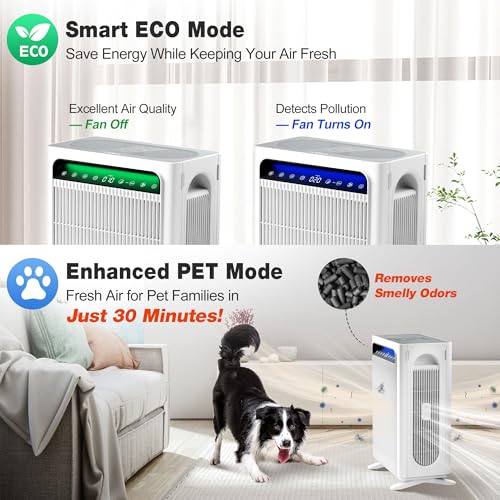
- Coverage: 3,500 sq ft in 1 hour
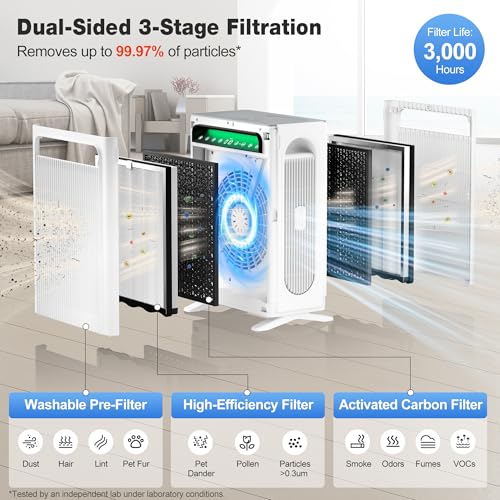
- Particle Removal: 99.97% down to 0.3 microns
- Filter Type: HEPA
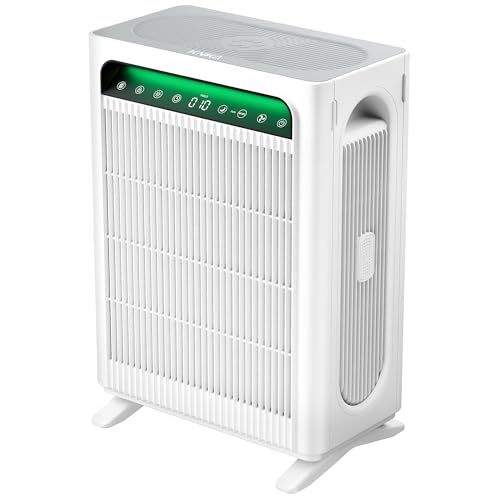
- Dimensions: 12.4" wide x 8.3" deep x 17.1" tall
- Ideal For: Allergens, dust, pet dander, smoke, odors





KNKA Air Purifier
Overall Review and Everyday Performance

The KNKA Air Purifier is designed for people who want noticeably cleaner indoor air without turning their living space into a tangle of complicated settings, noisy fan ramps, or constant maintenance chores. In day-to-day use, the most convincing part of the experience is how quickly it can change the “feel” of a room—less lingering cooking odor, less stuffiness after closed-window days, and a general sense that the air is fresher, particularly in spaces where dust accumulates easily. Air purifiers are often judged by what you can’t see, but the KNKA aims to make its impact apparent through consistent airflow and filtration geared toward common household pollutants.
For typical apartments, bedrooms, and home offices, an air purifier like the KNKA tends to be most appreciated during seasonal allergy spikes, wildfire-smoke events, and periods when you simply keep windows shut for long stretches. In those scenarios, performance comes down to a few interconnected elements: how effectively it captures fine particles, how much air it can process for the size of your room, and whether you’ll actually run it often enough for it to matter. The KNKA’s value is strongest when it’s used continuously or at least for extended blocks of time, because filtration benefits compound as air cycles through the system repeatedly.
Noise is another practical measure of “real” performance. Many people buy an air purifier with good intentions, only to turn it off at night because the fan becomes distracting. The KNKA is best thought of as a purifier you can live with: it can be quiet enough on lower settings for sleep or focused work, while higher modes are there when you need a more aggressive cleanup after cooking, cleaning, or opening windows on a high-pollen day. If you’re sensitive to sound, it’s worth remembering that all purifiers become more audible at their highest airflow, so the key is whether the unit can deliver acceptable air cleaning at a speed that still fits your comfort.
In terms of placement and usability, KNKA’s effectiveness depends on giving it room to breathe. Putting it right against a wall, behind furniture, or under a desk can restrict intake and reduce the amount of air it can circulate. If you can position it with open space around the intake and a clear path for the clean-air outlet, you’ll get more consistent results and a better match between what you paid for and what you actually experience. As with most air purifiers, the KNKA is also more useful as a steady, ongoing solution rather than a quick “one-time” fix, especially if your home has ongoing sources of particles like pets, heavy foot traffic, or frequent cooking.
What to Consider Before Buying and What Matters Most
Before purchasing the KNKA Air Purifier, it helps to separate the features that sound good on a product page from the factors that truly determine whether the purifier will work for your home. The most important starting point is room coverage, which is essentially the relationship between the purifier’s airflow and the size of the space where you plan to use it. A purifier that is undersized for a room may still run, still make noise, and still consume filter replacements, but it won’t cycle the air frequently enough to provide the results most people want. If you plan to use the KNKA in a bedroom, measure the approximate square footage and think realistically about door-open versus door-closed use, because open doors effectively turn one room into a larger zone that needs cleaning.
Filtration type is the next major consideration, and it is often the single biggest determinant of whether the purifier will help with your particular concern. If your goal is reducing dust, pollen, and airborne pet dander, you’ll want strong particle filtration. If odor reduction matters, such as cooking smells, litter box odors, or stale air, you’ll also want to pay attention to how the purifier handles gases and smells, since particle filters and odor control are not the same thing. Many households benefit most from a purifier that prioritizes fine particle capture first, because particulate pollution tends to be the primary driver of allergy symptoms and “dirty air” feelings indoors, while odor control is an added comfort feature.
Ongoing cost is frequently overlooked at checkout and regretted later. The real cost of owning an air purifier is the device plus the filters you’ll replace over time. If the KNKA uses a multi-stage filter, you’ll want to consider how often replacements are needed based on your environment. Homes with pets, heavy outdoor pollution, or frequent cooking can saturate filters faster. The most important question to ask yourself is whether you’re the kind of person who will reliably replace filters on schedule, because a purifier with a clogged or overdue filter can lose efficiency and in some cases become noisier as it struggles to pull air through.
Noise and sleep compatibility can be as important as filtration, especially if you’re buying the KNKA for a bedroom, nursery, or shared space. A purifier that’s technically powerful but too loud at the setting you need won’t be used enough to matter. Consider your tolerance for steady fan sound, whether you prefer near-silence, and whether you’ll actually run the unit overnight. For many users, the most important practical balance is choosing a purifier that can run quietly on a lower setting most of the time, with a higher mode available when needed.
Energy use is another sensible factor if you plan to operate the KNKA for long hours. Even efficient purifiers draw power continuously, and the difference between occasional use and 24/7 use can show up on your monthly bill. The best strategy is to prioritize a unit you’ll keep running consistently at a reasonable fan speed rather than one you run only in short bursts. Convenience features such as automatic modes, timers, or indicator lights can be helpful, but they matter less than the fundamentals of coverage, filtration, and filter replacement practicality.
Finally, consider your specific scenario. If you have asthma or significant allergies, you may prioritize strong fine-particle reduction and steady overnight operation. If you live in an area affected by seasonal smoke, the ability to sustain higher airflow for days at a time becomes more relevant. If you mainly want a fresher-smelling room, odor management may rise in importance. The KNKA is most compelling when it matches the space and the problem you’re trying to solve, rather than being treated as a one-size-fits-all gadget.
Common Questions
Will the KNKA Air Purifier help with allergies? It can help reduce common airborne triggers like dust and pollen when it is correctly sized for the room and run consistently. For many allergy sufferers, the biggest improvement comes from overnight use in the bedroom, because that’s where you spend the longest uninterrupted time breathing the same indoor air.
How often do I need to replace the filter? Filter life depends on how polluted your indoor air is and how long you run the purifier each day. If you have pets, cook frequently, or live near heavy traffic, expect more frequent replacements than someone in a low-dust environment. A good rule is to monitor any filter indicator if present and also watch for reduced airflow or a rise in odor, which can signal it’s time to replace.
Is it safe to run the KNKA Air Purifier all night? In typical use, yes, and overnight operation is often when an air purifier provides the most noticeable benefit. The key is choosing a fan setting that is comfortable for sleep while still moving enough air to matter in your room.
Where should I place it for best results? Place it where air can circulate freely around the intake and outlet, avoiding corners that block airflow. Bedrooms often work best with the unit positioned a few feet from the bed, not tucked behind furniture, so it can cycle the room air more efficiently.
Will it remove smells like cooking odors? Many purifiers can reduce odors to some extent, but odor control depends on the design and how it handles gases rather than particles. If odor reduction is a top priority, you’ll get better results by running the KNKA proactively during and after cooking and ensuring filters are replaced on time.
In conclusion, the KNKA Air Purifier is a solid choice for people who want cleaner-feeling indoor air in everyday living spaces, especially when it is properly matched to room size and used consistently. The most important purchase factors are coverage for your space, the filtration approach for the problem you want to solve, and the real-world costs and habits tied to filter replacement. If those align with your home and routine, the KNKA can be a practical, set-it-and-run-it addition that makes indoor air more comfortable over time.