


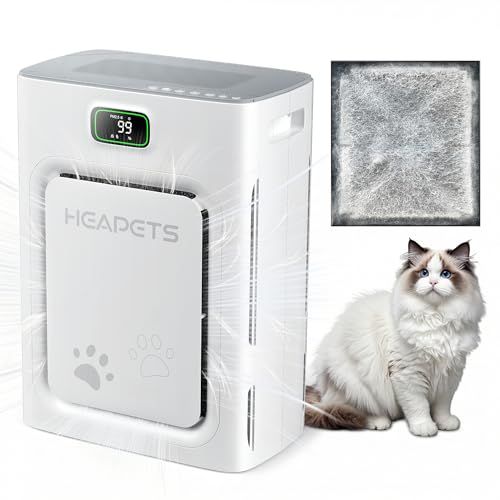
- Coverage: 2,500 sq ft in 1 hour
- Particle Removal: Down to 0.1 microns
- Filter Type: H13 True HEPA
- Dimensions: 11.8" wide x 7.1" deep x 16.1" tall
- Ideal For: Allergens, dust, pet dander, smoke, odors




HEAPETS Air Purifier
Overview and Everyday Performance

The HEAPETS Air Purifier is designed for people who want a straightforward way to improve indoor air quality without turning their home into a science project. In day-to-day use, it aims to reduce common airborne irritants such as dust, pet dander, smoke particles, and lingering cooking odors, while also supporting a cleaner-feeling environment overall. The biggest appeal of a purifier like this is the steady, background benefit: you may not “see” it working, but you often notice the difference when you wake up with less congestion, when a room smells fresher after meals, or when pet-related odors don’t build up as quickly.
What makes the HEAPETS particularly easy to live with is the way it fits into typical routines. You can run it while you work, while you sleep, or while you’re out, and in many homes it becomes part of the ambient soundscape much like a fan. If you are sensitive to noise, the ability to use a lower setting for quieter operation matters as much as raw cleaning power. On the other hand, if you are dealing with a short-term issue like wildfire smoke, renovation dust, or a strong odor event, being able to switch to a higher setting for faster turnover is what makes the purchase feel worthwhile.
In terms of perceived results, the HEAPETS is the sort of purifier that tends to deliver the best experience when it’s appropriately matched to the room. In a bedroom, nursery, or home office, it can contribute to air that feels less “stale,” especially with consistent use. In an open-plan living area, you may still get benefits, but the effect can be less dramatic unless the unit is rated for that larger volume. Placement also plays a bigger role than most people expect. Keeping it away from walls and furniture that block airflow, and positioning it near a typical source of particles such as a litter box area, a frequently used entryway, or a kitchen-adjacent zone, can make the purifier’s work more noticeable.
Factors to Consider Before Buying (and What Matters Most)
Before buying any air purifier, the most important factor is room size coverage, because everything else depends on whether the unit can meaningfully cycle the air in your space. If the HEAPETS is used in a room it is well-suited for, you are more likely to see improvements in how the air feels and smells. If it is undersized, you may end up running it on the highest setting constantly, which increases noise and filter consumption while still leaving you underwhelmed by results. A good practical approach is to think about where you will use it most often and prioritize that room rather than trying to “cover the whole home” with one device.
The next factor that typically matters most is filtration type and replacement cost. Many buyers focus on the initial price and overlook the long-term expense of filters, but the filter is the engine of an air purifier. You’ll want to understand what the HEAPETS uses, how often replacements are needed in your environment, and how easy those replacements are to find. Homes with pets, heavy cooking, candles, or nearby traffic pollution tend to load filters faster. If you want the purifier for allergies, the quality of particle filtration is central. If you want it for odors, the effectiveness of odor control and how quickly smells return will heavily depend on the design and condition of the odor-focused filtration components.
Noise is the factor that becomes more important the longer you own the purifier. It’s easy to accept a bit of fan sound in a store or during the first week, but the real test is whether you can sleep with it running or concentrate with it on nearby. Buyers should consider whether the HEAPETS has a low setting that is truly comfortable for nighttime use and whether higher settings are acceptable during the day. If you plan to run it continuously, a quieter device at a moderate speed often feels better than a loud one that only gets used occasionally.
Energy use and operating modes are worth considering, especially if you intend to keep it on most of the time. Even modest wattage adds up over months, and modes that help you tailor performance to your routine can keep costs reasonable. If the HEAPETS includes automatic behavior such as adjusting to conditions, that can be convenient, but some people prefer predictable manual control so the device doesn’t ramp up at inconvenient times. Ease of use also matters more than it seems. A purifier with simple controls and a clear indication of when maintenance is needed is more likely to be used correctly. If it’s confusing or annoying, people tend to turn it off and forget about it, which defeats the purpose.
Finally, think about your specific air-quality problem. If your main concern is seasonal allergies, you want consistent particle reduction and you’ll probably run it for long stretches. If your concern is pet odor or cooking smell, you may care more about how quickly it can clear an odor event and whether it keeps a room from developing a lingering “home smell.” If smoke is the concern, you want strong particle control and the ability to run at higher output when needed. The most important step is aligning expectations with the job you’re asking it to do. The HEAPETS can be a helpful tool, but it will not replace ventilation, source control, or regular cleaning.
Common Questions
Will the HEAPETS Air Purifier help with allergies? It can help reduce airborne particles that often trigger allergy symptoms, such as dust and pet dander, especially when run consistently in the room where you sleep. For best results, keep doors and windows closed during high pollen times and maintain a regular filter replacement schedule.
Is it worth running the purifier all day? For many households, continuous operation on a lower setting provides the most stable improvement, because particles and odors are created throughout the day. If you prefer to run it only sometimes, you’ll usually get better outcomes by running it during and after the activities that generate pollutants, such as cooking, cleaning, or when pets are most active.
Where should I place it in the room? Place it where airflow is not blocked, leaving space around the intake and output so it can circulate air effectively. Bedrooms often benefit from placement a few feet from the bed rather than tucked into a corner, and odor-heavy zones benefit from positioning closer to the source while still maintaining good clearance.
How often do I need to replace the filter? That depends on your environment, how many hours per day you run it, and the type of pollutants in your home. Pet hair, smoke, and frequent frying or sautéing can shorten filter life. A good rule is to check it regularly and replace it when performance drops, odors persist, or the filter looks heavily loaded, following the manufacturer’s guidance for your specific model.
Overall, the HEAPETS Air Purifier is a sensible option for improving comfort in a targeted space, particularly when it is matched to the room size and used consistently. Focus your purchase decision on coverage for your primary room, ongoing filter costs, and noise at the settings you will actually use. If those factors line up with your needs, it can become one of those quiet household devices that earns its place by making the air feel cleaner without demanding much attention.