










We also considered 10 others:


Our Top Choice
Compare Features


The order above is not editorial opinion, and it is not paid placement. It comes from what shoppers across our network actually do - which air popcorn poppers they compare, and which they ultimately buy. We re-rank as new data comes in, so the long-term favorites have to keep earning their spot against new entrants. The full method, including how we make money.
Air Popcorn Poppers Buyer's Guide
Air popcorn poppers are bought for the tradeoff they promise: fast, oil-free popcorn with less mess, but only if the airflow, batch size, and chute design keep kernels from flying out or staying unpopped. The sharpest buying concerns are popping completeness, simple timing or controls, and whether the unit is easy enough to clean and store for everyday snacking.
Popping Performance
Air poppers are judged first by whether they can move enough hot air through the chamber to pop kernels evenly before scorching or ejecting them. A good unit should produce fluffy popcorn fast while leaving only a small number of unpopped kernels behind.
Look for a popper with a well-shaped popping chute, strong airflow, and a chamber sized for the included measuring cup; too little airflow leaves kernels behind, while overly aggressive airflow can blow dry kernels into the bowl before they pop. For countertop hot-air models, check that the chute aims popcorn cleanly into a wide bowl and that the recommended kernel load is realistic, not just large on paper. Owner sentiment strongly favors models that make fresh, fluffy popcorn quickly and consistently, with speed repeatedly called out as a strength for snacks and movie nights. The main failure mode shoppers still report is unpopped or ejected kernels, often affected by kernel type, load size, or, for microwave silicone bowls, the right microwave time.
Simple Operation
Air popcorn poppers are often bought for spontaneous snacking, so complicated controls or fussy timing can defeat the purpose. The best designs make the correct kernel amount obvious and keep the process predictable from batch to batch.
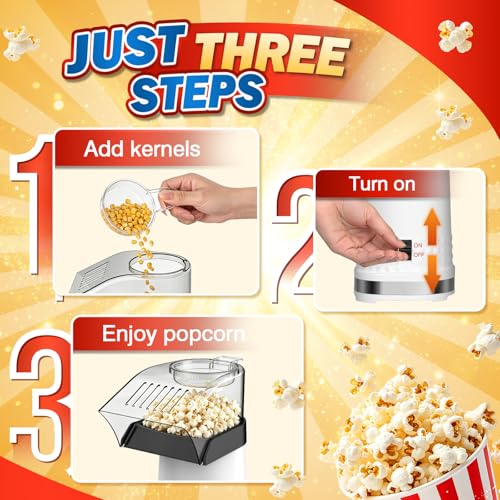
Choose a design that matches how hands-on you want to be: plug-in hot-air poppers are often simplest when they start with one switch or when plugged in, while microwave silicone bowls require learning the correct time and listening for popping to slow. A clear measuring scoop or fill line matters because overfilling can cause jams, fly-out kernels, or uneven popping. Buyers consistently praise simple setup, one-button or plug-in operation, and everyday snack convenience. Sentiment also shows that microwave-style air popping can be easy after learning the right timing for the amount of kernels.
Batch Fit
Capacity is not just about the maximum kernel load; it is about whether the popper can handle that load cleanly without overflow or waste. A smaller, faster batch may suit solo snacks, while families usually benefit from a chamber or bowl that makes multiple servings at once.
Match capacity to your real serving size: for family movie nights, look for a full-bowl yield from one measured scoop; for dorms or solo snacks, a smaller chamber that finishes fast may waste less and store more easily. Avoid assuming bigger is always better, because overloaded hot-air chambers are more likely to spit kernels, leave unpopped corn, or require repeat batches. Owner feedback supports capacity as a real separator, with satisfying batch sizes described as enough for multiple servings, a large bowl, or several snack portions. The strongest picks balance batch size with clean delivery into the bowl.
Taste Control
Hot-air popping appeals to shoppers who want a lighter base snack and control over salt, butter, oil, and seasonings after popping. Because there is no cooking oil carrying flavor into the kernels, texture and topping adhesion become more important than with stovetop popcorn.
If you want the classic air-popper advantage, confirm it pops with hot air rather than requiring oil in the chamber, then plan to add melted butter, spray oil, or seasonings after popping if you want toppings to stick. A butter-melting cup can be useful, but it should be removable and easy to clean; it is a convenience, not a substitute for even popping. Owners value no-oil popping because it makes a lighter snack and lets them add butter or toppings only when wanted. They also repeatedly describe good batches as fresh and fluffy, which is the texture benchmark for this category.
Cleanup & Storage
One reason shoppers choose air popping is to avoid greasy pots and oil splatter. But bulky chutes, fixed chambers, and awkward lids can still make a popper annoying if it is hard to clean or store.
Prioritize removable chutes, smooth surfaces, dishwasher-safe bowls or lids where applicable, and a shape that fits your cabinet, dorm shelf, or travel bin. For electric hot-air units, avoid getting water into the heating base; the chamber usually needs wiping rather than soaking. For silicone microwave bowls, collapsibility is a major space saver, but the bowl should still be sturdy enough to hold shape when filled. Owner feedback strongly supports cleanup as a category strength because air popping avoids greasy cookware and often needs only a quick wipe, while collapsible silicone bowls earn praise for washing easily and storing flat in small kitchens, dorms, or travel.
Everyday Value
A popcorn popper is only a good value if it is convenient enough to use often and dependable enough not to be replaced quickly. Since kernels are inexpensive, the real payoff comes from repeatable snack-making with minimal hassle.
Judge value by cost per use, not by novelty: the best buy is the one you will actually leave accessible, load correctly, and use for routine snacks. Look for a stable base, heat-resistant parts, a chute or lid that does not feel flimsy, and a capacity that prevents needing multiple runs every time. Owners say the price is easy to justify when homemade popcorn becomes convenient and inexpensive. Positive sentiment centers on reliable everyday performance, simple operation, and fast batches, which are the traits that make an air popper keep earning its cabinet space.
1,000,000+ shoppers use Buyer's Guide every week to find the best products and services online.

Helping millions of users make smarter purchases online.


