


- Type: Window unit
- Coverage Area: 350, 450, & 550 sq ft options
- Fan Speeds: Not indicated
- Cooling Power: 8000, 10000, & 12000 BTU options
- Window Dimensions: Window height ≥ 13.75", width from 22" to 36"





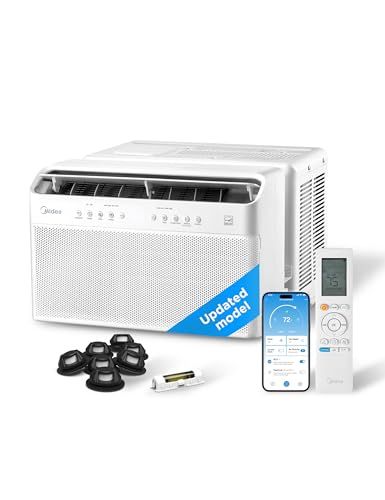
Midea U Shaped Smart Inverter Window Air Conditioner
Overview and Real-World Performance

The Midea U Shaped Smart Inverter Window Air Conditioner is one of the most interesting window AC designs in years, largely because it rethinks the part people dislike most about window units: noise and blocked windows. Its signature U-shape allows the window to close down through the middle of the unit, separating the indoor and outdoor sections more effectively than a traditional “one-box” window AC. In practice, this tends to make the indoor side feel less intrusive, both visually and acoustically, and it can preserve more of your window’s ability to admit light and maintain a more normal look from inside the room.
Performance-wise, the standout is the inverter compressor. Instead of cycling fully on and off like many conventional window air conditioners, an inverter unit modulates output to match the cooling demand. That typically means steadier temperatures, fewer dramatic swings, and less of that stop-start sound profile that can be disruptive in bedrooms or offices. In day-to-day use, you’re likely to notice that once the room hits the target temperature, the unit can settle into a lower, quieter operating level rather than repeatedly blasting at full power.
Cooling effectiveness depends heavily on sizing, but within its intended room range the Midea U generally delivers rapid pull-down on hot days and then maintains comfort with less fuss. Humidity control is also solid, particularly because longer, steadier runtimes at lower power can remove moisture efficiently without overcooling as much. The overall comfort experience tends to be “central air-like” compared with older window units, which often feel more like a cold gust followed by a warm lull.
Noise is the factor most people mention first, and for good reason. The U-shape design, the compressor placement, and inverter behavior combine to reduce the harshness of the sound you hear indoors. You may still hear airflow, and at higher fan speeds it can be noticeable, but the character of the noise is typically smoother and easier to live with. If your goal is cooling a bedroom without drowning out conversation or sleep, this model’s approach can be a meaningful improvement over basic window ACs.
Key Factors to Consider Before Buying
Before purchasing the Midea U Shaped Smart Inverter Window Air Conditioner, the most important consideration is fit, because a window air conditioner only performs as well as its installation allows. Measure your window opening carefully and confirm that the unit’s requirements match your window type and dimensions. The U-shaped design usually works best with standard double-hung windows, and you’ll want to think about how the window closes into the unit. If your window is unusual, very shallow, or has hardware that interferes with the sealing surfaces, you may need extra planning to get a secure, well-sealed installation.
The second most important factor is capacity. Choosing the right BTU rating for your room size and conditions determines whether you get stable comfort or frustration. Undersizing can lead to long runtimes and difficulty keeping up during heat waves. Oversizing can cool too quickly and reduce dehumidification, leaving the room clammy. Room conditions matter as much as square footage, including ceiling height, sun exposure, insulation quality, number of occupants, and heat from appliances. If you’re cooling a space with strong afternoon sun or a top-floor room that traps heat, it’s often wiser to size for the harsher scenario rather than the mild one.
Efficiency is another major reason people choose this model. Inverter-driven operation generally translates into lower electricity use compared with a similarly sized non-inverter window unit, especially in climates where the AC runs for long stretches. Over a season, the savings can be significant enough to help justify a higher upfront cost. If you pay high utility rates or expect frequent use, efficiency becomes not just a “nice to have” but a practical buying criterion.
Noise sensitivity and use case should also guide your choice. For a living room where the TV is on and people come and go, almost any AC might be acceptable. For a bedroom, nursery, or home office where you take calls, the noise profile becomes a priority. The Midea U’s design aims directly at this pain point, but it’s still worth thinking about your tolerance for airflow sound at various fan speeds and whether you prefer consistent low-level operation over intermittent louder bursts.
Smart features and controls are worth weighing realistically. The unit’s Wi-Fi connectivity and app control can be genuinely useful for scheduling, remote adjustments, and checking status. Voice assistant support can be convenient if your home is already set up for it. That said, the core value is still cooling, efficiency, and comfort; smart features should be treated as a bonus rather than the deciding factor unless remote control and scheduling are central to your routine. If your Wi-Fi is unreliable where the unit will be installed, you’ll want to ensure you’re happy using the onboard controls and remote without depending on the app.
Finally, consider installation complexity and maintenance. While many users can install it themselves, the U-shaped design can feel different if you’ve only installed traditional window units. A tight seal is crucial for both efficiency and comfort, and you’ll want to be prepared to take your time aligning supports and sealing gaps. Maintenance is typical for a window AC: cleaning the filter, keeping the unit reasonably free of dust, and ensuring condensate management is working as intended. If you expect to remove and reinstall seasonally, plan storage space and confirm you can handle the unit’s weight safely.
Common Questions
Does the U-shape actually make a difference in noise? Yes, in many setups it does. By positioning more of the compressor and mechanical noise outside and allowing the window to close through the unit, indoor noise often becomes more of a steady airflow sound rather than a loud mechanical cycling. Exact results depend on installation quality and fan speed, but the design generally helps.
Will I still be able to open my window? Partially, in many cases. Because the window closes into the center channel, you can often open the window somewhat after installation, though screens, security concerns, and the specific window type can limit how practical that is. Many people appreciate that it blocks less of the window’s view than a traditional unit.
Is it hard to install compared to a normal window AC? It can be a bit more involved the first time because the design is different and sealing matters. If you measure carefully, follow the instructions closely, and take time to secure supports and close gaps, it’s manageable for a typical DIY install. If the window is awkward or you’re uncomfortable lifting and aligning heavier appliances, professional help can reduce headaches.
Do the smart features require a subscription? Typically, basic app control does not require a subscription, but features and requirements can change depending on region and app updates. Even without smart connectivity, the unit should remain fully usable with the remote and onboard controls.
What size should I buy? Start with your room’s square footage, then adjust for sun exposure, insulation, ceiling height, and heat sources. If you’re between sizes and your room runs hot or gets strong sunlight, choosing the larger option can help. If humidity is your main problem and the room is modest, sizing too large can reduce dehumidification, so aim for the most accurate match rather than automatically going bigger.
Overall, the Midea U Shaped Smart Inverter Window Air Conditioner stands out for delivering a quieter, steadier, and often more energy-efficient experience than conventional window units, while also preserving more of the window’s look and light. If you prioritize comfort, noise reduction, and long-run efficiency, and you can confirm a good window fit and correct sizing, it’s an excellent candidate for bedrooms, offices, and any space where a typical window AC feels too loud or too crude.