




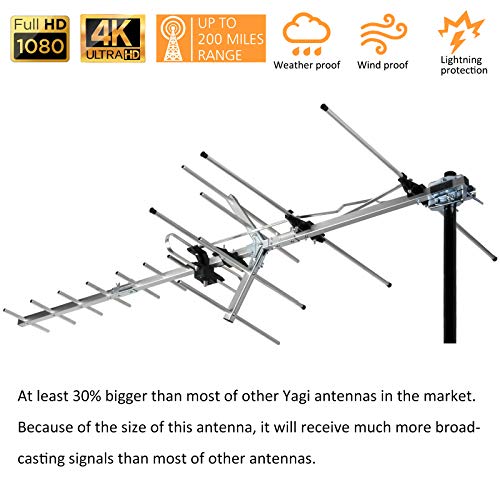
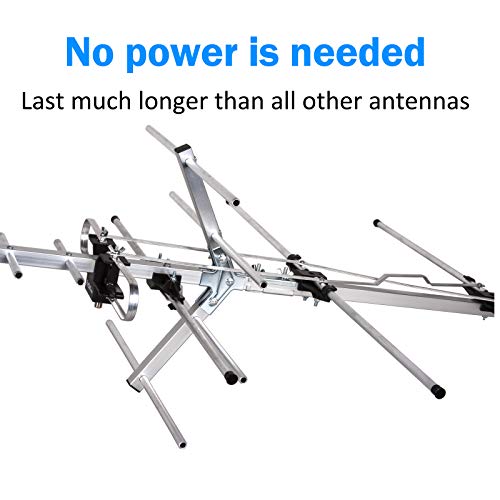
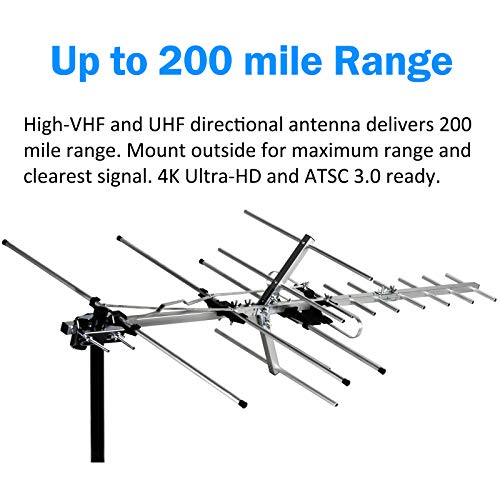








We also considered 10 others:


Our Top Choice
Compare Features


The order above is not editorial opinion, and it is not paid placement. It comes from what shoppers across our network actually do - which ota antennas they compare, and which they ultimately buy. We re-rank as new data comes in, so the long-term favorites have to keep earning their spot against new entrants. The full method, including how we make money.
OTA Antennas Buyer's Guide
OTA antenna buying is really a signal-matching problem: the right choice depends on your local transmitters, terrain, broadcast bands, and where you can physically mount the antenna. The sharpest mistakes are trusting inflated range claims and buying an indoor or amplified model when your needed stations require height, VHF support, or outdoor placement.
Quality
You want an antenna that feels well made because flimsy housings, weak connectors, or thin cables can shorten its life and make reception less consistent over time. Look for sturdy materials, secure coaxial connections, and weather-resistant construction if it will be mounted outdoors, and be wary of designs that feel overly delicate or depend on fragile adhesive mounting.
Prioritize an antenna whose physical design matches your local broadcast bands and mounting environment, not one that advertises vague “HD” or extreme-mile claims. For OTA TV, quality means sturdy VHF/UHF elements if your market needs both, weather-resistant hardware for outdoor use, a solid balun/transformer connection, and decent coax strain relief; for indoor models, look for a design you can reposition easily because a few inches can change reception. Owners generally support this: well-aimed antennas are often praised for clear HD picture and sound, and stronger outdoor or attic-capable designs are described as dependable even in tougher locations such as valleys, tree cover, roofs, and attics.
Reception
Reception determines how many channels you can actually watch and how reliably they stay clear, so you should match the antenna’s range and design to your distance from broadcast towers, nearby obstacles, and whether you need indoor or outdoor placement. Look for consistent signal stability and useful amplification if you’re far from towers or dealing with weak signals, but watch out for exaggerated range claims or overpowered amplifiers that can distort strong local stations.
Check your actual transmitter map before buying: distance, direction, terrain, and whether your desired stations are UHF, high-VHF, or low-VHF matter more than the antenna’s advertised range. Choose indoor only for strong, nearby signals; consider attic or outdoor mounting for suburbs, tree cover, valleys, detached buildings, or stations spread farther away, and be cautious with amplifiers because they can help long coax runs but can also overload strong local signals. Owner reports reinforce this pattern: larger outdoor or attic setups often replace weaker indoor antennas successfully, improve channel counts dramatically, and reduce pixelation when aimed correctly.
Performance
You want an antenna that reliably pulls in the channels available in your area and keeps them stable across your actual setup, not just under ideal conditions. Look for compatibility with your TV or tuner, placement flexibility, and easy rotation or repositioning if signals come from different directions. Be cautious of antennas that promise unrealistic range or seem to require frequent adjustment or replacement to maintain basic functionality.
For reliable day-to-day performance, buy for signal stability, not just maximum channel count on a perfect day. Look for enough gain and directivity for your location, RG6 coax for longer runs, minimal splitters unless you add proper distribution amplification, and a mounting plan that keeps the antenna fixed in wind and aimed at the transmitters; if stations are in different directions, a very directional antenna may require a rotor or a second antenna. Owners commonly report strong, clear signals after proper aiming and mounting, with major networks and HD broadcasts coming in reliably, including attic, roof, chimney, garage, and other challenging setups.
Channels
Channel count matters because an antenna is only useful if it can reliably pull in the stations you actually want, including major networks, public broadcasting, and local subchannels. Look at expected local channel coverage for your address rather than a generic range claim, and remember that terrain, building materials, antenna placement, and broadcast tower direction can all affect which channels come in clearly.
Do not judge an antenna by promised channel totals; judge it by whether it can receive the specific stations you care about. Use a broadcast lookup tool to identify each desired station’s real RF channel and band, because a station branded as channel 7 or 13 may require VHF capability while many compact flat antennas are stronger on UHF; also remember that rescanning the TV is required after every placement or aiming change. Owner sentiment supports the upside when the match is right: many buyers report gaining major networks plus extra subchannels, sometimes moving from only a few usable stations to dozens after aiming and scanning.
Installation
A TV antenna that’s easy to set up saves you trial-and-error time and helps you get a stronger signal sooner. Look for clear instructions, simple assembly, flexible mounting or placement options, and enough cable length to position it near a window, wall, attic, or roof where reception is best. Watch out for antennas that require extra hardware, awkward aiming, or frequent repositioning if you want a low-frustration installation.
Plan the installation path before choosing the antenna: indoor models need a window or wall facing the transmitters, attic installs can be weakened by foil radiant barriers or metal roofing, and outdoor installs need a secure mast, weatherproofed coax connections, grounding, and safe clearance from power lines. Also check whether your TV has an ATSC tuner, whether you need adapters for older sets, and whether cable length or splitters will require a preamp or distribution amp. Owners often describe setup as quick—connect, place or mount, then scan—but the best results in the feedback consistently come after correct placement, assembly, mounting, and aiming.
Value
You want an antenna that delivers reliable channels and clear reception without paying for features that don’t improve performance in your location. Look for strong value for money by weighing reception consistency, build quality, included accessories, and ease of setup against the cost. Be cautious of antennas that promise extreme range or premium features if reviews suggest spotty reception or little real-world benefit.
The best value is the least expensive setup that reliably receives your target stations, which may mean spending more on the right outdoor/attic antenna, mast, coax, grounding parts, or splitter solution instead of repeatedly trying underpowered indoor models. Avoid paying extra for marketing claims like “4K antenna,” huge mileage numbers, or unnecessary amplification if your issue is actually wrong band support, terrain blockage, or poor placement. Owners frame OTA antennas as strong cord-cutting value because they can replace paid service for local news, sports, major networks, and subchannels when location and setup cooperate.
1,000,000+ shoppers use Buyer's Guide every week to find the best products and services online.

Helping millions of users make smarter purchases online.


