













We also considered 10 others:


Our Top Choice
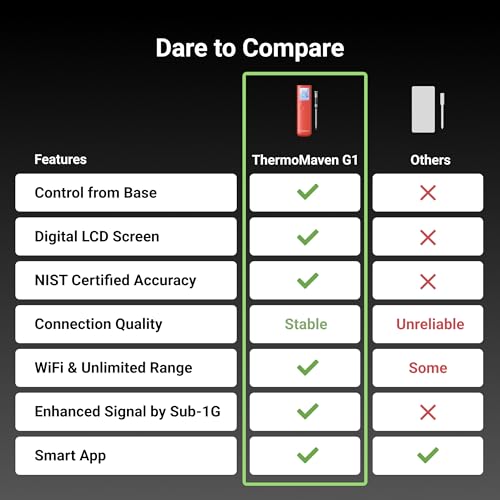
Compare Features


The order above is not editorial opinion, and it is not paid placement. It comes from what shoppers across our network actually do - which wireless meat probes they compare, and which they ultimately buy. We re-rank as new data comes in, so the long-term favorites have to keep earning their spot against new entrants. The full method, including how we make money.
Wireless Meat Probes Buyer's Guide
Wireless meat probes trade cable-free lid-closed cooking for a tougher engineering problem: the probe has to transmit accurately from inside hot meat, inside a metal grill or smoker, while its battery and seals survive long cooks. The sharpest things to verify are signal path and range for your actual cooker setup, probe heat limits near flames, and whether the app/base gives trustworthy alerts without making the cook dependent on a fragile connection.
Connectivity
Reliable connectivity matters because a wireless meat thermometer is only useful if it stays linked while you move around the kitchen, patio, or yard. Look for easy Bluetooth pairing, stable signal performance through typical obstacles like walls or a grill lid, and enough range for how you actually cook; be wary of devices that frequently disconnect or require you to stay too close for remote monitoring to be practical.
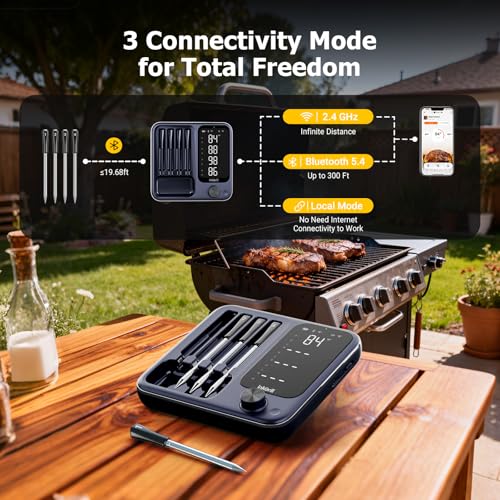
Prioritize the connection type that matches where you cook: Bluetooth-only can be fine if you stay near the grill, but WiFi, a dedicated bridge/base, or lower-frequency long-range links are better for smokers on patios, detached grills, thick walls, and overnight cooks. Check whether the probe talks directly from inside the cooker to a base, where that base must sit, whether remote monitoring works when you leave the grill area, and whether setup requires an account before you can start cooking. Owner feedback strongly supports these priorities: shoppers often praise easy pairing, account-free setup, stable long-session connections, and range that holds through walls, across the house, outdoors near smokers, and remotely through app-based monitoring, with fewer dropouts than Bluetooth-only designs.
Accuracy
You need a wireless meat thermometer that gives readings you can trust, because even a small temperature error can mean undercooked food, dry meat, or repeated lid-lifting to double-check. Look for steady, consistent temperature monitoring across the probe’s full range, and be wary of devices that show laggy readings, frequent dropouts, or large swings that make temperature control harder.
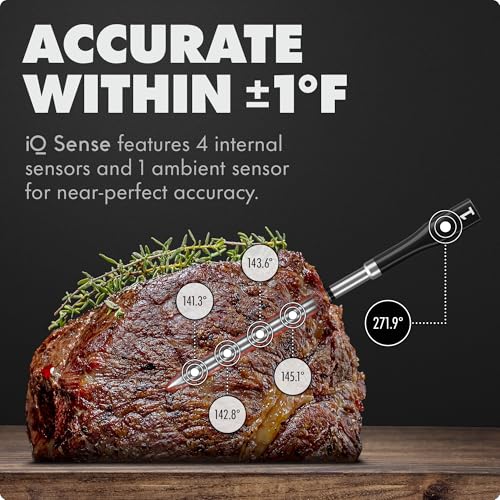
For this category, accuracy is not just the displayed number: look for a probe with a clear minimum insertion line, fast readings, dependable doneness alerts, and ideally both internal-meat and ambient-pit sensing so you are not guessing while the lid stays closed. Be cautious with very thin cuts where the sensor zone may not sit fully in the meat, bone-adjacent placement, probes exposed past their heat rating, and ambient readings affected by evaporative cooling or the probe being too close to cold meat early in the cook. Owner sentiment backs the usefulness of accurate models, with buyers repeatedly saying readings are quick, dependable, and trusted for pull timing, doneness alerts, rest guidance, grilling, smoking, roasting, and keeping the lid closed.
Build
You want a wireless meat thermometer that feels sturdy enough to handle heat, drops, grease, and frequent cleaning without becoming unreliable. Look for solid probe construction, secure charging or storage contacts, tight seams, and materials that resist warping or loosening over time. Be cautious of flimsy probes, weak magnets or clips, wobbly docks, and designs that make moisture easy to trap where it can shorten the thermometer’s life.
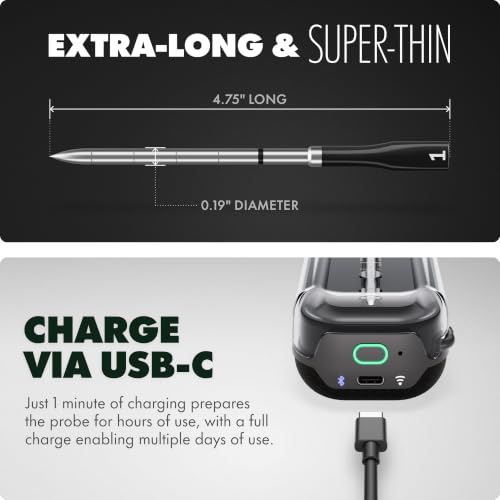
Inspect the probe’s heat ratings separately for the stainless shaft and any ceramic/plastic end, because the exposed end can be damaged by direct flame, searing zones, broilers, or contact with grill grates even when the meat end is safe. Also check water-resistance and cleaning rules, charging-contact durability, probe diameter for smaller cuts, base stability, and whether the probe is easy to insert without forcing it or stressing the electronics. Owners tend to reward well-built options, citing sturdy probes, dependable bases, easy-clean designs, clear manuals, reliable day-to-day use, and confidence that the tool works when needed.
Ease
A wireless meat thermometer should make cooking less stressful, not add setup steps or confusing alerts when food is already on the heat. Look for clear pairing, intuitive controls, readable temperature displays, and alerts you can understand quickly from a distance. Watch out for apps or interfaces that feel cluttered, require too much troubleshooting, or make it hard to change target temperatures during a cook.
Choose a setup that lets you manage a cook at a glance: a readable base display is valuable when your hands are greasy or your phone is inside, while the app should make probe assignment, alarms, target temperatures, and cook progress obvious without extra steps. For multi-probe cooks, look for clear labels, customizable alerts, presets you can override, and a workflow that does not require opening the grill just to check status. Owner feedback supports this, with frequent praise for simple setup, easy-to-read displays, clear real-time data, app alerts, preset and custom cook options, smart estimates, and monitoring that reduces the need to repeatedly open the grill.
Features
The right features make a wireless meat thermometer useful across more than one cooking style, from low-and-slow smoking to quick grilling or oven roasting. Look for clear cooking modes, customizable temperature alerts, reliable app controls, and helpful extras like timers, doneness guidance, or multi-probe support; watch out for flashy functions that are hard to use, require constant phone attention, or don’t match how you actually cook.
The most useful features for wireless meat probes are the ones that prevent overcooking during real cooks: internal and ambient temperature tracking, high/low pit alarms, carryover/rest guidance, graph history, strong range, and alerts that remain useful if you are away from the cooker. Extras such as magnetic storage, a dedicated base, quick-reference temperature ranges, and multiple probes matter more if they fit how you cook—brisket plus pit, several steaks at different doneness levels, or a roast where the lid should stay closed. Owners commonly value base-and-app monitoring, clear alerts, temperature information, practical storage extras, long wireless range, and dependable cooking results that help meat come off at the intended doneness.
Value
Value matters because a wireless meat thermometer should earn its place in your kitchen or grill setup through reliable readings, useful range, durable probes, and app features you’ll actually use. Look for a balance of accuracy, connectivity, build quality, and included accessories, and be wary of paying extra for flashy features that do not improve cooking confidence or convenience.
Judge value by the complete cooking system, not just the upfront package: the right buy should include the range you need, enough probes for your cooks, durable charging/storage hardware, replaceable accessories if available, and battery life that can handle long smoking sessions. A cheaper wireless probe loses value quickly if it drops connection from your smoker location, cannot survive high-heat finishes, or has battery degradation that makes overnight cooks stressful. Owner sentiment is mostly positive on value, with buyers describing these tools as worthwhile upgrades for low-and-slow cooking, strong overall packages, and good feature sets, though long-term battery life and unit reliability are the areas where value impressions become more mixed.
1,000,000+ shoppers use Buyer's Guide every week to find the best products and services online.

Helping millions of users make smarter purchases online.


