


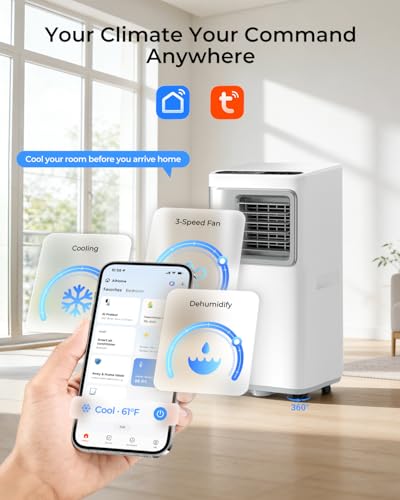


The YLEOOB portable AC gets especially strong praise for fast, effective cooling in larger spaces like living rooms, attics, and hot upper-level rooms.
Quiet operation is a standout strength, particularly for sleep mode or bedrooms where buyers want cooling without much disturbance.
Setup is consistently described as simple, with the included window kit and controls making installation and daily use feel convenient.
The YLEOOB portable AC gets especially strong praise for fast, effective cooling in larger spaces like living rooms, attics, and hot upper-level rooms.
Quiet operation is a standout strength, particularly for sleep mode or bedrooms where buyers want cooling without much disturbance.
Setup is consistently described as simple, with the included window kit and controls making installation and daily use feel convenient.
The YLEOOB portable AC gets especially strong praise for fast, effective cooling in larger spaces like living rooms, attics, and hot upper-level rooms.
Quiet operation is a standout strength, particularly for sleep mode or bedrooms where buyers want cooling without much disturbance.
Setup is consistently described as simple, with the included window kit and controls making installation and daily use feel convenient.
The AGTANA portable AC is most appreciated for cooling rooms quickly and making hot spaces comfortable, even in challenging upstairs or large-room situations.
Operation is generally considered quiet enough for everyday use, with several buyers noting they do not need to raise the TV volume or can use sleep mode at night.
Installation is the main mixed area: some buyers find setup quick and easy, while others struggle with the hose and window fittings.
The AGTANA portable AC is most appreciated for cooling rooms quickly and making hot spaces comfortable, even in challenging upstairs or large-room situations.
Operation is generally considered quiet enough for everyday use, with several buyers noting they do not need to raise the TV volume or can use sleep mode at night.
Installation is the main mixed area: some buyers find setup quick and easy, while others struggle with the hose and window fittings.


The AGTANA portable AC is most appreciated for cooling rooms quickly and making hot spaces comfortable, even in challenging upstairs or large-room situations.
Operation is generally considered quiet enough for everyday use, with several buyers noting they do not need to raise the TV volume or can use sleep mode at night.
Installation is the main mixed area: some buyers find setup quick and easy, while others struggle with the hose and window fittings.
The Garvee portable AC earns its strongest praise for cooling small to mid-size rooms effectively, with buyers describing bedrooms, server rooms, and hot humid spaces staying cold.
The overall quality and value come across well for the price, especially for shoppers who need a lower-cost unit that still cools reliably.
Noise is a tradeoff: some find it comparable to a fan and not unbearable, while others say it is louder than expected.
The Garvee portable AC earns its strongest praise for cooling small to mid-size rooms effectively, with buyers describing bedrooms, server rooms, and hot humid spaces staying cold.
The overall quality and value come across well for the price, especially for shoppers who need a lower-cost unit that still cools reliably.
Noise is a tradeoff: some find it comparable to a fan and not unbearable, while others say it is louder than expected.


The Garvee portable AC earns its strongest praise for cooling small to mid-size rooms effectively, with buyers describing bedrooms, server rooms, and hot humid spaces staying cold.
The overall quality and value come across well for the price, especially for shoppers who need a lower-cost unit that still cools reliably.
Noise is a tradeoff: some find it comparable to a fan and not unbearable, while others say it is louder than expected.

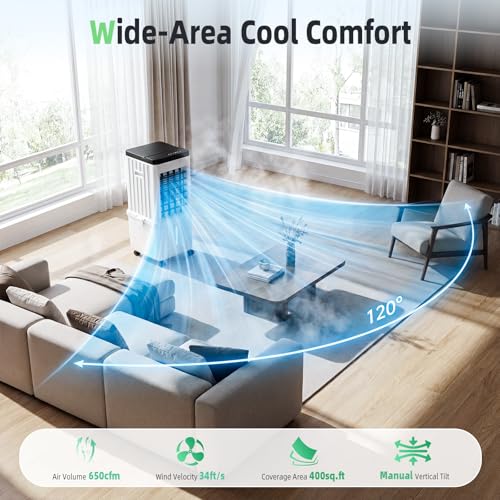


The FODFINU swamp cooler is widely liked for making bedrooms and smaller spaces noticeably cooler without the hassle of a window AC.
The unit runs quietly enough for everyday spaces, including bedrooms and a baby’s room, while still providing useful cooling.
It comes across as a good-value backup or room cooler, helped by a large water tank that lasts for hours and reduces constant refills.
The FODFINU swamp cooler is widely liked for making bedrooms and smaller spaces noticeably cooler without the hassle of a window AC.
The unit runs quietly enough for everyday spaces, including bedrooms and a baby’s room, while still providing useful cooling.
It comes across as a good-value backup or room cooler, helped by a large water tank that lasts for hours and reduces constant refills.
The FODFINU swamp cooler is widely liked for making bedrooms and smaller spaces noticeably cooler without the hassle of a window AC.
The unit runs quietly enough for everyday spaces, including bedrooms and a baby’s room, while still providing useful cooling.
It comes across as a good-value backup or room cooler, helped by a large water tank that lasts for hours and reduces constant refills.
The Dreo evaporative cooler is widely liked for making hot rooms feel noticeably cooler and more comfortable.
The build quality comes across as sturdy and well made rather than flimsy.
The Dreo evaporative cooler is widely liked for making hot rooms feel noticeably cooler and more comfortable.
The build quality comes across as sturdy and well made rather than flimsy.


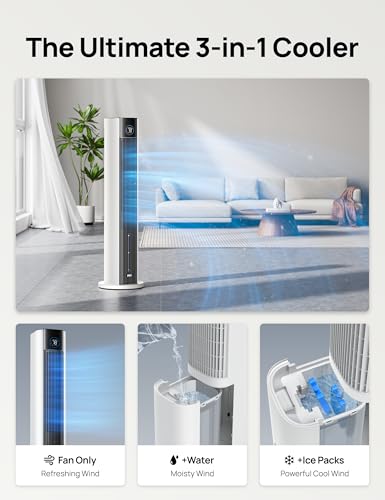
The Dreo evaporative cooler is widely liked for making hot rooms feel noticeably cooler and more comfortable.
The build quality comes across as sturdy and well made rather than flimsy.


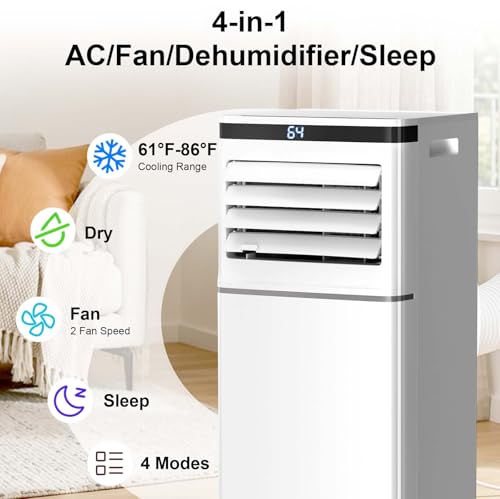

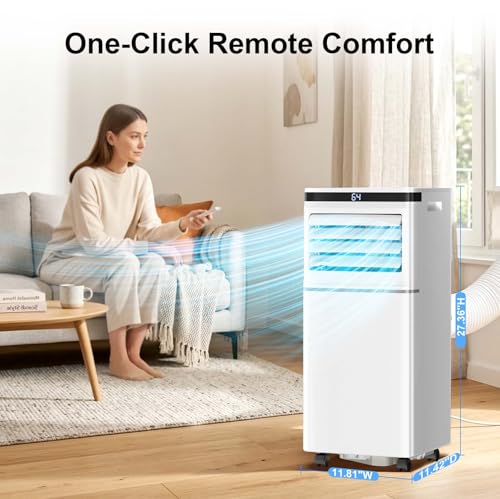
The Electactic portable AC cools bedrooms and medium-sized rooms quickly and comfortably, with multiple buyers describing spaces staying evenly or nicely cool.
Noise levels are low enough for bedroom use, and the fan mode is considered quiet enough for sleep.
The Electactic portable AC cools bedrooms and medium-sized rooms quickly and comfortably, with multiple buyers describing spaces staying evenly or nicely cool.
Noise levels are low enough for bedroom use, and the fan mode is considered quiet enough for sleep.
The Electactic portable AC cools bedrooms and medium-sized rooms quickly and comfortably, with multiple buyers describing spaces staying evenly or nicely cool.
Noise levels are low enough for bedroom use, and the fan mode is considered quiet enough for sleep.


The CrmyPeg swamp cooler is generally seen as a strong performer that makes hot areas more comfortable when used with cold water and ice packs.
The CrmyPeg swamp cooler is generally seen as a strong performer that makes hot areas more comfortable when used with cold water and ice packs.
The CrmyPeg swamp cooler is generally seen as a strong performer that makes hot areas more comfortable when used with cold water and ice packs.


The CrmyPeg portable swamp cooler is consistently praised for making rooms feel cooler and more comfortable, especially when used with water and ice packs.
The CrmyPeg portable swamp cooler is consistently praised for making rooms feel cooler and more comfortable, especially when used with water and ice packs.
The CrmyPeg portable swamp cooler is consistently praised for making rooms feel cooler and more comfortable, especially when used with water and ice packs.
The SNOCOD portable AC is widely appreciated for cooling rooms quickly with strong airflow, including in hot conditions and larger spaces.
The sound is considered manageable for daily use and sleep, more like steady background noise than an overly loud portable unit.
Portability and controls add to the convenience, with wheels, a useful remote, and WiFi app control making it easy to move and adjust.
The SNOCOD portable AC is widely appreciated for cooling rooms quickly with strong airflow, including in hot conditions and larger spaces.
The sound is considered manageable for daily use and sleep, more like steady background noise than an overly loud portable unit.
Portability and controls add to the convenience, with wheels, a useful remote, and WiFi app control making it easy to move and adjust.


The SNOCOD portable AC is widely appreciated for cooling rooms quickly with strong airflow, including in hot conditions and larger spaces.
The sound is considered manageable for daily use and sleep, more like steady background noise than an overly loud portable unit.
Portability and controls add to the convenience, with wheels, a useful remote, and WiFi app control making it easy to move and adjust.

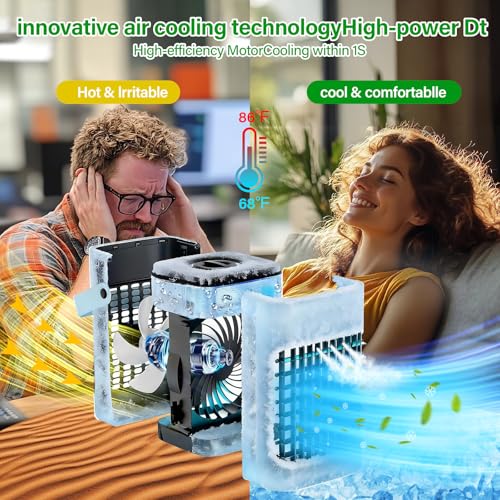


Quiet operation is a recurring strength, making it practical for desks, bedrooms, and nighttime use without being distracting.
The Anyrap portable air conditioner is well-liked for quick personal cooling, especially when water or ice is added for a cooler breeze.
Quiet operation is a recurring strength, making it practical for desks, bedrooms, and nighttime use without being distracting.
The Anyrap portable air conditioner is well-liked for quick personal cooling, especially when water or ice is added for a cooler breeze.
Quiet operation is a recurring strength, making it practical for desks, bedrooms, and nighttime use without being distracting.
The Anyrap portable air conditioner is well-liked for quick personal cooling, especially when water or ice is added for a cooler breeze.
We also considered 10 others:

.png)


Our Top Choice
The YLEOOB portable AC gets especially strong praise for fast, effective cooling in larger spaces like living rooms, attics, and hot upper-level rooms.
Quiet operation is a standout strength, particularly for sleep mode or bedrooms where buyers want cooling without much disturbance.
Setup is consistently described as simple, with the included window kit and controls making installation and daily use feel convenient.
The YLEOOB portable AC gets especially strong praise for fast, effective cooling in larger spaces like living rooms, attics, and hot upper-level rooms.
Quiet operation is a standout strength, particularly for sleep mode or bedrooms where buyers want cooling without much disturbance.
Setup is consistently described as simple, with the included window kit and controls making installation and daily use feel convenient.
The YLEOOB portable AC gets especially strong praise for fast, effective cooling in larger spaces like living rooms, attics, and hot upper-level rooms.
Quiet operation is a standout strength, particularly for sleep mode or bedrooms where buyers want cooling without much disturbance.
Setup is consistently described as simple, with the included window kit and controls making installation and daily use feel convenient.
Compare Features


The order above is not editorial opinion, and it is not paid placement. It comes from what shoppers across our network actually do - which windowless air conditioners they compare, and which they ultimately buy. We re-rank as new data comes in, so the long-term favorites have to keep earning their spot against new entrants. The full method, including how we make money.
Windowless Air Conditioners Buyer's Guide
Windowless air conditioning is a tradeoff between real heat removal and easy placement: true AC still has to dump heat somewhere, while fans and evaporative coolers can feel cooler without necessarily lowering the room temperature. The sharpest checks are whether you have a safe exhaust or drainage path, and whether your climate is dry enough for evaporative cooling to help instead of adding humidity.
Cooling
Cooling performance matters because it determines how quickly and consistently an air conditioner can bring your room to a comfortable temperature. Look for a unit with enough output for your room size, and watch out for models that are underpowered, which may run constantly without cooling well, or oversized, which can short-cycle and leave the space feeling clammy. If you want year-round use, also consider whether its heating performance is strong enough for your climate and room needs.
For a windowless setup, first separate true cooling from comfort airflow: a compressor-based portable unit must exhaust hot air somewhere outside the room, while an evaporative cooler only works well in dry air and a fan will not lower room temperature. Check the unit’s real-world room-size rating, whether it can vent through a sliding door, wall sleeve, drop ceiling, or other safe outlet, and whether your room has heat loads like upper-floor sun, electronics, or poor insulation. Owner reports support this distinction: compressor-style units are praised for quickly cooling bedrooms, medium rooms, attics, and hot upper-level spaces, while evaporative models are liked for making smaller rooms feel cooler where central air does not reach, and tower-style airflow is most often described as comfortable overnight rather than true temperature reduction.
Build
A well-built air conditioner is more likely to hold up through heavy use, frequent starts and stops, and seasonal storage without rattles, leaks, or early part failures. Look for sturdy housing, well-fitted panels, durable controls, and signs that the unit is designed for easy maintenance, since poor build quality can lead to louder operation, reduced cooling performance, and higher repair hassle over time.
In this niche, build quality is not just cabinet sturdiness—it is whether the hose collars, drain system, caster base, filter access, water tank, and shutoff sensors can survive seasonal moving, warm exhaust, and condensate. Favor units with secure hose connections, washable filters, accessible drain ports, auto-shutoff for full tanks, and self-evaporating or continuous-drain options if you live in humid conditions; avoid flimsy adapters or designs that require frequent lifting to empty water. Owners often describe better units as sturdy, practical, and well made, especially when fan, dehumidifier, and self-evaporating functions reduce maintenance, but the main failure pattern to watch for is early loss of cooling or units failing after limited seasonal use.
Airflow
Strong airflow helps your air conditioner cool the whole room more evenly, not just the area directly in front of the unit. Look for fan quality, adjustable vents, and circulation strength that match your room size, and watch out for units that blow cold air forcefully in one direction but struggle to move air throughout the space.
For windowless cooling, airflow needs to solve room mixing, not just blast one spot: look for wide oscillation, adjustable louvers, multiple fan speeds, and enough throw to reach the bed, desk, or seating area without aiming the exhaust side near the intake. If using an evaporative unit, airflow must pass through the wetted media and circulate through the room; if using a compressor unit, poor placement can create cold pockets while the rest of the room stays warm. Owner feedback aligns with this: strong airflow, 10- to 12-foot reach, oscillation, and multiple wind settings are repeatedly praised for spreading cooler-feeling air across bedrooms and living areas, with many users not needing the highest setting.
Noise
Noise level matters because an air conditioner that is too loud can disrupt sleep, conversations, work, or TV, especially in bedrooms, offices, and small rooms. Look for models with lower decibel ratings and quieter sleep or eco modes, but also watch for rattling, buzzing, compressor cycling, or fan noise that can be more annoying than the stated rating suggests.
Do not judge windowless units by fan noise alone: compressor cycling, exhaust-hose vibration, pump sounds, drain gurgle, and high-speed airflow can matter more at night than the advertised low-speed rating. For bedrooms or work rooms, look for a true sleep mode, low-speed cooling that still moves air, a dimmable display, stable hose mounting, and published noise ratings for cooling mode rather than fan-only mode. Owner sentiment is encouraging here—many units are described as quiet enough for sleep, TV, conversation, and overnight use, with lower and mid speeds especially well liked—but shoppers should still expect compressor-based units to sound different from quiet tower fans or evaporative coolers.
Value
Value matters because an air conditioner can be affordable up front but costly to run, noisy to live with, or too weak for your space. Look for a unit that balances purchase price with cooling performance, energy use, reliability, and features you’ll actually use, and watch out for paying extra for capacity or extras that don’t improve comfort in your room.
The best value depends on whether the unit can actually solve your no-window problem: a fan or evaporative cooler may be worthwhile for dry climates and personal comfort, but it is poor value if you need actual room-temperature reduction; a compressor unit is only worthwhile if you have a safe, practical exhaust path. Also factor in venting accessories, replacement pads or filters, drainage needs, storage space, and electricity use rather than judging the unit by cooling claims alone. Owner feedback shows strong satisfaction when the product matches the use case—basic room coolers and backup units are often seen as good value—but value becomes mixed when buyers expect more cooling, stronger build, or broader performance than the design can deliver.
Controls
Good controls make an air conditioner easier to live with every day, especially when you want to adjust temperature, fan speed, mode, or timers without getting up. Look for a clear, responsive remote control and an on-unit panel that is easy to read and use, since small buttons, vague icons, or buried settings can make routine adjustments frustrating.
For windowless or nonstandard installs, controls should reduce how often you physically access the unit: prioritize a remote, timer, thermostat or target-temperature setting, auto mode, sleep mode, auto-restart after power loss, clear full-tank alerts, and easy switching between cooling, fan, dehumidifying, or evaporative pump modes. If choosing smart controls, confirm they manage the functions you actually need and are not limited to basic on/off; if using an evaporative unit, make sure fan and water-pump settings are independently controllable. Owners consistently value simple setup, quick assembly, remotes, timers, multiple speeds, and app-style control where available, especially for daily adjustments from bed, a desk, or away from home.
Don't miss the latest sales on Windowless Air Conditioners and more. Get the best prime day deal today!
.png)
2,400+ shoppers have used Buyer's Guide in the last week to help find the best Windowless Air Conditioners.

Helping millions of users make smarter purchases online.


