We also considered 10 others:
Our Top Choice
Compare Features
The order above is not editorial opinion, and it is not paid placement. It comes from what shoppers across our network actually do - which weather alert radios they compare, and which they ultimately buy. We re-rank as new data comes in, so the long-term favorites have to keep earning their spot against new entrants. The full method, including how we make money.
Weather Alert Radios Buyer's Guide
Weather alert radios sit at a hard tradeoff: they must be simple enough to trust during a storm, yet capable enough to receive targeted warnings, stay powered through outages, and get your attention from another room. The sharpest buying concerns are reliable NOAA alert reception in your actual location and a backup power plan that still works when the lights, internet, and phone battery do not.
Alerting
A weather alert radio is only useful if it wakes you up or gets your attention before conditions become dangerous. County-targeted alerts and unmistakable alarms reduce both missed warnings and irrelevant alarms that train people to ignore the device.
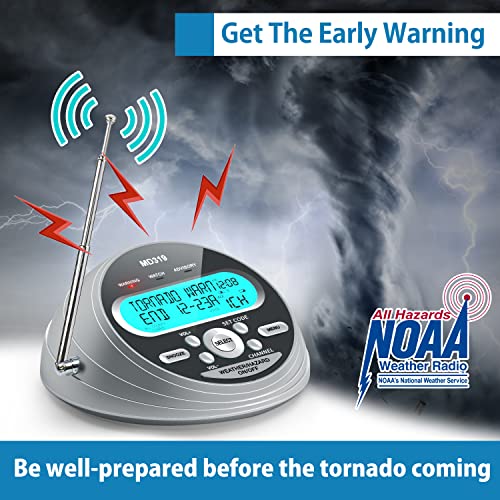
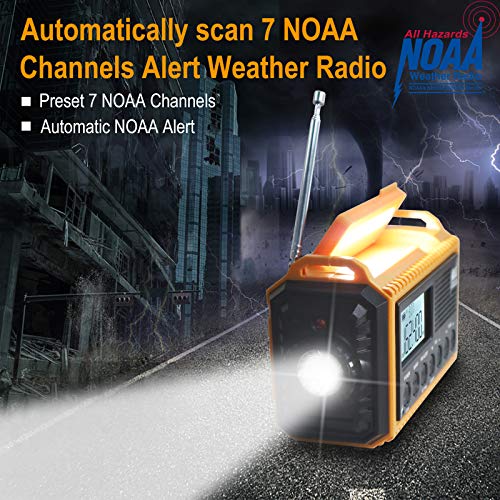
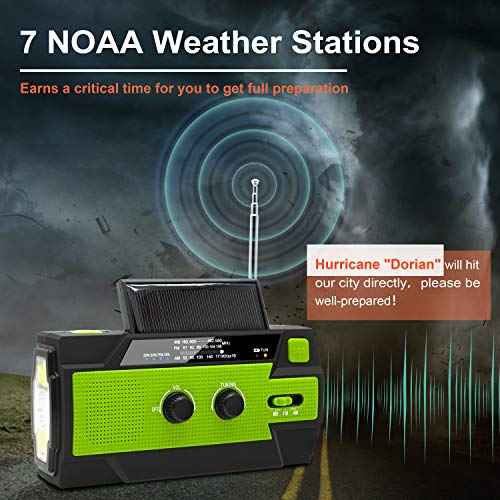
Prioritize a radio with NOAA Weather Radio alerts, Specific Area Message Encoding county selection if you need local-only warnings, an alert standby mode, and multiple warning cues: loud tone, clear voice message, and a flashing light. For bedrooms, basements, garages, or households with heavy sleepers, avoid models that rely only on a small display or low-volume beep; the failure mode is technically receiving the alert but not being noticed in time. If you live near county borders, check whether the radio can program multiple nearby counties without becoming too noisy with irrelevant alerts. Owner reports strongly support this dimension: buyers valued units that picked up emergency warnings, named nearby counties, and delivered loud, clear alerts with visible flashing lights that were hard to miss from another room.
Reception
Weather radios depend on receiving a local NOAA transmitter, and reception can vary sharply by house construction, terrain, and room placement. A radio that sounds excellent in one location may need an antenna, window placement, or a different room to stay reliable in another.
Look for strong NOAA reception across the weather band, a telescoping or external antenna connection, and audio that keeps spoken warnings intelligible rather than merely loud. Before relying on any radio, test it in the exact location where it will sit during storms—interior rooms, basements, metal buildings, and low-lying areas can all weaken signal. A good pick should hold reception without constant fiddling, but having an external antenna option is a practical safeguard if your nearest transmitter is marginal. Owner sentiment matches this tradeoff: many buyers praised clear NOAA, AM, and FM pickup with crisp audio, while the main mixed complaint was reception, with some owners needing an external antenna or still struggling to connect reliably.
Backup Power
Severe weather often coincides with power outages, so the radio’s power plan matters as much as its tuner. The best emergency setup gives you both long unattended standby and ways to recover power when outlets are unavailable.
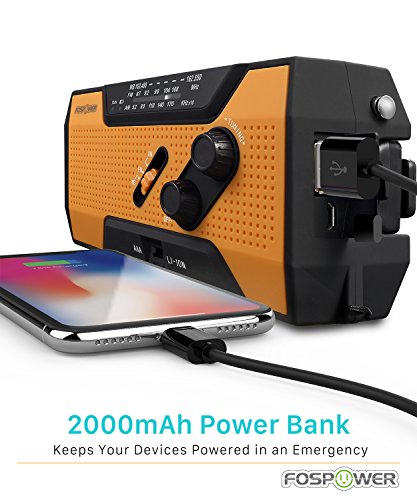
Choose a radio with more than one practical power source: a rechargeable internal battery for daily readiness, replaceable batteries for long outages, USB or adapter input for normal charging, and crank or solar as last-resort replenishment. Be careful not to overvalue tiny solar panels or hand cranks as primary power; they are best treated as emergency supplements, not a substitute for charged batteries and stored spares. If the radio will monitor alerts continuously, check standby behavior and whether the alert mode drains batteries quickly. Owners repeatedly treated multiple charging options—solar, hand crank, rechargeable battery, AAA batteries, and adapter power—as a major strength because they felt prepared when outlets were unavailable.
Emergency Tools
Many weather alert radios double as compact emergency stations, but extra features only help if they are usable during a dark, wet, stressful outage. The right extras reduce the number of separate tools you need in a go-bag or shelter area.
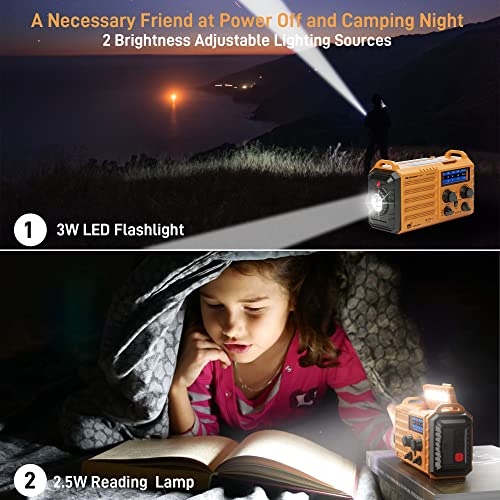
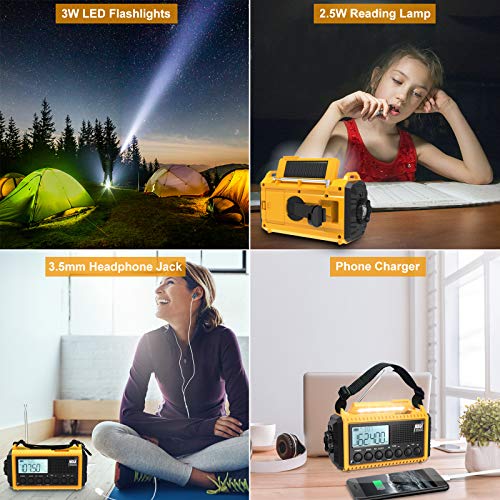
For storm kits, look for a bright directional flashlight, a softer area or reading light, an SOS siren, and a phone-charging output for short emergency top-ups. Avoid treating phone charging as a full power-bank replacement unless capacity is clearly sufficient; radios are often better for preserving communication than fully recharging modern phones. Controls for lights and siren should be easy to distinguish by touch so they are not accidentally triggered in a bag or during nighttime use. Owner feedback supports these extras when they are practical: buyers called out flashlights, reading lights, alert sirens, phone charging, AM/FM/NOAA bands, and rugged protection as useful beyond basic radio listening.
Ease of Use
Emergency gear has to be understandable before the emergency starts. Straightforward programming, readable controls, and quick testing make it more likely the radio will actually be armed and correctly configured when warnings arrive.
Favor clear menus for setting the clock, choosing NOAA channels, enabling alert standby, and entering county codes; complicated programming is a real failure point because users may leave the radio in the wrong mode. A careful shopper should also look for a clear display, obvious volume and alert controls, and a test routine for confirming the alarm without waiting for severe weather. If multiple people in the household may use it, physical buttons that are understandable without an app or manual are safer than hidden multi-press commands. Owners generally found setup and programming straightforward on well-liked units, with several getting configured quickly and receiving alerts right away.
Build
A weather alert radio may live on a nightstand for years, then be carried to a shelter, campsite, vehicle, or outage kit. Size, weight, and toughness decide whether it is convenient enough to keep accessible and sturdy enough to survive rough handling.
Pick a radio that is compact enough to store with batteries, cables, and paperwork, but not so tiny that the speaker, antenna, battery, or controls become compromised. For outdoor or storm use, look for a stable case, protected ports, a secure battery door, and enough ruggedness for drops, damp hands, and being packed with other emergency supplies. Pay attention to antenna durability, because a weather radio with a fragile or awkward antenna can lose its main advantage when it is needed most. Owners described good units as compact, not flimsy or overly heavy, and well suited to home emergency kits or outdoor use; some also viewed the combination of small size, external antenna, alert light, and emergency features as strong value.