















We also considered 10 others:


Our Top Choice
Compare Features


The order above is not editorial opinion, and it is not paid placement. It comes from what shoppers across our network actually do - which wearable cameras they compare, and which they ultimately buy. We re-rank as new data comes in, so the long-term favorites have to keep earning their spot against new entrants. The full method, including how we make money.
Wearable Cameras Buyer's Guide
Wearable cameras trade bulk and battery headroom for hands-free footage, so the best choice depends less on headline resolution and more on whether it stays securely mounted, records clearly while moving, and survives the environment you actually use it in. For this niche, scrutinize mount security, waterproofing, battery swaps, and whether the controls are usable when the camera is clipped to clothing, a helmet, a bike, or inside a case.
Features
Features matter because they determine how well a digital camera fits the way you actually shoot, from built-in modes and connectivity to accessory support, lens options, and rugged or waterproof construction. Look for useful functions you’ll rely on often, not just long spec lists, and make sure the camera’s controls, size, styling, and expandability suit your skill level and typical subjects.
Prioritize the feature set around your exact wearing and mounting use: look for secure clip, strap, adhesive, helmet, chest, backpack, bike, or magnetic options; a waterproof housing with usable buttons; included cables and storage support; and fast phone transfer if you need to post or review footage in the field. Avoid kits where the camera is small but the mounts are flimsy, proprietary, or poorly suited to vibration, because a wearable camera fails the moment it tilts, bounces, or detaches. Owner feedback supports the value of practical bundles: buyers often like having enough mounts, attachment pieces, cables, and even memory-card support to start hiking, cycling, riding, traveling, or recording immediately, and they repeatedly describe setup, phone transfers, and everyday recording as low-fuss.
Quality
A digital camera’s quality and reliability matter because you’re trusting it to perform consistently when a shot can’t be repeated. Look for solid build, dependable autofocus and exposure, durable controls, good battery and card performance, and a reputation for stable operation over long-term use. Watch out for cameras that feel flimsy, overheat easily, freeze or lag, or have user reports of recurring mechanical or software issues.
Judge quality by field durability, not just how the shell feels in your hand: check for solid mount threading, tight latch points, reliable case seals, buttons that do not jam inside a housing, and construction that can handle sweat, rain, road vibration, and occasional bumps. If you plan water use, treat waterproof claims cautiously and confirm whether protection depends on a case, because bare-camera splash resistance and true underwater use are very different failure modes. Owner sentiment is broadly reassuring here, with buyers reporting that compact wearable cameras can feel well made, capable, and reliable for everyday recording, outdoor use, and water scenarios when the proper case is installed.
Video
If you plan to record more than stills, you’ll want a camera that delivers clean, detailed video with reliable autofocus, good stabilization, and recording options that match how you shoot. For vlogging, watch for a screen you can monitor while filming, comfortable handheld operation, and microphone support, since built-in audio can pick up handling noise and wind. Also consider practical limits like overheating, battery life, and recording time, especially for longer clips or frequent filming.
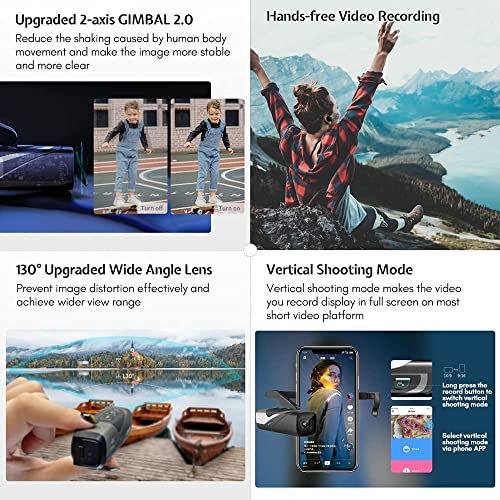
Match video specs to motion: cycling, scooters, motorcycles, skiing, and chest-mounted sports benefit from real high-frame-rate recording, wide but not overly distorted field of view, and stabilization that can control bounce; security or dash-cam-style use needs readable faces, plates, timestamps, and decent low-light handling; underwater use needs detail and color that hold up through the housing. Be cautious of headline resolution that is interpolated or only usable at low frame rates, because smooth 1080p or 2.7K can be more useful than shaky nominal 4K. Owners commonly praise sharp, detailed footage, pleasing color, clear 1080p or 4K results, and better-than-expected outdoor, underwater, travel, cycling, and body-cam-style video, which supports focusing on real-world clarity rather than spec-sheet numbers alone.
Battery
Battery life matters because it determines how long you can shoot without stopping to recharge or swap batteries, especially during travel, events, or long days outdoors. Look for a camera that matches your shooting style, and remember that video recording, continuous autofocus, bright screens, wireless features, and cold weather can drain power faster than casual still photography. Also consider how it charges, including USB charging support and recharge speed, so you know whether you can top it up easily between sessions.
Size and wearability limit battery capacity, so check claimed runtime at the resolution, frame rate, Wi-Fi state, and temperature you will actually use—not just the longest low-power mode. For rides, hikes, patrol-style recording, or travel days, favor swappable batteries, an included spare, power-bank compatibility, recording while charging, and clear low-battery indicators; avoid sealed tiny models if you need continuous all-day capture. Owner feedback is mostly positive for short sessions, normal outings, travel, and multi-hour use, especially where rechargeable or two-battery setups are included, but some buyers still find endurance less dependable, so battery planning matters more in this category than in handheld cameras.
Portability
Portability affects whether you’ll actually bring your camera with you, especially for travel, street shooting, hiking, or everyday use. Look at the camera’s body size and weight with a typical lens attached, not just the body alone, and consider whether it fits comfortably in your bag or can be carried all day without fatigue. Be careful not to trade away too much grip comfort, battery life, or control layout for the smallest possible compact size.
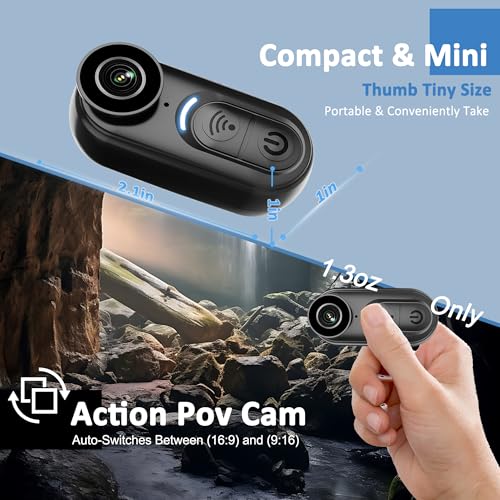
Choose portability by how the camera behaves when worn, not just by its dimensions: a good wearable camera should sit flat enough not to snag, be light enough not to pull clothing or helmet mounts off angle, and have a lens orientation that works from a pocket, lanyard, backpack strap, handlebar, or chest position. If you need discreet everyday recording, verify local consent and recording laws, and make sure small size does not come at the expense of visible status lights or secure attachment. Owners strongly value compact, thumb-sized, lightweight designs because they are easy to clip, mount, pocket, wear, and carry for biking, hiking, travel, stage recording, and daily activities without feeling bulky.
Usability
You’ll get more out of a digital camera if it feels easy to pick up, set up, and adjust without constantly digging through confusing menus. Look for clear controls, helpful automatic modes, and simple playback or sharing steps, especially if the camera is for a beginner or kid. Watch out for models with tiny buttons, cluttered interfaces, or too many advanced settings if you want photography to feel fun rather than frustrating.
Wearable-camera usability hinges on starting and confirming recording without looking at a screen: look for one-button capture, tactile buttons usable with gloves or inside a waterproof case, clear beeps/vibration/LED status, simple file deletion, and an app that helps but is not required for basic recording. For phone connectivity, check whether Wi-Fi transfer is straightforward, whether the app is stable, and whether default wireless settings can be secured; for field use, QR instructions are helpful only if you can access them before you lose signal. Owner reports support this priority, with many buyers describing setup, app connection, phone transfers, one-button operation, and basic controls as straightforward, approachable, and convenient for quick everyday recording.
1,000,000+ shoppers use Buyer's Guide every week to find the best products and services online.

Helping millions of users make smarter purchases online.


