


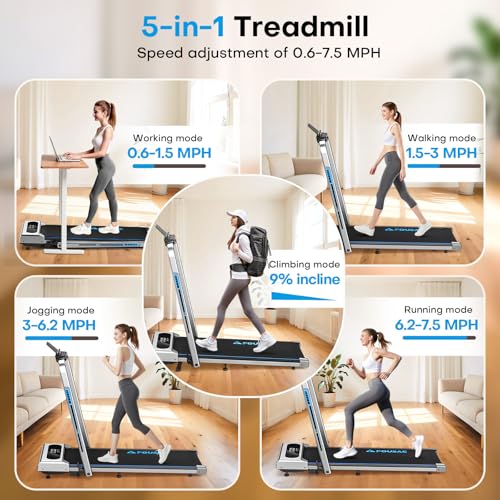


- Speed: 0.6 - 7.5 mph
- Incline: 0 - 9%
- Belt: 16" wide x 40" long
- Weight Limit: 330 lbs





FOUSAE Treadmill with Incline
Overall impression and day-to-day experience

The FOUSAE Treadmill with Incline is designed for people who want reliable indoor cardio without dedicating an entire room to a full-size gym setup. In day-to-day use, the appeal is straightforward: it offers the core treadmill experience—walking, jogging, and steady running—while adding incline capability that can make workouts feel more varied and challenging. Incline matters because it changes which muscles you recruit and how quickly your heart rate climbs, so even moderate speeds can feel meaningfully more intense. For home users focused on consistency, that variety is often what keeps a routine from going stale.
For walking and light jogging, the treadmill tends to feel approachable and easy to hop on and off. If your goal is daily steps, calorie burn, or gentle conditioning, an incline feature can be especially helpful because it allows you to increase effort without pushing speed to an uncomfortable level. That can be useful for beginners, people returning to exercise, or anyone managing joint sensitivity. More advanced runners may still appreciate incline for hill-style sessions, though the overall experience will depend on factors like motor strength, belt feel, and how stable the frame feels at faster paces.
In a typical home environment, practical details matter as much as performance. Noise level, how smoothly the belt runs, how quickly you can adjust incline or speed, and whether the console is readable while you’re in motion all influence how often you’ll use it. The FOUSAE Treadmill with Incline aims to provide a balance of functionality and convenience, particularly for users who want an incline option and a compact-friendly footprint. The best value here comes when the treadmill fits your space, your routine, and your tolerance for setup and maintenance. A treadmill that looks good on paper but feels awkward in your home is the one that becomes a clothes rack, so evaluating your real use case is key.
Key factors to consider before buying (and what matters most)
Before purchasing the FOUSAE Treadmill with Incline, the first factor to consider is your primary training goal, because it determines how much treadmill you actually need. If you’re mainly walking for general health, you’ll care most about comfort, stability, and easy controls. If you plan to run frequently, you should put extra emphasis on motor capability, belt size, and overall sturdiness at higher speeds. Incline is a major selling point, but it only becomes valuable if the treadmill remains stable and smooth when incline is engaged and you’re working harder.
Space and storage are usually the next make-or-break factor. Measure the area where you’ll use the treadmill and the pathway you’ll move it through, including doorways and tight corners. Also think about ceiling height if you’re tall and plan to use incline, since incline effectively raises your stance. The most important space-related detail is not just whether it fits, but whether it fits in a way that feels convenient. If you have to constantly rearrange furniture to use it, you’ll use it less. If the treadmill is foldable or easy to roll, that can change the experience from “occasional” to “daily.”
Comfort and ergonomics matter more than many people expect. Pay attention to the belt width and length relative to your stride, and consider how the deck feels underfoot. A comfortable surface can reduce the feeling of impact, especially for longer sessions. Handrail placement and console visibility also influence usability, particularly for beginners who like having a steadying point during incline walking. If multiple people in the household will use it, it’s worth ensuring the controls are intuitive for everyone, not just the most tech-comfortable person.
Incline range and how it’s controlled is another key buying point. Some users only need a slight incline to increase intensity; others want steeper options for hiking-style workouts. The most important thing is that incline adjustments feel predictable and manageable mid-workout. Quick adjustments are useful for interval training, while smoother transitions are better for steady endurance sessions. If your workouts involve frequent changes, you’ll want a system that doesn’t interrupt your rhythm.
Noise is an underappreciated decision factor, especially in apartments, shared homes, or households with sleeping children. Treadmills generate noise from the motor, belt movement, and footstrike. Even if the motor is quiet, the sound of running can transmit through floors. If noise sensitivity is a concern, the most important step is pairing the treadmill with a proper mat and placing it thoughtfully in the home. Consider when you’ll use it most often and whether your household schedule makes that realistic.
Safety features deserve attention, particularly if you’re new to treadmills or you plan to do higher-intensity sessions. Look for a safety key or quick-stop option and consider whether side rails or a stable frame make you feel secure. The most important safety factor is whether you feel confident using it at your intended pace. If you’re uneasy, you’ll hold back, and the treadmill will never match its potential. Also consider who else might access it, such as children, and plan for safe storage and supervision.
Finally, consider the long-term ownership experience: warranty coverage, customer support reputation, and how easy it is to maintain the belt. Regular belt lubrication and basic cleaning can keep performance consistent. The most important long-term factor is reliability, because a treadmill that spends weeks waiting on a part is not saving you time or money. When comparing options, prioritize dependable operation over flashy extras that won’t matter if the machine is down.
Common Questions
Is incline really worth it if I mostly walk? Yes. Incline is one of the easiest ways to make walking workouts more effective without increasing speed. It can raise your heart rate, add variety, and emphasize glutes and hamstrings more than flat walking, which helps many users stay engaged over time.
How do I know if this treadmill is right for running? Focus on whether the belt feels long and wide enough for your stride, whether the frame feels stable at your target pace, and whether the motor maintains smooth speed without struggling. If you plan to run frequently, prioritize sturdiness and consistent performance over compactness alone.
What should I do to reduce noise in an apartment? Place the treadmill on a dense treadmill mat, position it away from shared walls when possible, and consider walking or running at times that won’t disturb neighbors. Footstrike noise often travels more than motor noise, so cushioning under the treadmill and mindful placement make a big difference.
How much maintenance will I need to do? Expect light but regular care: wiping down sweat, keeping the area around the belt clean, checking belt alignment, and lubricating the belt as recommended. Consistent maintenance is usually simple and is one of the best ways to prevent performance issues over time.
What if I’m short on space? Measure carefully and think about “use space” versus “storage space.” Even if the treadmill can be moved, you’ll want enough room to step on and off safely and to allow airflow around it. A treadmill that fits physically but feels cramped in practice can be frustrating to use.
As a home cardio option, the FOUSAE Treadmill with Incline stands out most for users who value incline-assisted intensity and practical indoor convenience. The smartest purchase decision comes from matching the treadmill to your real routine, your space, and your comfort priorities. If it fits your home and your habits, it can be a dependable tool for building consistent fitness without complicated setup or constant planning.
```