








We also considered 10 others:


Our Top Choice
Compare Features


The order above is not editorial opinion, and it is not paid placement. It comes from what shoppers across our network actually do - which video doorbell cameras they compare, and which they ultimately buy. We re-rank as new data comes in, so the long-term favorites have to keep earning their spot against new entrants. The full method, including how we make money.
Video Doorbell Cameras Buyer's Guide
Video doorbell cameras live at the awkward intersection of security camera, door chime, porch monitor, and Wi‑Fi device, so the best choice is not just the sharpest camera—it is the one that reliably captures faces, packages, and motion at your specific doorway. Pay closest attention to field of view, power method, storage/subscription requirements, and Wi‑Fi stability, because those are the areas most likely to determine whether the doorbell actually records the event you care about.
Video
Clear video quality helps you see faces, packages, and activity at your door with enough detail to understand what happened. Look for sharp daytime picture quality, a wide enough view to cover visitors and deliveries, and night vision that stays clear without washing out faces or losing detail in shadows.
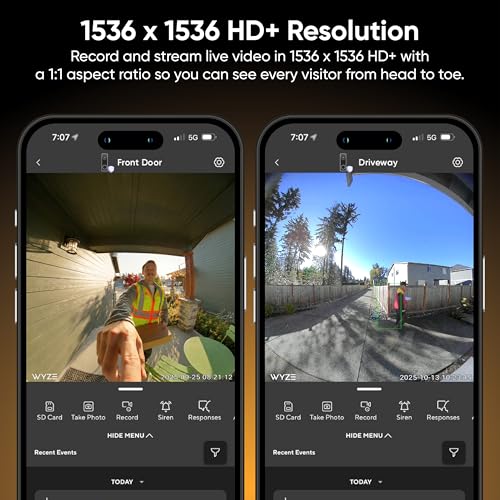
Prioritize a doorbell with enough vertical field of view to see both a visitor’s face and the doorstep where packages sit; a narrow, face-only view can miss package theft or deliveries placed close to the threshold. Look for sharp resolution, usable night vision, and exposure handling that can cope with porch lights, backlit visitors, and shaded entryways. Owner feedback strongly supports this priority: shoppers consistently praise clear 2K-style footage, strong day and night image quality, wide porch coverage, and head-to-toe views that make it easier to see visitors, faces, walkways, and packages.
Quality
A video doorbell has to live outside, handle frequent use, and stay dependable when someone is at your door, so overall quality directly affects how much you can trust it. Look for solid weather resistance, sturdy construction, consistent notifications and video capture, and a track record of reliable performance; be cautious of units that seem prone to connection dropouts, weak buttons, poor seals, or failures after exposure to heat, cold, rain, or sun.
Judge quality by whether the doorbell can function as a dependable front-door security device over time: solid weather-resistant construction, consistent alerts, reliable recording, usable app controls, and a storage method you are comfortable trusting. If you want footage after a theft or missed visitor, confirm whether clips are saved locally, in the cloud, or both, and whether the camera keeps recording during internet interruptions. Owner sentiment backs the importance of these fundamentals, with many buyers praising models that combine clear footage, local recording options, straightforward setup, quick alerts, and a dependable sense of security for checking the door remotely.
Connectivity
Reliable connectivity matters because a video doorbell is only useful if it can quickly send alerts, load live video, and record events without frequent dropouts. Check that it supports your home’s Wi-Fi setup and works smoothly with your phone, app preferences, and any smart-home system you already use. Watch out for weak signal at the door, limited router compatibility, or features that only work well within a specific ecosystem.
Treat Wi‑Fi reliability as a core safety feature, not a convenience feature: a video doorbell that drops offline during a delivery or suspicious visit is failing its main job. Before buying, check whether your door area has strong 2.4 GHz or supported 5 GHz signal, whether the unit reconnects automatically after outages, whether it needs a chime module or bridge, and whether it integrates with your existing smart-home, NVR, or local-recording setup. Owner feedback is notably uneven here: some buyers value compatibility with broader surveillance and smart-home systems, while others report dropouts, offline cameras, reset requirements, app-sharing quirks, answering delays, SD-card issues, and setup-dependent reliability.
Value
A video doorbell should feel worth what you pay because the upfront cost is only part of the total value—you also need to consider useful features, reliability, and any ongoing subscription requirements. Look for a model that delivers the essentials you’ll actually use, such as clear video, dependable alerts, and practical storage options, and be wary of paying extra for flashy features that do not improve everyday security or convenience.
Calculate value around total ownership cost, not just the device itself: many video doorbells hide key functions—recorded clips, person detection, package alerts, extended history, or rich notifications—behind subscriptions. If avoiding monthly fees matters, verify that local storage supports the clip length, retention, and remote access you need, and check whether memory cards, hubs, chimes, transformers, or batteries are extra requirements. Owner sentiment strongly reinforces this: buyers repeatedly call local storage and no required monthly fee major reasons to choose a doorbell, and they tend to rate models highly when recording, live view, storage, and app features feel complete without becoming subscription-dependent.
Features
This is about how reliably a video doorbell handles the basics: alerting you to visitors, detecting motion, recording useful clips, and letting you respond without hassle. Look for adjustable motion zones, clear notifications, dependable two-way audio, and an app that makes everyday tasks simple. Watch out for overly sensitive motion detection, delays in alerts or live view, and settings that are hard to manage.
Focus on features that reduce missed events at the front door: person detection, package detection, adjustable motion zones, pre-roll or event buffering, two-way audio with clear volume, a reliable indoor chime option, and a view wide enough to cover the approach path as well as the mat. Avoid being swayed by feature lists unless the app lets you tune sensitivity and zones, because poor detection can mean false alerts from cars, trees, or sidewalks—or missed visitors standing too close. Owner feedback supports the value of practical features, with praise for head-to-toe and 180°-style views, people/vehicle/package alerts, easy footage review, live view, two-way audio, loud chimes or sirens, and simple app-guided setup.
Battery
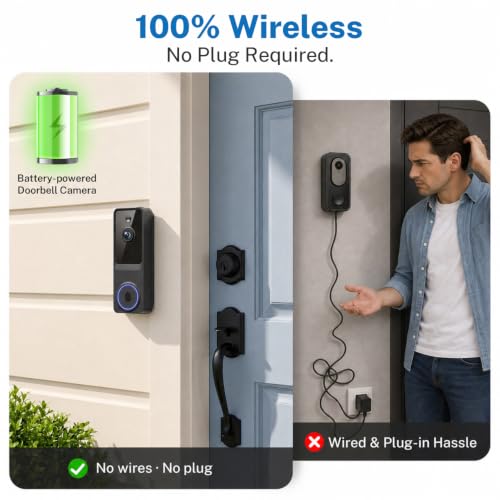
Battery life matters because it determines how often you’ll need to remove or recharge your video doorbell, and whether it may go offline at inconvenient times. Look for realistic runtime expectations based on your door traffic, motion sensitivity, video settings, and weather, since frequent alerts or cold temperatures can drain power faster. If you don’t want regular charging, consider whether the doorbell can be hardwired or uses a removable battery you can swap easily.
Choose battery power only if you are willing to manage charging and accept that heavy motion traffic, cold weather, frequent live view, high sensitivity, and weak Wi‑Fi can shorten runtime dramatically. If you plan to wire the doorbell, confirm transformer voltage, chime compatibility, whether the battery is removable, and whether wiring truly powers the unit continuously or merely trickle-charges a battery that may still need manual charging. Owner sentiment is split in exactly these ways: some buyers report weeks or long stretches between charges, while others find battery drain faster than expected, need charging even when wired, or experience runtime changes tied to settings, cold weather, connectivity, and overall reliability.
1,000,000+ shoppers use Buyer's Guide every week to find the best products and services online.

Helping millions of users make smarter purchases online.


