


- Power Source: Corded + 20' cord
- Dust Bin: 1.3L
- HEPA Filter: No
- Multi-Surface: No, carpet and upholstery only
- Anti-Tangle Brush Roll: Yes
- Weight: 13 lbs
- Ideal For: Deep carpets





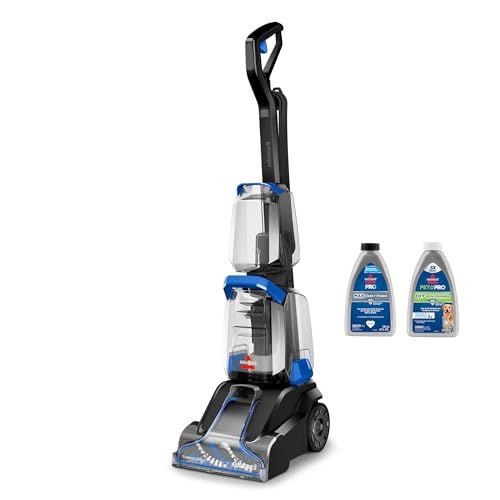
Bissell TurboClean Upright Carpet Cleaner
Performance and Everyday Use

The Bissell TurboClean Upright Carpet Cleaner is designed for people who want the benefits of a dedicated carpet shampooer without committing to the size, price, and storage demands of a professional-grade machine. In day-to-day use, it aims to bridge the gap between spot-cleaning with sprays and renting a full-size carpet extractor. The overall experience is straightforward: fill the clean-water tank with water and formula, make a slow wet pass to scrub and lift soil, then make additional dry passes to pull out as much moisture as possible. For many households, that simple routine is the difference between “it looks a little better” and “it genuinely feels refreshed.”
Where the TurboClean tends to shine is on typical household messes such as tracked-in dirt, light-to-moderate staining, and dingy traffic lanes that develop in hallways and in front of sofas. A rotating brush system provides agitation that helps loosen debris embedded in carpet fibers, and the suction path is meant to recover dirty water into a separate tank so you can see the results immediately. While it is not meant to replace commercial extraction for severely neglected carpets, it can be a very practical tool for maintenance cleaning that keeps carpets looking presentable between deep cleans.
Because it is an upright machine, it generally feels familiar to anyone who has used an upright vacuum. That familiarity matters: you are more likely to use a cleaner that feels manageable and doesn’t require a long setup. On many carpets, you’ll notice the best results when you slow your pace and let the brush and suction do the work. If you rush, you can leave behind extra moisture, which can lengthen drying time and reduce the “freshly cleaned” feel. Like most carpet cleaners in this category, it performs best when paired with patience and a bit of technique rather than speed.
Drying time is a key part of the real-world performance story. Even with decent extraction, carpets will be damp after cleaning. You can improve results by doing multiple dry passes, using fans, and cleaning on a day when you can open windows. If your home has thick plush carpeting, humidity issues, or limited airflow, you’ll want to plan accordingly because those conditions can extend drying time. In contrast, low-pile carpets and rugs typically dry faster and are often easier for compact cleaners to refresh effectively.
Key Purchase Factors and What Matters Most
Before buying the Bissell TurboClean Upright Carpet Cleaner, it helps to think about how you actually intend to use it. The most important factor for many people is cleaning power relative to the kinds of messes they face. If your carpets mainly suffer from everyday soil, occasional spills, and seasonal grime, a compact upright like the TurboClean can be a sensible match. If you are dealing with extensive pet accidents, heavy staining across large areas, or carpets that have not been cleaned in years, you may want a more powerful extractor or a model with stronger suction, larger tanks, and more robust brush action. Matching the machine to the severity and frequency of your cleaning needs is the single most important purchase consideration.
The second factor that tends to matter most is tank capacity and how it affects your workflow. Smaller tanks usually mean more refills and more trips to the sink, but they also keep the machine lighter and easier to carry. For apartments, small homes, or targeted cleaning of a few rooms, a smaller tank can be perfectly acceptable. For larger homes with wall-to-wall carpeting, stopping frequently to refill and empty tanks can turn cleaning day into a longer project than expected. Think about your tolerance for interruptions and how much carpet you plan to clean in one session.
Another practical factor is maneuverability and storage. Upright carpet cleaners can be awkward in tight spaces, but a compact form can make it easier to move around furniture legs, navigate hallways, and store in a closet. Consider the layout of your home and where the machine will live when not in use. A carpet cleaner that is too bulky or too inconvenient to store often ends up used less frequently, which reduces its value no matter how good the cleaning performance is.
Maintenance is also worth weighing before you buy. Carpet cleaners do their job by pulling dirty, sometimes smelly water into internal channels and tanks. That means regular cleaning of the dirty-water tank, occasional rinsing of components, and letting parts dry to prevent odors. If you know you are unlikely to keep up with basic after-use cleanup, choose a unit that you find easy to disassemble, rinse, and reassemble. Ease of maintenance becomes more important over time than it seems at checkout, because a machine that is quick to clean is more likely to stay in good working condition and smell-free.
You should also consider formula costs and compatibility. Bissell machines typically work best with manufacturer-recommended cleaning formulas, and ongoing use means you’ll be buying solution periodically. For budget-minded shoppers, it is smart to factor that into the total cost of ownership. If you have pets or kids, you may also care about low-odor formulas, options designed for stains, or products that emphasize family- and pet-friendly use when used as directed.
Finally, think about your carpet type and your expectations. Low-pile carpet, indoor-outdoor rugs, and durable synthetic fibers are often very forgiving and respond well to routine extraction. Thick, high-pile carpet can be more challenging, not just for cleaning but for drying. If you expect a carpet cleaner to erase every old stain on the first pass, you may be disappointed. If your goal is to noticeably improve cleanliness, reduce dinginess, and keep carpets from gradually getting worse, the TurboClean style of cleaner can be a valuable tool.
Common Questions
Is the Bissell TurboClean Upright Carpet Cleaner suitable for pet messes?
It can help with light-to-moderate pet-related soil and odors when used promptly and paired with an appropriate cleaning formula, but it is not a guarantee for severe or recurring urine problems that have soaked into carpet padding. For those cases, multiple treatments or professional help may be needed.
How long does it take for carpets to dry after using it?
Drying time varies by carpet thickness, humidity, and how many dry passes you make. Many users find that carpets are damp rather than soaked afterward, and drying can be sped up with fans and ventilation. Thick carpets and humid rooms will take longer.
Do I need to vacuum before using the machine?
Yes, vacuuming first is strongly recommended. Removing loose dirt and hair allows the carpet cleaner to focus on deep soil and staining, improves extraction, and reduces the chance of tangling or clogging.
Will it remove old stains?
It may lighten or improve older stains, especially with repeated passes and the right formula, but results depend on what caused the stain, how long it has been there, and whether it has bonded to the fibers or seeped into the pad. Managing expectations is important for set-in discoloration.
What maintenance should I plan on after each use?
Empty and rinse the dirty-water tank, rinse the clean-water tank if solution remains, and let parts air-dry. A quick wipe-down and occasional inspection for hair or debris helps prevent odors and keeps suction and brush performance consistent.
Overall, the Bissell TurboClean Upright Carpet Cleaner is a practical choice for routine carpet refreshes, smaller spaces, and households that want an accessible way to keep carpets from looking worn between deeper cleanings. If you prioritize matching cleaning power to your mess level, consider tank size for your home, and commit to simple after-use maintenance, it can be a satisfying, cost-effective addition to your cleaning routine.