


- Food Types: Dry, wet, moist
- Vacuum Levels: Airtight, gentle, seal only
- Built-in Roll Storage: Yes
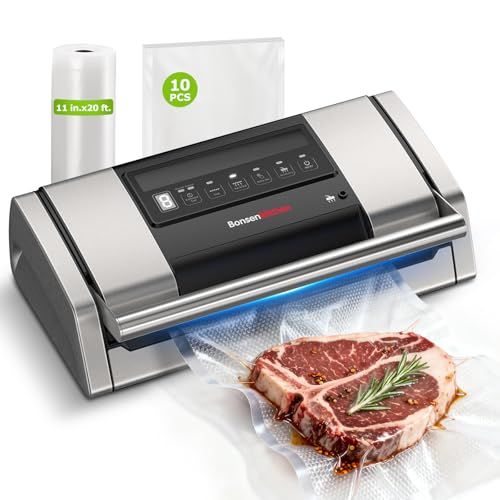
- Accessories: Air suction hose, vacuum bags & roll
- Dimensions: 16" wide x 8.7" deep x 4.8" tall





Bonsenkitchen Vacuum Sealer
Overview and Real-World Performance

The Bonsenkitchen Vacuum Sealer is designed for anyone who wants longer-lasting food storage without needing a bulky, commercial-grade machine. At its core, it removes air from a bag and seals it shut, which helps slow freezer burn, reduce odor transfer, and keep foods tasting fresher for longer. In day-to-day use, this kind of appliance is most appreciated when you’re portioning meats, freezing leftovers, prepping ingredients ahead of time, or buying in bulk to save money. If you cook frequently, the time savings can be surprisingly meaningful: sealing and labeling a few portions can be faster and cleaner than juggling containers and wrap, and it generally takes up less freezer space than rigid tubs.
In terms of performance, the most important expectation is consistent suction and a reliable seal. The Bonsenkitchen vacuum sealer typically aims to balance simplicity with practicality: press-to-start operation, a sealing strip that heats quickly, and enough suction for common foods like chicken breasts, ground meat, vegetables, cheese, and pantry items. For most households, that covers the majority of use cases. You’ll notice the biggest payoff when sealing items that are prone to freezer burn, such as steaks, fish fillets, or anything you want to keep frozen for more than a couple of weeks. You can also use it to protect dry goods like coffee beans, nuts, or flour from staling and absorbing odors.
Where a vacuum sealer’s real-world behavior matters most is with moisture. Foods with lots of liquid, marinated items, or freshly washed produce can sometimes be trickier because liquid can interfere with sealing. Many users solve this by pre-freezing the food for a short time on a tray, patting surfaces dry, using a longer bag, or carefully positioning the bag so moisture stays away from the seal area. If you anticipate sealing soups, stews, or very wet marinades often, you’ll want to pay special attention to whether the model supports a gentle or moist setting and how easy it is to stop suction before liquid reaches the sealing bar. For typical “everyday” sealing, though, the unit is generally at its best when the sealing edge is clean, dry, and flat.
Noise and heat are also part of the experience. Vacuum sealing is not silent; suction motors create a noticeable hum, though it’s usually brief. Heat buildup can matter if you plan to do many bags in a row. If the device needs short pauses between seals to maintain consistency, that’s normal for many compact consumer models. For most kitchens, the overall tradeoff is favorable: a small amount of noise and a bit of counter time in exchange for longer storage life and less waste.
What to Consider Before Buying (and What Matters Most)
Before buying the Bonsenkitchen Vacuum Sealer, it helps to think through how you’ll actually use it, because the “best” vacuum sealer depends less on brand name and more on your habits. The most important factors are sealing reliability, bag compatibility and ongoing cost, and how the machine handles wet foods. If those three align with your needs, everything else tends to feel like a bonus.
Sealing reliability is the top priority because a weak seal cancels the whole point of vacuum storage. You want consistent, complete seals along the entire width of the bag without gaps or wrinkles. A good sealer should produce a strong seam even when you’re working quickly, and it should be forgiving enough that minor bag misalignment doesn’t ruin the batch. If you expect to seal a lot of food at once, reliability also includes repeatability across multiple consecutive seals.
Bag compatibility and cost are the next major consideration. Many household vacuum sealers use textured or embossed bags and rolls that allow air to be pulled out effectively. If the Bonsenkitchen unit is compatible with common third-party rolls, it can reduce long-term costs and give you more flexibility in bag sizes. If it requires proprietary bags, convenience may be high, but ongoing expense can rise. Your purchasing decision should account for the total cost of ownership, not just the device itself, because bags become the recurring expense.
How the machine deals with moisture is especially important if you freeze marinated proteins, seal fresh fish, store juicy fruits, or prepare sous vide meals. Look for settings that differentiate between dry and moist foods, a pulse or manual control option, and an easy-to-clean drip area or channel. Even if you don’t seal liquids frequently, occasional moisture happens in real kitchens, and a unit that’s easier to wipe down and less sensitive to small amounts of liquid will feel more user-friendly over time.
Ease of use and ergonomics also matter. A vacuum sealer should be simple to lock, start, and release without requiring awkward pressure or multiple attempts. If you plan to use it several times a week, the small details become big details: whether the lid closes smoothly, whether the controls are intuitive, and whether the sealing cycle is fast enough to keep meal prep moving. Storage footprint is another practical factor. If you have limited counter space, you’ll appreciate a unit that stores easily in a cabinet and doesn’t require special setup each time.
Consider the types of food you plan to seal most often. If you mainly seal dry pantry goods, snacks, and occasional meat portions, almost any reliable sealer can work well. If you want to do frequent bulk processing, such as breaking down large warehouse-store packs of meat every weekend, you may care more about motor strength, duty cycle, and the ability to do repeated seals without overheating. If sous vide cooking is a priority, you’ll want especially strong seals and bags that withstand heat, plus confidence that the seal won’t creep open in a water bath.
Finally, think about maintenance and durability. Sealing strips and gaskets can wear over time. A device that’s easy to clean and has readily available replacement parts can be a better long-term choice, even if the upfront price is similar to competitors. Warranty terms and customer support quality are worth a quick look, because a vacuum sealer is a small appliance you may rely on often, and quick resolution of issues can save a lot of frustration.
Common Questions
Does the Bonsenkitchen Vacuum Sealer work with third-party vacuum bags and rolls? In most cases, compact household vacuum sealers are designed around embossed or textured bags, and many users successfully use third-party rolls as long as the bag texture is compatible and the width fits the sealing bar. The safest approach is to confirm the maximum bag width the unit supports and choose textured rolls from a reputable supplier.
Can I vacuum seal liquids like soup or sauce? You can, but it usually requires extra technique. A common method is to pre-freeze liquids in a container until solid or slushy, then seal the frozen portion. This prevents liquid from being pulled into the vacuum channel and helps ensure a strong seal.
Is it good for sealing marinated meat? It can be, especially if the unit has a moist mode or manual control so you can stop suction before liquid reaches the seal. Many people pat the bag edge dry, leave extra headspace, and chill the bag briefly before sealing to reduce mess and improve consistency.
Will vacuum sealing prevent freezer burn completely? Vacuum sealing can greatly reduce freezer burn, but it’s not magic. A solid seal, minimal trapped air, proper freezing practices, and stable freezer temperatures all matter. When done well, vacuum-sealed foods typically keep quality far longer than foods stored in standard zip bags or loosely wrapped containers.
Is vacuum sealing the same as canning for long-term shelf storage? No. Vacuum sealing is a storage method that reduces air exposure, but it does not sterilize food. Perishable foods still require refrigeration or freezing, and shelf-stable preservation requires validated canning or other approved preservation methods.
Overall, the Bonsenkitchen Vacuum Sealer is a practical choice for home kitchens that want to cut down on waste, organize the freezer, and keep food tasting fresher longer. If you focus your buying decision on sealing consistency, bag cost and compatibility, and how comfortably the unit handles moist foods, you’ll be well positioned to choose a model that fits your cooking style and delivers the long-term convenience vacuum sealing is known for.