










We also considered 10 others:


Our Top Choice
Compare Features


The order above is not editorial opinion, and it is not paid placement. It comes from what shoppers across our network actually do - which tri-fuel generators they compare, and which they ultimately buy. We re-rank as new data comes in, so the long-term favorites have to keep earning their spot against new entrants. The full method, including how we make money.
Tri-Fuel Generators Buyer's Guide
Tri-fuel generators trade fuel flexibility for more setup variables: the same unit can be very useful in an outage, but only if its gasoline, propane, and natural-gas ratings match your real loads and your home’s fuel plumbing. The sharpest checks are fuel-specific wattage derating, natural-gas line capacity, safe transfer-switch connection, and whether the generator can start high-surge loads like HVAC, pumps, and refrigerators without stalling.
Fuel
Your fuel choice affects how long you can run the generator, how easy it is to refuel in an outage, and how much flexibility you have for camping, job sites, or home backup. Look for fuel-efficient operation and consider whether dual-fuel or tri-fuel versatility is worth it, but watch for lower power output on some fuels and the storage, safety, and availability trade-offs of gasoline, propane, and natural gas.
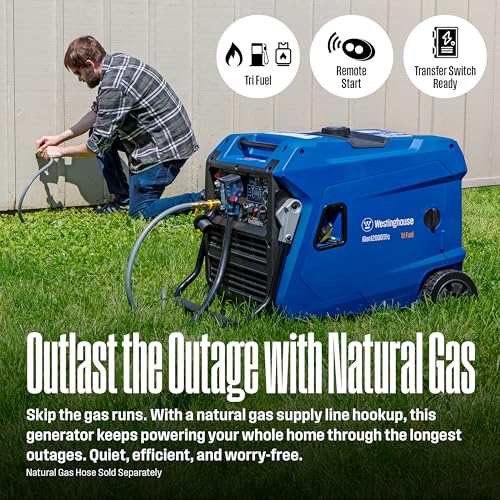
For a tri-fuel generator, do not shop by the gasoline wattage alone: compare rated and surge output separately on gasoline, propane, and natural gas, because propane and especially natural gas often deliver less power. If you plan to use natural gas as the main outage fuel, confirm your gas meter, pipe diameter, hose length, regulator, and required inlet pressure can supply the generator’s BTU demand at full load; an undersized line can cause hard starting, surging, or shutdowns even if the generator itself is capable. For propane, check whether the unit needs vapor withdrawal, what tank size is recommended for cold weather, and whether the included hose/regulator matches your tanks. Owner feedback supports the value of true multi-fuel flexibility: buyers repeatedly appreciate being able to switch among gasoline, propane, and natural gas during emergencies, and some note that having tri-fuel capability included avoids needing a separate conversion kit.
Ease
You’ll appreciate a portable generator that’s easy to set up, starts reliably, and has clear controls when power is out or you’re working away from an outlet. Look for simple starting options, intuitive gauges and outlets, accessible fuel and oil fill points, and features like remote start or connectivity if you want to operate it from a distance. Watch out for heavy, awkward designs or confusing control panels that can make day-to-day use more frustrating than the power is worth.
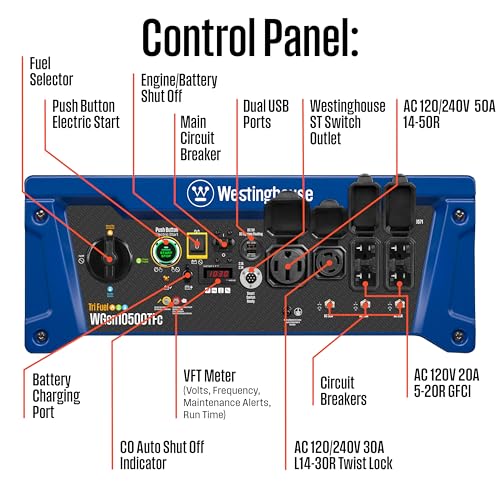
Ease of use in this niche means more than wheels and a start button: look for a clearly labeled fuel selector, simple choke/start procedure for each fuel, accessible battery connections, and instructions that explain purging air from propane or natural-gas lines. If the generator will sit for emergencies, prioritize electric start with a maintained battery, recoil backup, visible breakers, and a control panel that makes 120/240V selection and transfer-switch use obvious. Remote start is convenient, but only if you can still operate the unit safely outdoors, away from openings, with carbon-monoxide precautions followed. Owners commonly report straightforward assembly, clear instructions, easy wheel installation, and convenient push-button or remote starting once fueled, which reinforces the importance of choosing a model that keeps multi-fuel operation simple under outage stress.
Reliability
You want a portable generator that feels dependable under real load, not just one that looks good on a spec sheet. Look for sturdy build quality, clean assembly, protected outlets and controls, effective airflow, and a reputation for running consistently during extended use. Be cautious of flimsy frames, poor ventilation, hard-starting engines, or reports of unstable power, since those can turn backup power into another problem.
For reliability, focus on whether the generator is built for repeated emergency duty on the fuel you actually intend to use, not just a brief test run. Check for low-oil shutdown, overload protection, accessible air/oil filters, a durable fuel selector, copper or high-quality alternator windings where specified, and a service schedule you can realistically follow; also run the unit under load before storm season to verify stable operation on gasoline, propane, and natural gas. Be cautious of models with poor parts availability or unclear warranty support, because carburetors, regulators, batteries, and control boards are common failure points after storage. Owner sentiment is broadly positive on dependability, with reports of generators running through multi-day outages, grid failures, job-site days, and backup use while starting cleanly and maintaining enough stable output for essentials.
Power
You need enough power output to handle the appliances, tools, or devices you plan to run, including the higher starting watts many motors require. Look for a generator with appropriate running and surge capacity, stable power quality for sensitive electronics, and built-in protections that reduce the risk of overloads or unsafe delivery. Be careful not to size it only by peak wattage—your real-world backup needs depend on what you will run at the same time.
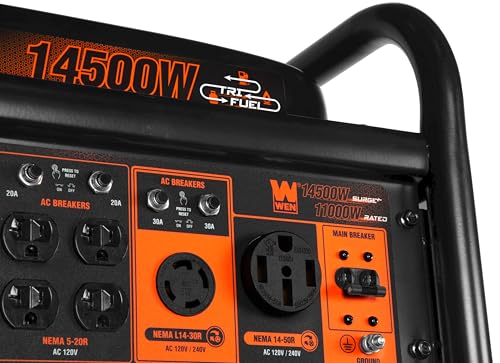
Size a tri-fuel generator from a load list, not from a “whole-house” claim: add running watts for must-have circuits and account for surge watts from refrigerators, freezers, well pumps, sump pumps, furnace blowers, air conditioners, and power tools. If you need 240V loads, verify the generator has the correct 120/240V output, receptacle type, breaker rating, and enough capacity on your preferred fuel after derating. For sensitive electronics, check total harmonic distortion or inverter output if you plan to power internet gear, computers, modern HVAC controls, or medical devices. Owners praise strong output for large household loads, 240V needs, refrigerators, freezers, HVAC, appliances, tools, RV air conditioners, lights, and electronics, but the right buy is still the one whose fuel-specific rating covers your actual starting and running loads.
Value
Portable generators can vary widely in cost once you factor in power output, fuel use, runtime, noise, build quality, and included features, so the best value is not always the cheapest option. Look for a generator that reliably covers your essential power needs without making you pay for capacity or extras you will rarely use, and watch out for low upfront prices that may come with shorter runtimes, flimsy components, or limited support.
The best value in a tri-fuel generator is not simply the lowest upfront cost; it is the unit that avoids expensive surprises such as a separate conversion kit, incompatible gas hose, undersized natural-gas plumbing, missing transfer-switch hardware, or insufficient 240V capacity. Compare what is included: propane hose and regulator, natural-gas hose, battery, wheel kit, covers, maintenance items, and outlets that match your inlet box or RV connection. Also weigh whether portability matters, because a lighter open-frame unit may serve RVs, tailgates, or job sites, while a heavier high-output model may be better for home standby through a manual transfer switch. Owners often view these generators as strong values when they combine tri-fuel capability, electric start, useful power, 120/240V output, portability, and enough capacity for whole-home or major-appliance backup without needing add-on fuel conversion parts.
Noise
Noise matters because a portable generator may run for hours near your home, campsite, or work area, and a loud unit can quickly become disruptive to you and others nearby. Look for clear decibel ratings at a stated load and distance, and remember that higher output or heavier loads often mean more noise. Also consider whether the generator has loud warning beeps or alarms, since alert sounds can be especially annoying in quiet settings or overnight.
Noise matters differently for tri-fuel generators because many are high-output open-frame machines intended for home backup, not quiet campsite use. If you need campground, RV, close-neighbor, or overnight operation, check the stated decibel rating at a specified distance and load, whether the unit has inverter or Eco mode, and how loud it becomes under heavy 240V or HVAC loads; a quiet idle rating can be misleading during real outage use. Plan placement for both sound and safety: outdoors only, far from doors/windows, with exhaust directed away from people, and with enough distance or barriers to reduce neighbor impact without restricting ventilation. Owner reports indicate some units run quieter than expected, especially inverter models or Eco-mode operation at moderate loads, but feedback is more variable for noise and long-term consistency, so shoppers should treat sound ratings and real-load operation as key checks.
1,000,000+ shoppers use Buyer's Guide every week to find the best products and services online.

Helping millions of users make smarter purchases online.


