


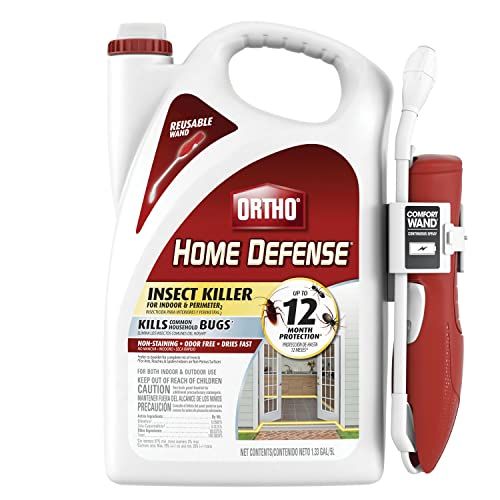
- Type: Ready to use spray
- Active Ingredient: Bifenthrin
- Coverage Area: Up to 5,300 sq ft
- Kills: Fleas, ticks, ants, roaches, spiders, and more





Ortho Home Defense Indoor Insect Killer
What It Does and How It Performs Indoors

Ortho Home Defense Indoor Insect Killer is designed for people who want a practical, store-bought solution for common household pests without turning their home into a full-time battleground. The product’s main appeal is its focus on indoor use along baseboards, around door frames, window trim, under sinks, and in other places where insects tend to travel. In day-to-day performance, it generally shines as a barrier-style spray: you treat the edges and entry points where bugs appear, and it aims to stop newcomers while also taking care of the insects that cross the treated area.
In typical homes, the most noticeable benefit is how quickly it can improve the “random sightings” problem. If you occasionally see ants in the kitchen, spiders in corners, or roaches near utility areas, a perimeter treatment can reduce those encounters significantly. The spray pattern and delivery method matter a lot here, and many users will appreciate an applicator that can reach seams along flooring or behind appliances where bugs hide. It’s best thought of as a prevention and control tool rather than a single, instant knockout for a severe, established infestation in walls or deep voids. If the issue is heavy, recurring, or tied to moisture and structural entry points, you may see the best results when the spray is paired with cleaning, sealing cracks, and fixing leaks.
Another part of “performance” is the experience of using it indoors. Most buyers care about whether the spray leaves visible residue, whether it has a strong odor, and how long the treated area needs to dry before normal foot traffic resumes. This is especially important in busy households with kids, pets, or small spaces where you can’t easily block off rooms. While outcomes vary with ventilation and how much product is applied, users typically do best by applying a light, even treatment where it’s needed rather than saturating surfaces. A measured approach often reduces the chances of stickiness or noticeable residue while still helping create a protective boundary.
It’s also worth noting that “indoor insect killer” is a broad label. Some insects are seasonal invaders, some are food-motivated, and others are moisture-driven. Ortho Home Defense is most compelling when the insects you’re dealing with are the ones it’s intended to target, and when you can treat the pathways they use. If you can identify where the bugs are coming from, you’ll likely feel the product working faster. If you can’t, you might be treating the wrong areas and conclude it’s weaker than it is.
Factors to Consider Before Buying (and What Matters Most)
Before purchasing Ortho Home Defense Indoor Insect Killer, the first factor to consider is pest match. The most important question is whether the insects you’re seeing are among the pests listed on the label. This matters more than nearly any other detail because insecticides are not equally effective across all species, and the label is your best guide to realistic expectations. If your main issue is a specific pest that requires a different approach, such as bed bugs or fleas, you’ll want to confirm that this product is appropriate or look for a targeted alternative.
The second most important factor is where you plan to use it and how you intend to apply it. This type of product is typically strongest as a crack-and-crevice and perimeter treatment. Buyers should think about their home layout, whether they can consistently treat baseboards and entry points, and whether they have trouble spots like a garage entry door, basement windows, or gaps around plumbing. If you need something for wide open rooms, rugs, upholstery, or bedding, a perimeter barrier spray may not be the best fit. Application style is crucial because even an effective formula can disappoint if it’s used in the wrong place.
Third, consider residual control and how often you’re willing to reapply. Many people buy indoor sprays because they want longer-lasting protection than a quick-contact aerosol. If your goal is fewer repeat treatments, you’ll want a product that continues working after it dries. At the same time, real-world longevity depends on cleaning habits and surfaces. Frequent mopping along baseboards, heavy scrubbing, or damp environments can reduce how long a barrier remains effective. It’s wise to think about your household routine and whether you can avoid washing treated areas immediately after application.
Fourth, pay attention to odor, drying time, and general indoor comfort. For indoor use, the “user experience” can make or break satisfaction. If you’re sensitive to smells, you’ll likely prefer applying when you can open windows or run fans. Drying time matters if you have pets that tend to hug walls, or children who play on the floor. The safest approach is always to follow the label directions closely, including any guidance on keeping people and pets away until surfaces are fully dry.
Fifth, consider surface compatibility and staining risk. Some sprays can leave marks on certain flooring materials, painted surfaces, or unfinished wood. If your home has specialty finishes, testing a small, inconspicuous area is a sensible step. This is particularly relevant for renters who need to avoid cosmetic damage and for homeowners with freshly painted trim or delicate flooring.
Finally, weigh value and convenience. Many users gravitate to Ortho Home Defense because it’s widely available, reasonably priced for the amount you get, and simple to incorporate into routine home maintenance. However, value is not just the sticker price. The true value is whether it reduces sightings enough that you stop buying multiple products, whether it helps prevent seasonal invasions, and whether it saves you time compared to constant spot-killing.
Common Questions
Does Ortho Home Defense Indoor Insect Killer work immediately? It can reduce active insects quickly when they contact treated areas, but it’s often most effective as a barrier treatment. Many users notice the biggest improvement over the days following application as insects cross the treated perimeter and as entry points become less “welcoming.”
Where should I apply it for best results? Focus on insect highways and entry points: baseboards, corners, door thresholds, window trim, under sinks, around pipes, and along edges in garages or basements. If you’re seeing insects in a specific room, treat the perimeter of that room and the likely routes they take to get there.
Is it safe to use around kids and pets? The label directions are the deciding authority. Generally, indoor insecticides require keeping children and pets away during application and until the product has dried. Using it as directed, avoiding over-application, and ventilating the area can help keep the experience manageable for most households.
Why am I still seeing bugs after spraying? There are a few common reasons. You may be treating the wrong areas, the infestation may be coming from a hidden source such as a wall void or under an appliance, or the bugs may be entering through gaps that haven’t been addressed. Cleaning up food crumbs, reducing moisture, and sealing cracks often improves results significantly.
Will it replace professional pest control? For mild to moderate issues and ongoing prevention, it can be a solid DIY option. For severe infestations, repeated reintroductions from neighboring units, or pests that require specialized treatment, a professional assessment may be the faster and more reliable route.
Ortho Home Defense Indoor Insect Killer is a practical choice for homeowners and renters who want a straightforward indoor perimeter spray that can reduce everyday pest sightings and help prevent new insects from settling in. The most important buying considerations are whether it targets your specific pests and whether your home and habits support barrier-style application, since proper placement and consistent use are what turn a basic spray into a meaningful layer of protection.