
Best Telescopes for Beginners Updated August 2026

Best Telescopes for Beginners
2026 Buyer's GuideUpdated August 2026
Sort by:
1

10.0

Gskyer Telescope, 70mm Aperture 400mm AZ Mount Astronomical Refracting Telescope for Kids Beginners - Travel Telescope with Car...
Optical Design: Refractor
Aperture: 70mm
Magnification: Eyepieces for 16x & 40x + 3x Barlow lens
Star Finding: Manual
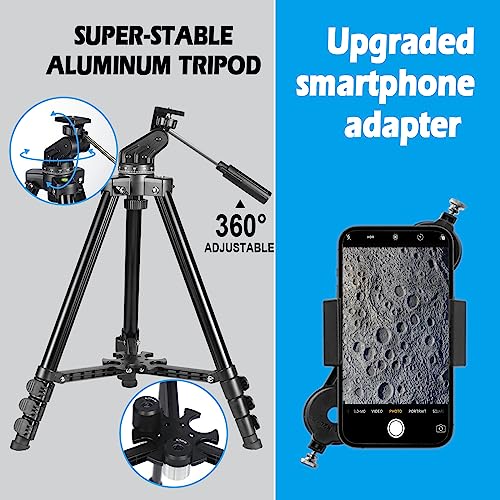
Accessories: Tripod, phone mount, camera remote, carrying case

10.0

1
Gskyer Telescope, 70mm Aperture 400mm AZ Mount Astronomical Refracting Telescope for Kids Beginners - Travel Telescope with Car...
Optical Design: Refractor
Aperture: 70mm
Magnification: Eyepieces for 16x & 40x + 3x Barlow lens
Star Finding: Manual
Accessories: Tripod, phone mount, camera remote, carrying case
2

9.8

Koolpte 80mm 600mm Telescope for Adults & Beginners, AZ Mount Stargazing
Optical Design: Refractor
Aperture: 80mm
Magnification: Eyepieces for 24x & 60x + 3x Barlow lens
Star Finding: Manual
Accessories: Tripod, phone mount, camera remote, carrying case
Compare

9.8

2
Koolpte 80mm 600mm Telescope for Adults & Beginners, AZ Mount Stargazing
Optical Design: Refractor
Aperture: 80mm
Magnification: Eyepieces for 24x & 60x + 3x Barlow lens
Star Finding: Manual
Accessories: Tripod, phone mount, camera remote, carrying case
3

9.7

Uonol Telescope for Adults High Powered,90mm Aperture 800mm Refractor
Optical Design: Refractor
Aperture: 90mm
Magnification: Eyepieces for 32x & 80x + 3x Barlow lens
Star Finding: Manual
Accessories: Tripod, phone mount, carrying case
Compare

9.7

3
Uonol Telescope for Adults High Powered,90mm Aperture 800mm Refractor
Optical Design: Refractor
Aperture: 90mm
Magnification: Eyepieces for 32x & 80x + 3x Barlow lens
Star Finding: Manual
Accessories: Tripod, phone mount, carrying case
Compare
4

9.5

HUGERSTAR Telescope for Adults High Powered, 90mm Aperture 800mm Refractor
Optical Design: Refractor
Aperture: 90mm
Magnification: Eyepieces for 32x & 80x + 3x Barlow lens
Star Finding: Manual
Accessories: Tripod, phone mount, moon filter, scope, carrying case
Compare

9.5

4
HUGERSTAR Telescope for Adults High Powered, 90mm Aperture 800mm Refractor
Optical Design: Refractor
Aperture: 90mm
Magnification: Eyepieces for 32x & 80x + 3x Barlow lens
Star Finding: Manual
Accessories: Tripod, phone mount, moon filter, scope, carrying case
Compare
5

9.4

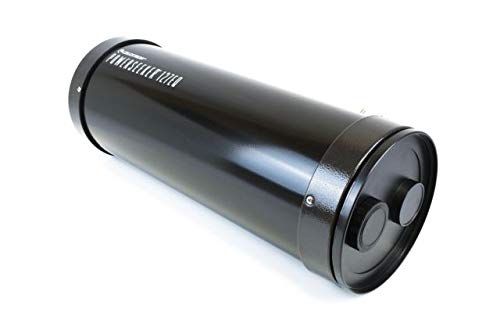
Celestron PowerSeeker 127EQ Reflector Telescope for Home Astronomy
Optical Design: Newtonian reflector
Aperture: 127mm
Magnification: Eyepieces for 50x & 250x 3x Barlow lens
Star Finding: Starry Night astronomy software
Accessories: Tripod
Compare

9.4

5
Celestron PowerSeeker 127EQ Reflector Telescope for Home Astronomy
Optical Design: Newtonian reflector
Aperture: 127mm
Magnification: Eyepieces for 50x & 250x 3x Barlow lens
Star Finding: Starry Night astronomy software
Accessories: Tripod
6

9.3

MEEZAA Telescope for Adults High Powered, 90mm Aperture 800mm Refractor
Optical Design: Refractor
Aperture: 90mm
Magnification: Eyepieces for 32x & 80x + 3x Barlow lens
Star Finding: Manual
Accessories: Tripod, phone adapter, carrying bag
Compare

9.3

6
MEEZAA Telescope for Adults High Powered, 90mm Aperture 800mm Refractor
Optical Design: Refractor
Aperture: 90mm
Magnification: Eyepieces for 32x & 80x + 3x Barlow lens
Star Finding: Manual
Accessories: Tripod, phone adapter, carrying bag
7

9.1

Telescope for Kids 50mm 100x Magnification Beginner Telescopio with Tripod, 2 Eyepieces & Finder Scope, STEM Educational Gift f...
Optical Design: Refractor
Aperture: 50mm
Magnification: Eyepieces for 20x & 100x + 2x Barlow lens
Star Finding: None
Accessories: Tripod, scope, moon filter, carrying case
Compare

9.1

7
Telescope for Kids 50mm 100x Magnification Beginner Telescopio with Tripod, 2 Eyepieces & Finder Scope, STEM Educational Gift f...
Optical Design: Refractor
Aperture: 50mm
Magnification: Eyepieces for 20x & 100x + 2x Barlow lens
Star Finding: None
Accessories: Tripod, scope, moon filter, carrying case
Compare
8

9.0

Dianfan Telescope for Kids & Adults, 80mm 500mm Portable Refractor, Purple
Optical Design: Refractor
Aperture: 80mm
Magnification: 20x to 150x + 3x Barlow lens
Star Finding: Manual
Accessories: Tripod, phone adapter, backpack, stickers
Compare

9.0

8
Dianfan Telescope for Kids & Adults, 80mm 500mm Portable Refractor, Purple
Optical Design: Refractor
Aperture: 80mm
Magnification: 20x to 150x + 3x Barlow lens
Star Finding: Manual
Accessories: Tripod, phone adapter, backpack, stickers
Compare
9

8.9

Koolpte Telescope for Adults & Beginner Astronomers - 80mm Aperture 600mm Fully Multi-Coated High Transmission Coatings with AZ...
Optical Design: Refractor
Aperture: 80mm
Magnification: Eyepieces for 24x & 60x + 3x Barlow lens
Star Finding: Manual
Accessories: Tripod, phone mount, camera remote, carrying case
Compare

8.9

9
Koolpte Telescope for Adults & Beginner Astronomers - 80mm Aperture 600mm Fully Multi-Coated High Transmission Coatings with AZ...
Optical Design: Refractor
Aperture: 80mm
Magnification: Eyepieces for 24x & 60x + 3x Barlow lens
Star Finding: Manual
Accessories: Tripod, phone mount, camera remote, carrying case
10

8.7

Celticbird Telescope for Adults High Powered, 80mm Aperture 600mm AZ Mount Refractor Telescope for Kids Beginners - Portable Te...
Quality
Easy setup
Clarity
Value for money
Ease of use
Suitable for beginners

8.7

10
Celticbird Telescope for Adults High Powered, 80mm Aperture 600mm AZ Mount Refractor Telescope for Kids Beginners - Portable Te...
Quality
Easy setup
Clarity
Value for money
Ease of use
Suitable for beginners

Our Top Choice

1

10.0

Gskyer Telescope, 70mm Aperture 400mm AZ Mount Astronomical Refracting Telescope for Kids Beginners - Travel Telescope with Car...
Optical Design: Refractor
Aperture: 70mm
Magnification: Eyepieces for 16x & 40x + 3x Barlow lens
Star Finding: Manual
Accessories: Tripod, phone mount, camera remote, carrying case

10.0

1
Gskyer Telescope, 70mm Aperture 400mm AZ Mount Astronomical Refracting Telescope for Kids Beginners - Travel Telescope with Car...
Optical Design: Refractor
Aperture: 70mm
Magnification: Eyepieces for 16x & 40x + 3x Barlow lens
Star Finding: Manual
Accessories: Tripod, phone mount, camera remote, carrying case

Compare Features

Optical Design
Best Telescope
1. Gskyer Telescope
GSKYER Preview GSKYER Preview
GSKYER
at Amazon
2. Hexeum AZ80600 Astronomical Telescope
HEXEUM Preview HEXEUM Preview
HEXEUM
at Amazon
3. Uonol Telescope for Adults High Powered,90mm Aperture 800mm Refractor
UONOL Preview UONOL Preview
UONOL
at Amazon
Premium Pick
4. Hugerstar 90mm 800mm Refractor Telescope
HUGERSTAR Preview HUGERSTAR Preview
HUGERSTAR
at Amazon
5. Celestron PowerSeeker 127EQ Telescope
CELESTRON Preview CELESTRON Preview
CELESTRON
at Amazon
6. Meezaa 90mm Refractor Telescope
MEEZAA Preview MEEZAA Preview
MEEZAA
at Amazon
Best Value
7. Luzsco Telescope for Kids
LUZSCO Preview LUZSCO Preview
LUZSCO
at Amazon
8. Dianfan Telescope for Kids & Adults, 80mm 500mm Portable Refractor, Purple
DIANFAN Preview DIANFAN Preview
DIANFAN
at Amazon
9. Hexeum AZ80600 Telescope
HEXEUM Preview HEXEUM Preview
HEXEUM
at Amazon
Deal
-25% -29% -7% -15% -26% -15% -19% -25% -26%
Deal -25% -29% -7% -15% -26% -15% -19% -25% -26%
Optical Design
Refractor Refractor Refractor Refractor Newtonian reflector Refractor Refractor Refractor Refractor
Optical Design
Refractor Refractor Refractor Refractor Newtonian reflector Refractor Refractor Refractor Refractor
Aperture
70mm 80mm 90mm 90mm 127mm 90mm 50mm 80mm 80mm
Aperture
70mm 80mm 90mm 90mm 127mm 90mm 50mm 80mm 80mm
Magnification
Eyepieces for 16x & 40x + 3x Barlow lens Eyepieces for 24x & 60x + 3x Barlow lens Eyepieces for 32x & 80x + 3x Barlow lens Eyepieces for 32x & 80x + 3x Barlow lens Eyepieces for 50x & 250x 3x Barlow lens Eyepieces for 32x & 80x + 3x Barlow lens Eyepieces for 20x & 100x + 2x Barlow lens 20x to 150x + 3x Barlow lens Eyepieces for 24x & 60x + 3x Barlow lens
Magnification
Eyepieces for 16x & 40x + 3x Barlow lens Eyepieces for 24x & 60x + 3x Barlow lens Eyepieces for 32x & 80x + 3x Barlow lens Eyepieces for 32x & 80x + 3x Barlow lens Eyepieces for 50x & 250x 3x Barlow lens Eyepieces for 32x & 80x + 3x Barlow lens Eyepieces for 20x & 100x + 2x Barlow lens 20x to 150x + 3x Barlow lens Eyepieces for 24x & 60x + 3x Barlow lens
Star Finding
Manual Manual Manual Manual Starry Night astronomy software Manual None Manual Manual
Star Finding
Manual Manual Manual Manual Starry Night astronomy software Manual None Manual Manual
Accessories
Tripod, phone mount, camera remote, carrying case Tripod, phone mount, camera remote, carrying case Tripod, phone mount, carrying case Tripod, phone mount, moon filter, scope, carrying case Tripod Tripod, phone adapter, carrying bag Tripod, scope, moon filter, carrying case Tripod, phone adapter, backpack, stickers Tripod, phone mount, camera remote, carrying case
Accessories
Tripod, phone mount, camera remote, carrying case Tripod, phone mount, camera remote, carrying case Tripod, phone mount, carrying case Tripod, phone mount, moon filter, scope, carrying case Tripod Tripod, phone adapter, carrying bag Tripod, scope, moon filter, carrying case Tripod, phone adapter, backpack, stickers Tripod, phone mount, camera remote, carrying case
How we rank

The order above is not editorial opinion, and it is not paid placement. It comes from what shoppers across our network actually do - which telescopes they compare, and which they ultimately buy. We re-rank as new data comes in, so the long-term favorites have to keep earning their spot against new entrants. The full method, including how we make money.

Telescopes Buyer's Guide

Telescopes are a tradeoff between aperture, stability, portability, and how easy it is to find objects in the sky. The sharpest buying concerns are avoiding shaky high-magnification toy-like setups and choosing a scope whose aiming, focusing, and mount quality match your actual goals—visual moon and planet viewing, family stargazing, or early astrophotography.

Ease

A telescope that’s easy to use helps you spend more time observing and less time troubleshooting alignment, focusing, or shaky adjustments. Look for intuitive controls, clear setup steps, smooth mount movement, and stable construction; watch out for designs that require frequent recalibration or make basic aiming and tracking feel tedious.

Prioritize a telescope you can align, aim, focus, and move in the dark without turning the first night into a troubleshooting session. For beginners, that means clear step-by-step instructions, a finder that is easy to calibrate in daylight, smooth slow-motion controls or intuitive push-to guidance, and a mount that does not shake every time you touch the focuser. Phone-assisted locating can be a major advantage if you want help finding targets without learning manual star-hopping immediately, but check that the dock fits your phone and that the app workflow is supported on your device. Owner feedback strongly supports this: many buyers describe beginner models as quick to assemble, approachable for kids and first-time users, and easy to get from unboxing to a first moon view when directions are followed.

Build

Build quality matters because a telescope needs to stay stable, aligned, and usable through repeated setup, transport, and outdoor conditions. Look for solid materials, smooth-moving parts, secure fittings, and a sturdy mount or tube assembly; watch out for flimsy plastics, loose knobs, wobble, or parts that feel prone to flexing or misalignment.

For telescopes, build quality is mostly about mount stability, focuser feel, tripod rigidity, and whether the optical tube stays aligned after setup—not just whether the tube looks sturdy. Avoid flimsy tripods, wobbly altitude/azimuth heads, sticky focusers, and lightweight accessories that make high magnification unusable because vibration will blur the view. If choosing a reflector, consider whether you are comfortable checking collimation; if choosing a larger computerized or catadioptric scope, make sure the added weight and setup complexity fit how often you will actually carry it outside. Owners often praise well-packaged starter scopes that feel solid for the money, and they report that better-built beginner and upgrade models can deliver rewarding moon, star, and planet views when the mount and optics work together.

Optics

Optics determine how sharp, bright, and detailed celestial objects look, so you should prioritize clear image quality over simply chasing the highest magnification. Look for a telescope with good sharpness across the field of view, smooth and precise focus, and enough aperture to support useful magnification without making the image dim or blurry. Watch out for exaggerated magnification claims, since poor optical quality or a shaky setup can make planets, stars, and deep-sky objects harder to see clearly.

Buy aperture and optical design for the objects you actually want to see: the Moon and bright planets can look good in modest apertures, while faint galaxies and nebulae need more light-gathering ability and darker skies. Be skeptical of very high advertised magnification; useful magnification depends on aperture, eyepiece quality, atmospheric seeing, and mount stability, and a blurry oversized image is worse than a smaller sharp one. Look for coated optics, a usable low-power eyepiece for finding objects, a smooth focuser, and realistic expectations: colorful deep-sky images like online photos generally require imaging gear and processing, not just visual observing. Owner sentiment matches this pattern, with the clearest praise going to sharp lunar detail, crater shadows, planets, Jupiter’s moons, and brighter views from larger apertures.

Value

Value matters because a telescope’s price should match the quality of its optics, mount, accessories, and ease of use—not just its magnification claims. Look for a package that performs well out of the box and leaves room to grow, and watch out for cheap bundles that include shaky mounts or low-quality eyepieces that make observing frustrating.

The best telescope value is not the one with the longest accessory list or biggest magnification claim; it is the package that includes a stable mount, decent starter eyepieces, a practical finder, and optics you will not outgrow after two sessions. A moon filter, phone adapter, case, or Barlow lens can be useful, but only if the core scope and mount are competent—accessories cannot fix shaky pointing or poor focusing. For most new visual observers, it is smarter to spend on aperture, stability, and easy aiming than on astrophotography promises. Owners commonly describe good starter scopes as strong values when they feel reliable, arrive with useful basics, and deliver satisfying visual observing without forcing beginners into much more expensive equipment.

Beginners

If you’re new to astronomy or buying for a child, a telescope that’s easy to set up, aim, and focus can make the difference between lasting curiosity and quick frustration. Look for beginner-friendly controls, clear instructions, stable mounts, and enough optical performance to show the Moon, bright planets, and standout deep-sky objects without a steep learning curve. Be cautious of toys or giftable-looking scopes that overpromise magnification but are shaky, dim, or hard to use.

A beginner telescope should make the Moon, bright planets, and easy star clusters rewarding quickly while teaching real observing skills rather than relying on unrealistic claims. Look for labeled parts, tool-free or low-tool assembly, a finder that can be aligned during the day, an eyepiece set that starts with low magnification, and instructions that explain target selection. For children, prioritize durability, easy parental setup, safe supervision, and low frustration; for adults, choose enough aperture and mount quality to keep the hobby interesting. Owner feedback supports this beginner-first approach: shoppers often appreciate starter scopes that are affordable, educational, quick to assemble, and capable enough to spark genuine interest in astronomy.

Features

Features determine how much you can actually do with a telescope beyond basic viewing, from app-guided object finding and tracking to astrophotography support and the usefulness of included accessories. Look for capabilities that match your goals and experience level, and watch out for bundles that emphasize lots of extras while skimping on core performance, stable mounts, or optics that will matter most in real use.

Choose telescope features based on how you plan to observe: manual visual use, phone-guided object finding, computerized tracking, or smart-scope imaging all solve different problems. Phone docks and sky-recognition apps can dramatically reduce the frustration of finding objects, while smooth focusing and a reliable finder matter more for traditional visual observing. If you want photos, distinguish simple phone snapshots of the Moon from true deep-sky imaging; smart scopes with automatic target finding and app control can help with galaxies and nebulae, but they trade off against eyepiece-based observing and may depend heavily on software. Also check failure-prone basics—focus travel, phone fit, app compatibility, and whether the unit can produce a sharp image on the Moon—because some owners report frustrating focusing or functionality problems even on easy targets, while many others praise app-guided locating, smooth focus, and clear beginner-level views.



