

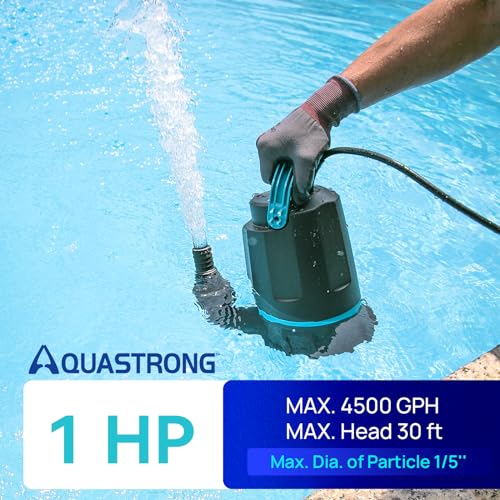

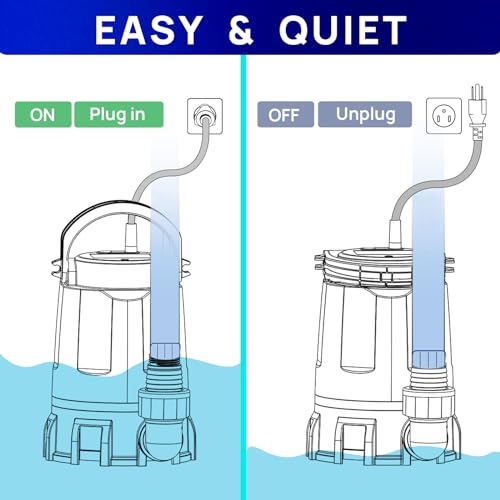




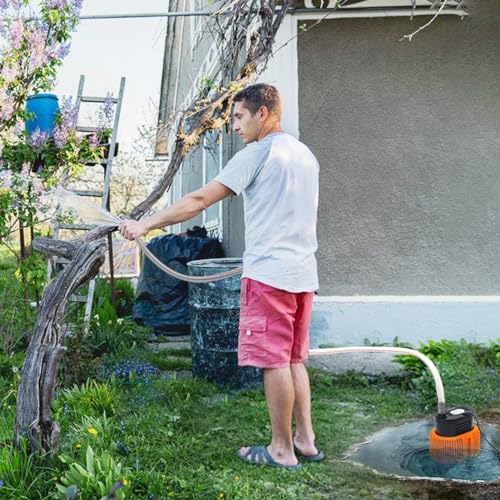


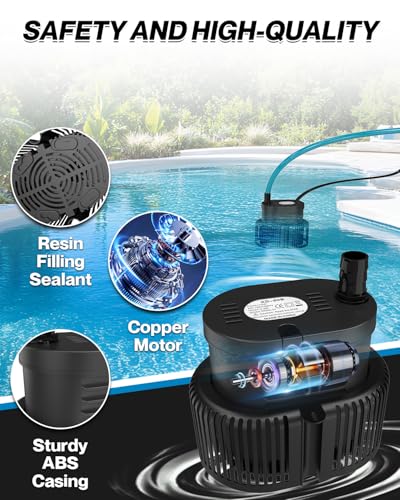


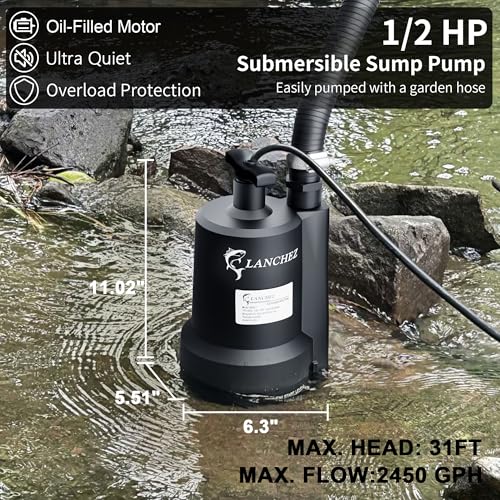


We also considered 10 others:


Our Top Choice
The order above is not editorial opinion, and it is not paid placement. It comes from what shoppers across our network actually do - which sump pumps for pool they compare, and which they ultimately buy. We re-rank as new data comes in, so the long-term favorites have to keep earning their spot against new entrants. The full method, including how we make money.
Sump Pumps for Pool Buyer's Guide
A sump pump for pool use has to balance fast water movement with safe, low-water operation on covers, liners, and shallow standing water. The sharpest buying concerns are whether it can clear water without constant hand work, and whether leaves, mud, hose restriction, or seasonal storage will slow it down or kill it early.
Water Removal
Pool cover and pool-draining pumps are judged first by whether they can actually pull water down without constant babysitting. A good choice should match the job: shallow cover puddles, small above-ground pools, or larger standing-water removal all place different demands on intake design and lift.
For pool covers, look for a pump that can start without priming and draw down to a very shallow remaining water level, because leaving even a thin layer can keep stressing the cover and make manual cleanup necessary. For draining pools, basins, duck pools, or flooded low spots, prioritize the rated ability to handle standing water continuously rather than a utility pump meant only for occasional transfer. Owner feedback strongly supports this as a core divider: buyers praised pumps that simply worked on pool covers, basins, and standing water, and especially valued models that cleared water down to shallow levels and removed the last water from a cover or pool.
Flow Speed
Flow rate determines whether the pump feels like a convenience or a waiting game. In this niche, hose diameter, hose length, lift height, and debris screens can make real-world draining much slower than the headline rating.
Choose flow capacity based on the actual volume you need to move: a small cover puddle does not need the same pump as a flooded yard or a full above-ground pool. If fast draining matters, use the largest compatible discharge hose and avoid narrow garden-hose setups when the pump supports a wider outlet, since restrictive hoses can choke performance. Owners repeatedly tied strong performance to moving a lot of water quickly, especially with a larger hose, but sentiment was mixed on bigger jobs: many found drain speed quick, while others said some pumps were not super fast for larger water-removal tasks.
Debris Handling
Pool pumps often sit on covers or in dirty outdoor water where leaves, twigs, mud, and grit can reach the intake. A pump that is easy to screen and clean is less likely to stall, clog, or burn out during seasonal use.
For pool-cover duty, favor a raised or screened intake that resists sucking in leaves and cover sediment, and check that the bottom plate or filter area can be opened and rinsed without tools or frustration. Avoid assuming a clean-water pump will tolerate pond debris, mud, or twigs; once debris reaches the impeller, clogging and stalling become the common failure mode. Owner reports back this up: easy cleanout after mud or debris slowed the pump was appreciated, but dirty-water handling was mixed, with some users reporting clogs or stalls when twigs, mud, or pond debris reached the impeller.
Easy Handling
Seasonal pool draining is often done in wet, awkward places, so small usability details matter more than they do on paper. Cord length, attachment options, weight, and noise can determine whether setup is safe and simple or a chore.
Look for a long outdoor-rated power cord, secure hose adapters for the hose sizes you actually own, a stable base for sitting on a soft pool cover, and light enough weight to place and retrieve without pulling on the cord or hose. No-priming operation is especially useful for shallow cover water because the pump may need to restart or run in low-water conditions. Owners consistently praised straightforward setup and daily use, citing easy hose connection, long cords, light weight, quiet operation, no-priming starts, compact design, multiple hose attachments, and reduced physical effort when draining small pools, duck pools, or pool covers.
Seasonal Reliability
A pool pump may sit unused for months and then be expected to work during heavy rain or opening season. Durability depends not only on the motor and housing, but also on keeping debris out, preventing dry running, and cleaning the intake before storage.
For pool use, prioritize a pump with a sturdy housing, thermal protection or auto shutoff where available, and a design that can be cleaned and dried before storage. Be cautious if the pump will be left unattended on a cover for long stretches: clogging, dry running after the water drops, and repeated exposure to grit are the conditions most likely to shorten life. Sentiment was generally positive around pumps that were dependable once set up and reliable for above-ground pools and routine draining, but durability was the clearest caveat, with some owners reporting units that stopped working after months or stalled when debris reached the impeller.
Job Value
Value in this category is not just the lowest purchase cost; it is whether the pump can handle the water volume, debris level, and frequency of use without wasting time or failing early. Overbuying can be unnecessary for small cover puddles, but underbuying can turn large draining jobs into long, frustrating sessions.
Match spending to the job: a lightweight compact pump can be the right value for seasonal cover water and small pools, while larger flooded areas or full-pool draining justify more pumping power and better debris protection. Do not judge value only by claimed gallons per hour; include the cost of the right hose, adapters, and the likelihood of needing to clean or replace a pump that is undersized for muddy water. Owners often called these pumps strong values, saying inexpensive models performed better than expected and handled impressive water-removal jobs for the cost, especially when cleaned and cared for properly.
1,000,000+ shoppers use Buyer's Guide every week to find the best products and services online.

Helping millions of users make smarter purchases online.


