

















We also considered 10 others:


Our Top Choice
The order above is not editorial opinion, and it is not paid placement. It comes from what shoppers across our network actually do - which steel tip darts they compare, and which they ultimately buy. We re-rank as new data comes in, so the long-term favorites have to keep earning their spot against new entrants. The full method, including how we make money.
Steel Tip Darts Buyer's Guide
Steel-tip darts are a control purchase: the right set must match your throw while surviving repeated impact with a bristle board. The sharp tradeoff is between a slim, well-balanced barrel that groups tightly and the replaceable parts—flights, stems, and points—that can loosen, wear, or break during regular play.
Barrel Build
The barrel is the part you keep longest, while flights, shafts, and points are easier to tune or replace. Better machining and denser barrel materials can make a dart feel more consistent and allow a slimmer profile for tighter grouping on a steel-tip board.
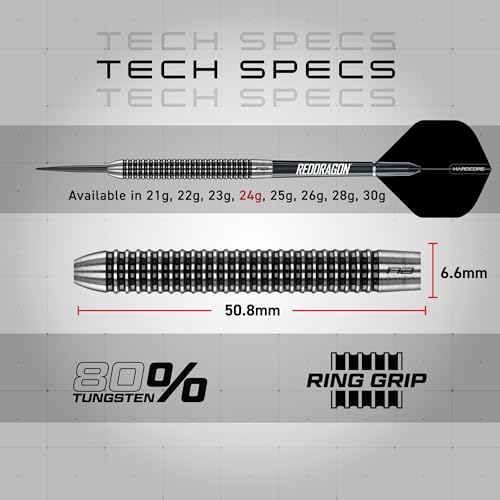
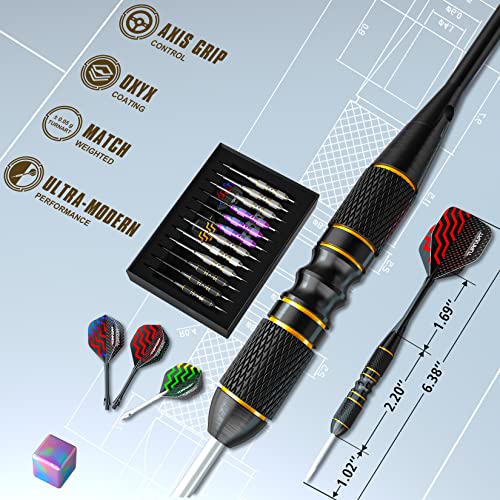
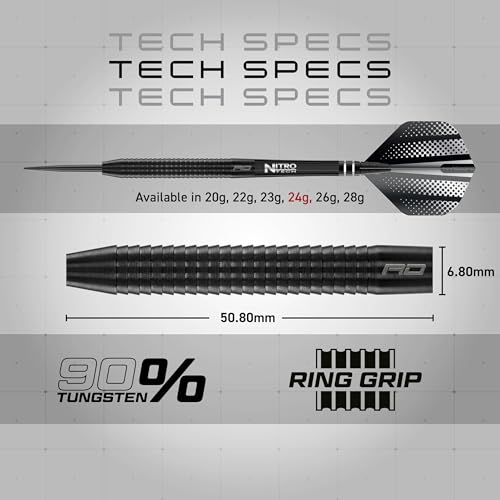
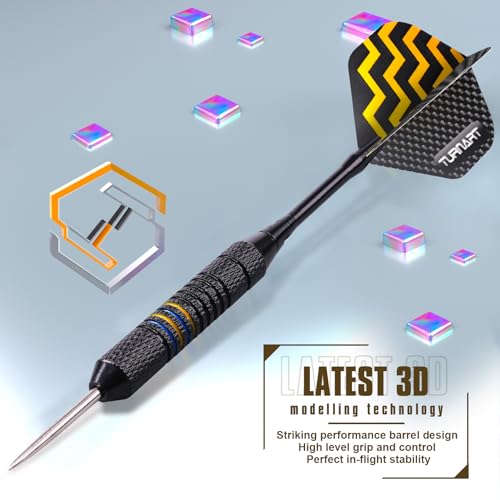
Prioritize the barrels before the bundle: for steel-tip darts, look for straight, cleanly machined barrels, secure steel point seating, and a material/profile that fits your level. Tungsten or tungsten-style slim barrels are useful when you want tighter groups because they take up less space in the treble bed, while wider basic-metal barrels can still be fine for casual play if the machining and balance are consistent. Owner feedback strongly favored sets that felt well made, high quality, and like a clear upgrade from basic board darts; several comments also singled out slim, solid barrels and polished presentation as signs that the set felt more serious than entry-level darts.
Weight Balance
Weight and balance determine the arc, speed, and release timing of the dart. A dart that is too light, too heavy, or balanced away from your natural grip point can make grouping harder even if the build quality is good.
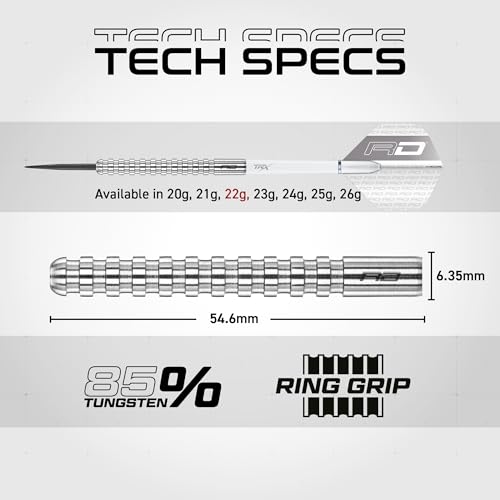
Choose weight by throw style, not by what looks most advanced: lighter darts reward a faster, cleaner release, while heavier darts in the common mid-20-gram range can feel steadier for players who like a deliberate throw. Check whether the dart is front-, center-, or rear-balanced and whether your fingers naturally land near that balance point; a mismatch can cause tail-up, tail-down, or wobbly flight. Owner sentiment supports making this a major ranking factor: buyers repeatedly praised darts that felt well balanced, flew nicely, stuck reliably, and helped with tighter grouping, while some casual players liked the feel but still wished for a heavier option.
Grip Control
Grip is not just about how secure the dart feels before release; it also affects whether the dart leaves the hand cleanly. Too little texture can cause slipping, while overly sharp or aggressive cuts can catch on the fingers and pull shots off line.
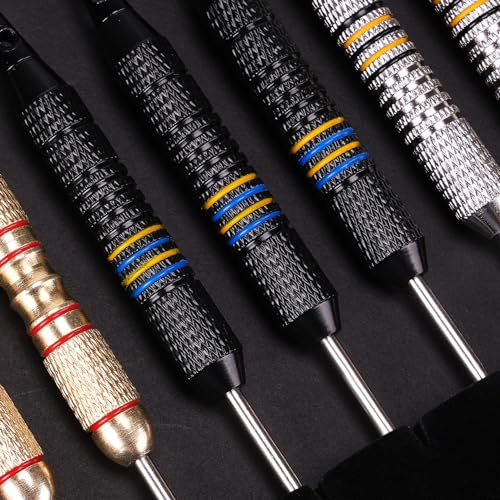
Look closely at the barrel cuts where you actually hold the dart: ring cuts, ridges, knurling, scallops, and smooth sections all change finger reference and release. For a first serious steel-tip set, a medium grip is often safer than an extreme grip because it gives repeatable placement without snagging; players who use chalky hands, a rear grip, or a very light hold may want more texture. Owner comments lined up with this: secure ringed, ridged, and knurled barrels were praised for confidence and control, while comfortable non-aggressive handling was also valued for working well right out of the box.
Board Hold
Steel-tip darts must enter and stay in a bristle board without excessive bounce-outs or board damage. Point condition, angle of entry, and the dart’s flight stability all influence whether a good throw actually scores.
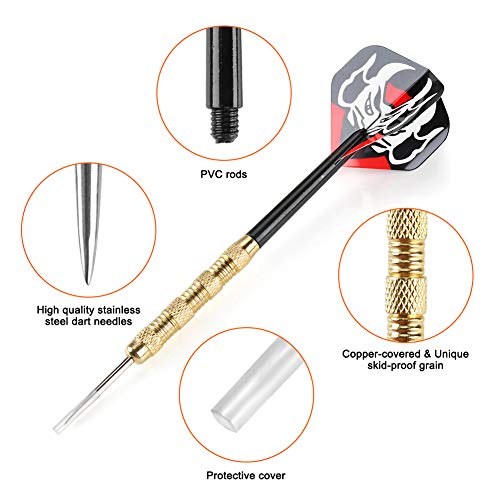
For steel-tip use, confirm the darts have true steel points for bristle boards and inspect whether the points are straight, evenly seated, and lightly grippy rather than mirror-slick. A sharpener can help restore bite, but avoid making points needle-like or burred because that can chew up the board and make retrieval rough. Owner feedback specifically noted darts that flew nicely and stuck to the board reliably, which suggests that point performance works together with weight and balance rather than standing alone.
Flight System
Flights and shafts are tuning parts and wear items, but poor ones can still make a good barrel frustrating. Loose flights, split stems, or inconsistent shaft lengths can change the way the dart travels through the air.
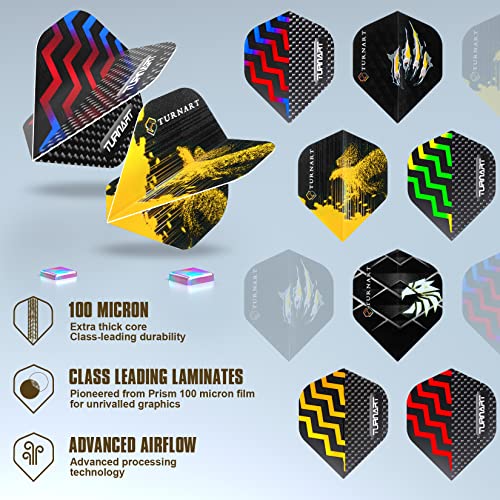
Check the shaft thread standard, shaft material, shaft length, and flight retention before assuming the included setup will be your long-term setup. Nylon stems are cheap and forgiving but can split; metal stems may need O-rings to stop loosening; punched flights, rings, or locking systems can help prevent flights from popping out. Owner sentiment was clearly mixed here: many liked having usable flights and extras included, but repeated watch-outs mentioned stems or shafts splitting, flights wearing or falling apart, and some stems not holding flights securely over time.
Kit Value
A dart set can be a better buy when the extras are genuinely useful, but accessories should not distract from poor core darts. The best bundles give a player enough parts to tune and maintain the setup without forcing immediate replacements.
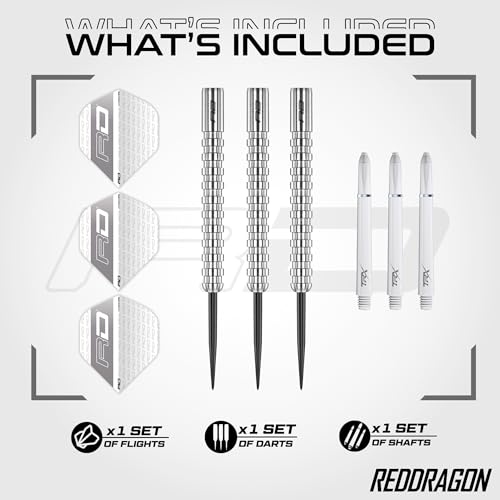
Treat extras as useful only if they match real steel-tip needs: spare flights, alternate shafts, O-rings, a point sharpener, a small tool, and a protective case are more valuable than decorative add-ons. Multiple dart sets can be good for families, guests, or practice comparisons, but a single better-built set may be preferable if you are trying to improve consistency. Owner feedback strongly favored sets that included plenty of usable extras and were seen as strong value, especially when the bundle supported beginners or players upgrading from basic board darts; however, owners also noted that included stems and flights may be basic parts that some players replace.
1,000,000+ shoppers use Buyer's Guide every week to find the best products and services online.

Helping millions of users make smarter purchases online.


